






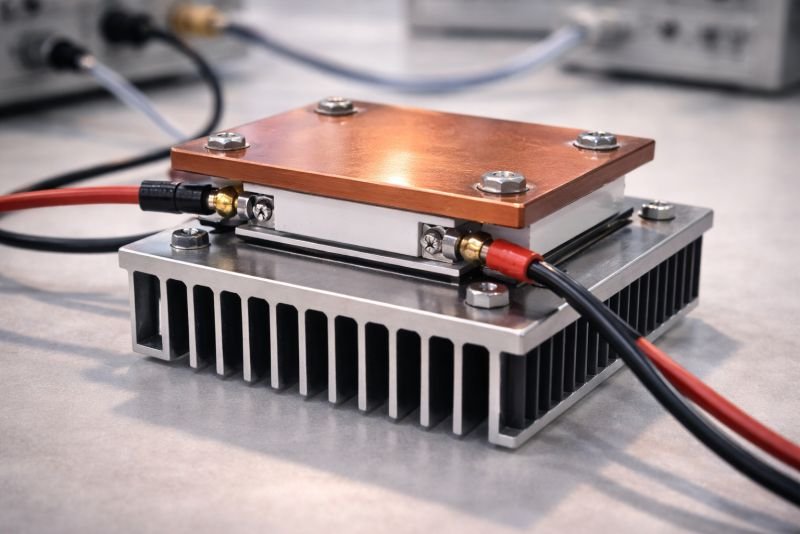
What Is Thermoelectric Generator?
A thermoelectric generator is a solid-state device that converts a temperature difference directly into electrical power through the Seebeck effect. When one side of the device is hotter than the other, charge carriers diffuse unevenly across semiconductor legs and create a voltage without any moving parts or combustion.
In wearable thermal harvesting, the available temperature gradient is usually modest because it depends on body heat, ambient air, insulation, and airflow. That means a thermoelectric generator tends to produce small but continuous output, making it more useful for background power or for complementing intermittent solar generation than for high-demand loads.
A basic relation is V = S x Delta T, where voltage depends on the Seebeck coefficient S and the temperature difference across the device. Why it matters is that thermoelectric generation works in darkness, indoors, and at night, so it can extend the operating window of self-powered systems beyond sunlight alone.
Used in devices include remote sensors, waste-heat monitors, and body-powered wearables. Engineers optimize material figure of merit, contact resistance, thermal matching, and heat flow because electrical output rises only when the device can maintain a useful temperature gradient across its active elements.
Example:
A wearable health monitor can harvest a small electrical supply from the temperature difference between skin and outdoor air.
Related Terms:
NoSuchDevice is a free archive of machines that do not exist yet but already have a shadow in physics. I research and write every entry alone, with no ads. Take a look around the archive, or help keep it free.