





What Is Thermophilic Fermentation?
Thermophilic fermentation is biological conversion performed by microorganisms that thrive at elevated temperatures, commonly around 50 to 60 degrees Celsius. In anaerobic processing, this hotter regime accelerates many reaction steps and can shorten the time needed for useful conversion. Temperature is the defining parameter, and the operating window is narrower than in mesophilic systems because small deviations can affect microbial activity quickly.
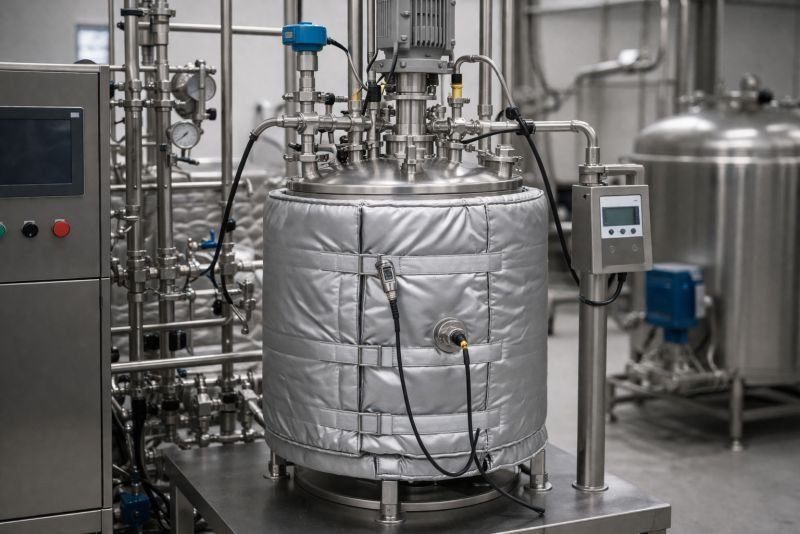
In real reactors, thermophilic operation can improve throughput, pathogen reduction, and gas production per unit time when control systems are precise enough. In compact organic-waste digestion, it is attractive because faster processing reduces the reactor volume required for a given daily feed rate. Used in devices include digesters, waste treatment reactors, sludge sanitization units, food-waste systems, and experimental bioprocess modules.
The term matters because it captures a tradeoff between speed and stability. Higher temperature can support faster conversion, but it also increases heating demand and tightens tolerance to temperature fluctuation, pH drift, and feed inconsistency. Engineers choose thermophilic fermentation when space or throughput matters enough to justify the extra control burden.
Performance is tracked through gas yield, methane fraction, retention time, and temperature uniformity across the reactor mass. Those measurements reveal whether the system is truly benefiting from thermophilic biology or simply spending more heat to chase unstable operation.
Example:
A food-waste reactor held near 55 degrees Celsius can reach similar daily throughput with a smaller vessel than a mesophilic unit processing the same feedstock.
Related Terms:
NoSuchDevice is a free archive of machines that do not exist yet but already have a shadow in physics. I research and write every entry alone, with no ads. Take a look around the archive, or help keep it free.