




What Is Volatile Solids?
Volatile solids are the fraction of a material’s dry solids lost when the sample is heated under standardized conditions. In wastewater, sludge, and biomass processing, this fraction is used as an estimate of organic matter available for conversion. A simple relation is VS = TS – fixed solids, where TS is total solids and the remainder represents the mineral ash fraction.
In real reactors, volatile solids help describe how much degradable feed is entering a system and how much remains afterward. In small-scale anaerobic digestion, gas yield is often normalized to kilograms of volatile solids because water content alone says little about actual methane potential. Used in devices include digesters, sludge thickeners, composting systems, wastewater treatment trains, and feedstock testing equipment.
The term matters because it connects laboratory measurements to mass balance, biogas yield, and reactor sizing. Two feedstocks with the same wet weight can behave very differently if one carries much more degradable organic content. Engineers therefore use volatile solids to compare substrates fairly and to estimate retention time, loading rate, and expected biological conversion.
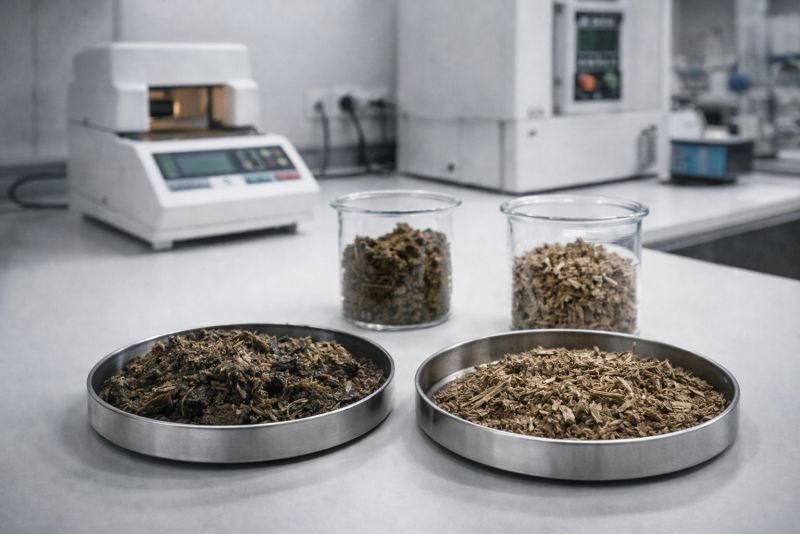
Measurement usually involves drying a sample to determine total solids, then igniting it in a furnace to remove combustible material. The result is approximate rather than perfect, but it remains useful as an operational indicator of how much biologically active matter a process stream contains.
Example:
A food-waste slurry with high volatile solids content can produce more biogas per kilogram of feed than a diluted stream carrying the same total mass.
Related Terms:
NoSuchDevice is a free archive of machines that do not exist yet but already have a shadow in physics. I research and write every entry alone, with no ads. Take a look around the archive, or help keep it free.