


What Is Vortex Shedding Frequency?
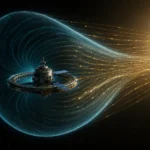
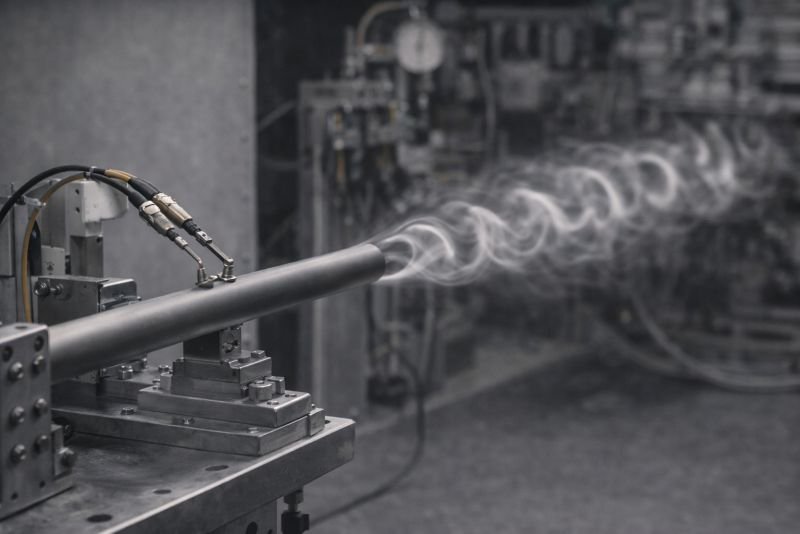
Vortex shedding frequency is the rate at which alternating vortices detach from opposite sides of a body in flowing fluid. It is a key quantity in unsteady aerodynamics and hydrodynamics because it sets the forcing frequency applied to cables, cylinders, beams, and other bluff structures exposed to crossflow.
In ultrasonic wind resonators, vortex shedding frequency determines whether the incoming airflow excites the device near resonance or misses it almost completely. The value changes with wind speed, geometry, and flow regime, which is why tuned harvesters face a real bandwidth problem outdoors.
A common relation is f = St x V / D, where Strouhal number, flow velocity, and characteristic dimension set the shedding rate. Why it matters is that matching or avoiding resonance depends on this frequency, whether the design goal is to reduce structural vibration, predict sound, or convert oscillation into electrical output.
Used in devices include vortex flow meters, cable damping systems, and airflow energy harvesters. Engineers monitor local velocity, characteristic size, and body shape because small geometric or environmental changes can shift the forcing band enough to alter performance, noise, and fatigue behavior.
Example:
A tiny change in wire diameter can move vortex shedding frequency enough to push a resonator toward or away from its strongest response.
Related Terms:
NoSuchDevice is a free archive of machines that do not exist yet but already have a shadow in physics. I research and write every entry alone, with no ads. Take a look around the archive, or help keep it free.