






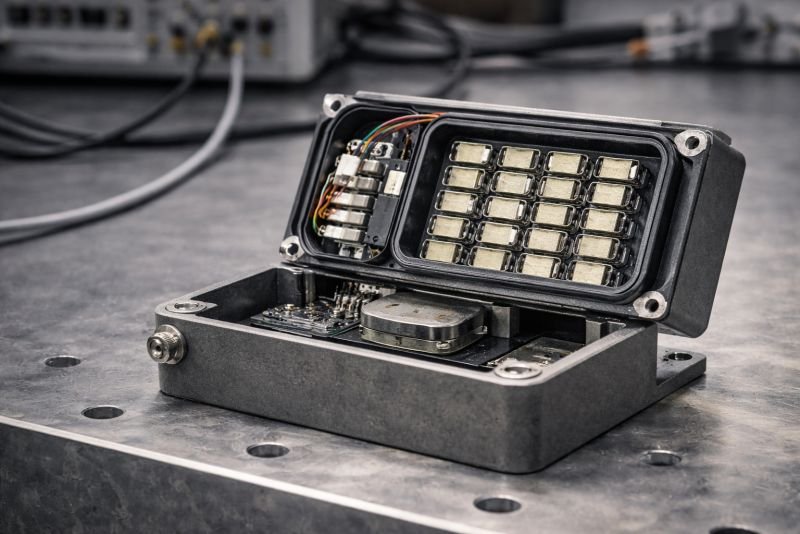
What Is Resonator Array?
A resonator array is a group of multiple resonant elements arranged so their collective response covers a broader or more controllable frequency range than a single resonator can provide. Each element may be tuned to the same resonance for stronger combined output or to different resonances for wider bandwidth and better tolerance to changing excitation.
In broadband vibration harvesting, a resonator array helps solve the problem of drifting input frequency. Instead of depending on one perfectly tuned element, the array spreads response across several bands so some fraction of the structure remains near resonance as wind speed and shedding behavior shift.
A basic resonance relation is f_n = (1 / 2pi) x sqrt(k / m), where natural frequency depends on stiffness k and mass m. Why it matters is that arrays let engineers stagger these frequencies deliberately, maintaining usable output and controlling vibration response across operating conditions that would leave a single resonator inactive.
Used in devices include ultrasonic transducers, vibration harvesters, and frequency-selective filters. Engineers tune spacing, coupling strength, damping, and bandwidth because neighboring resonators can reinforce each other, split response peaks, or suppress unwanted motion depending on how the array is designed.
Example:
A harvester with resonators tuned to 25, 35, and 45 kHz can keep producing energy even as the incoming vibration frequency drifts.
Related Terms:
NoSuchDevice is a free archive of machines that do not exist yet but already have a shadow in physics. I research and write every entry alone, with no ads. Take a look around the archive, or help keep it free.