




What Is Wells turbine?
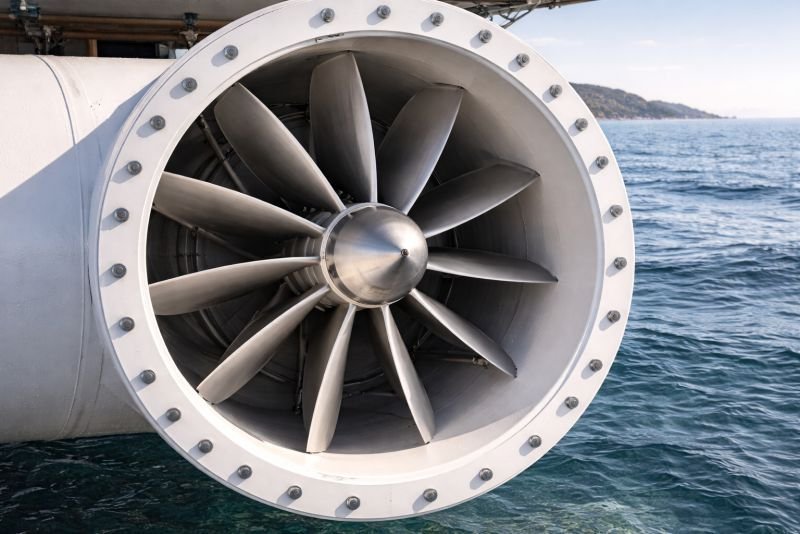
A Wells turbine is a self-rectifying air turbine designed for oscillating airflow. Its symmetric blades are arranged so that reversing axial flow still produces torque in the same rotational direction, allowing an alternating pneumatic source to drive one shaft continuously. Output power follows P = tau omega, but practical performance depends on blade profile, tip speed, and how close the rotor operates to stall.
The turbine is most closely associated with the Oscillating Water Column, where wave-driven pressure changes push air back and forth through the rotor. This avoids mechanical valves or gearing to reverse the drive, but it also means the machine can lose efficiency at high flow coefficients and may produce modest starting torque at low speeds. Maintenance is also easier when the rotor sits in a dry nacelle rather than a submerged housing.
The concept matters because it turns bidirectional wave-induced airflow into usable rotation for a generator mounted above the waterline. In oscillating air-flow energy conversion, the turbine, chamber, and generator must be matched so the rotor stays responsive across common sea states without entering severe aerodynamic stall or excessive acoustic loss. That matching problem often determines the real electrical yield of the system.
Example:
An oscillating water column plant can use a Wells rotor so the generator keeps spinning the same way during both inhaling and exhaling airflow phases.
Related Concepts:
- Airfoil Symmetry
- Self-Rectifying Turbine
- Stall
NoSuchDevice is a free archive of machines that do not exist yet but already have a shadow in physics. I research and write every entry alone, with no ads. Take a look around the archive, or help keep it free.