





What Is adsorption?
Adsorption is the accumulation of atoms, ions, or molecules at a surface instead of throughout the bulk of a material. It happens because solid surfaces present sites where electrostatic attraction, van der Waals forces, or chemical bonding can lower the energy of nearby species. Unlike absorption, which moves matter into the interior, adsorption concentrates it at an interface where reactions or separation can be controlled.
In practical systems, adsorption depends on surface area, pore structure, temperature, fluid chemistry, and competition between dissolved species for available sites. A simple low-coverage relation is q = K C, where the adsorbed amount scales with concentration before the surface begins to saturate. Activated carbon, metal oxides, resins, and clays all rely on this behavior to capture contaminants, retain catalysts, or tune chemical availability.
The concept matters across water treatment, gas purification, sensing, and catalysis because surfaces often determine whether a reaction or separation starts efficiently. In contaminant surface treatment, adsorption can hold pollutants close to reactive sites long enough for breakdown or immobilization. Used in devices include fixed-bed filters, gas scrubbers, catalyst supports, and sampling cartridges that rely on controlled surface binding.
Example:
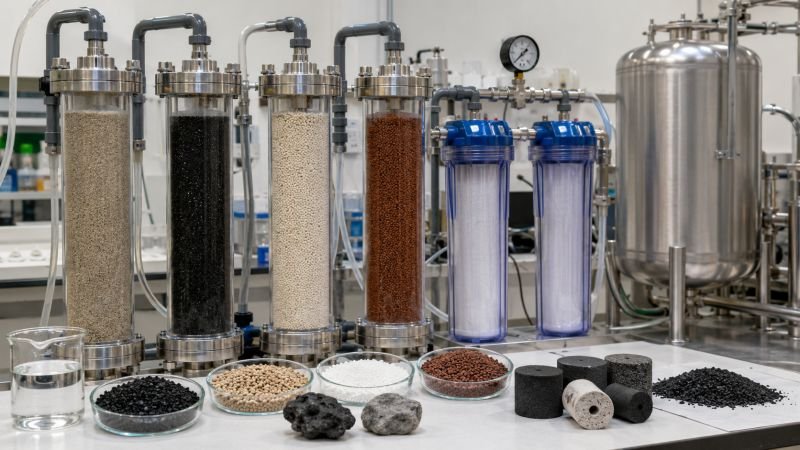
Granular activated carbon in a treatment column can adsorb dissolved organic molecules from water before they reach downstream process equipment.
Related Terms:
- Photocatalysis
- Electron Transfer
- Surface Area
NoSuchDevice is a free archive of machines that do not exist yet but already have a shadow in physics. I research and write every entry alone, with no ads. Take a look around the archive, or help keep it free.