





What Is electron transfer?
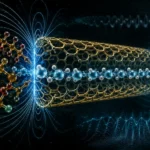
Electron transfer is the movement of one or more electrons from a donor species to an acceptor species during a chemical or electrochemical process. It is the defining event behind oxidation and reduction, because the donor loses electron density while the acceptor gains it. The energy change is often summarized as Delta G = -n F E, linking transferred charge to electrochemical driving force.
In real materials and devices, electron transfer can happen through direct contact, across catalytic surfaces, within biological pathways, or between dissolved species in solution. Reaction rate depends on distance, electronic structure, solvent environment, and any activation barrier that must be crossed before charge can move. Corrosion, batteries, semiconductor interfaces, and reactive nanoparticles all rely on controlled transfer pathways to convert stored or chemical energy into measurable change.
The concept matters because many engineering systems are limited less by whether a reaction is possible than by how quickly charge can be exchanged at the right location. In subsurface redox treatment, electron transfer determines whether a contaminant is transformed after contact with a reactive surface. Used in devices include batteries, fuel cells, corrosion sensors, catalytic reactors, and electrochemical probes that depend on predictable charge movement.
Example:
When iron particles contact a chlorinated solvent, electron transfer can weaken carbon-chlorine bonds and begin reductive breakdown.
Related Terms:
NoSuchDevice is a free archive of machines that do not exist yet but already have a shadow in physics. I research and write every entry alone, with no ads. Take a look around the archive, or help keep it free.