





What Is Air Quality Index?
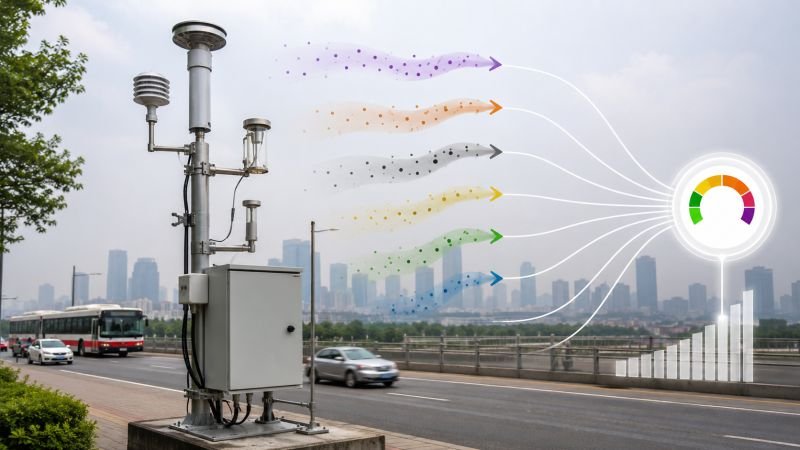
Air Quality Index is a reporting scale that converts measured pollutant concentrations into a standardized public health number. For a given pollutant, the usual interpolation is AQI = [(IHi – ILo) / (BPHi – BPLo)] x (Cp – BPLo) + ILo, where Cp is the measured concentration and the other values come from regulatory breakpoint tables. The index communicates risk bands rather than raw chemistry.
In practice, agencies calculate a subindex for pollutants such as PM2.5, ozone, carbon monoxide, sulfur dioxide, or nitrogen dioxide, then publish the highest result as the headline value. It supports decisions in public air quality monitoring when pollutant levels change through the day. Used in devices include sensor networks, optical particle counters, ozone analyzers, and forecast dashboards that translate measurements into health alerts.
The concept matters because it gives non-specialists a consistent way to compare short-term exposure conditions across places and dates, even though different pollutants can produce the same reported index. In environmental health, the AQI is useful for communication and planning, but it does not identify the pollutant source or the biological mechanism behind the hazard.
Example:
A daily report may classify PM2.5 concentrations as unhealthy even when ozone remains in a lower category that same afternoon.
Related Terms:
- Photochemical Smog
- Temperature Inversion
- Fine Particulate Matter
NoSuchDevice is a free archive of machines that do not exist yet but already have a shadow in physics. I research and write every entry alone, with no ads. Take a look around the archive, or help keep it free.