




What Is Albedo?
Albedo is the fraction of incoming electromagnetic radiation that a surface reflects rather than absorbs. It is a dimensionless ratio, often written as alpha = P_reflected / P_incident, and it ranges from near 0 for very dark materials to near 1 for highly reflective ones. In practice, albedo depends on wavelength, surface roughness, moisture, color, and viewing geometry.
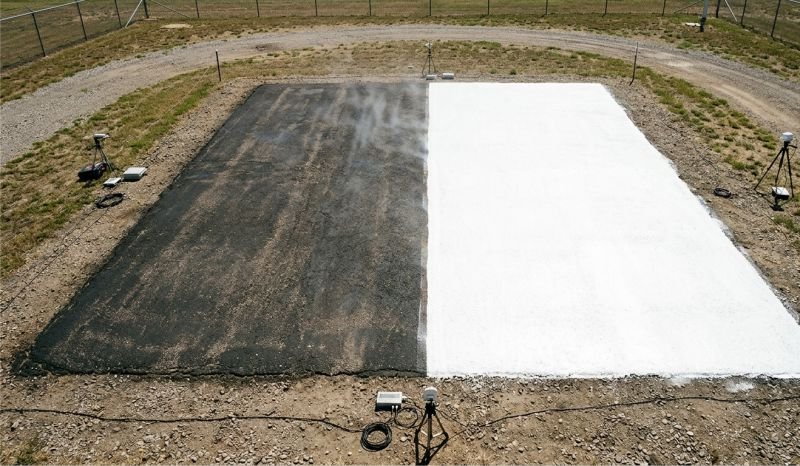
In thermal and climate calculations, albedo helps determine how much solar energy becomes heat within a material or environment. A lower albedo means more absorbed energy and higher surface temperatures, while a higher albedo shifts more energy back toward the surroundings. In surface energy balance, small changes in reflectance can alter cooling demand, pavement heating, snowmelt timing, and sensor readings.
The term matters across meteorology, remote sensing, materials engineering, and building physics because it links optics to temperature response. Designers use albedo when selecting coatings, road materials, roof finishes, and planetary models that must predict absorbed radiation accurately. Used in devices include weather satellites, spectrometers, thermal cameras, solar test rigs, and environmental monitoring stations. It is measured with reflectometers or by comparing reflected flux to calibrated incident light.
Example:
A white roof coating with higher albedo than black membrane can lower summertime surface temperature under the same sunlight.
Related Terms:
- Solar Irradiance
- Thin-Film Photovoltaic Cells
- Reflectance
NoSuchDevice is a free archive of machines that do not exist yet but already have a shadow in physics. I research and write every entry alone, with no ads. Take a look around the archive, or help keep it free.