





What Is Atmospheric window?
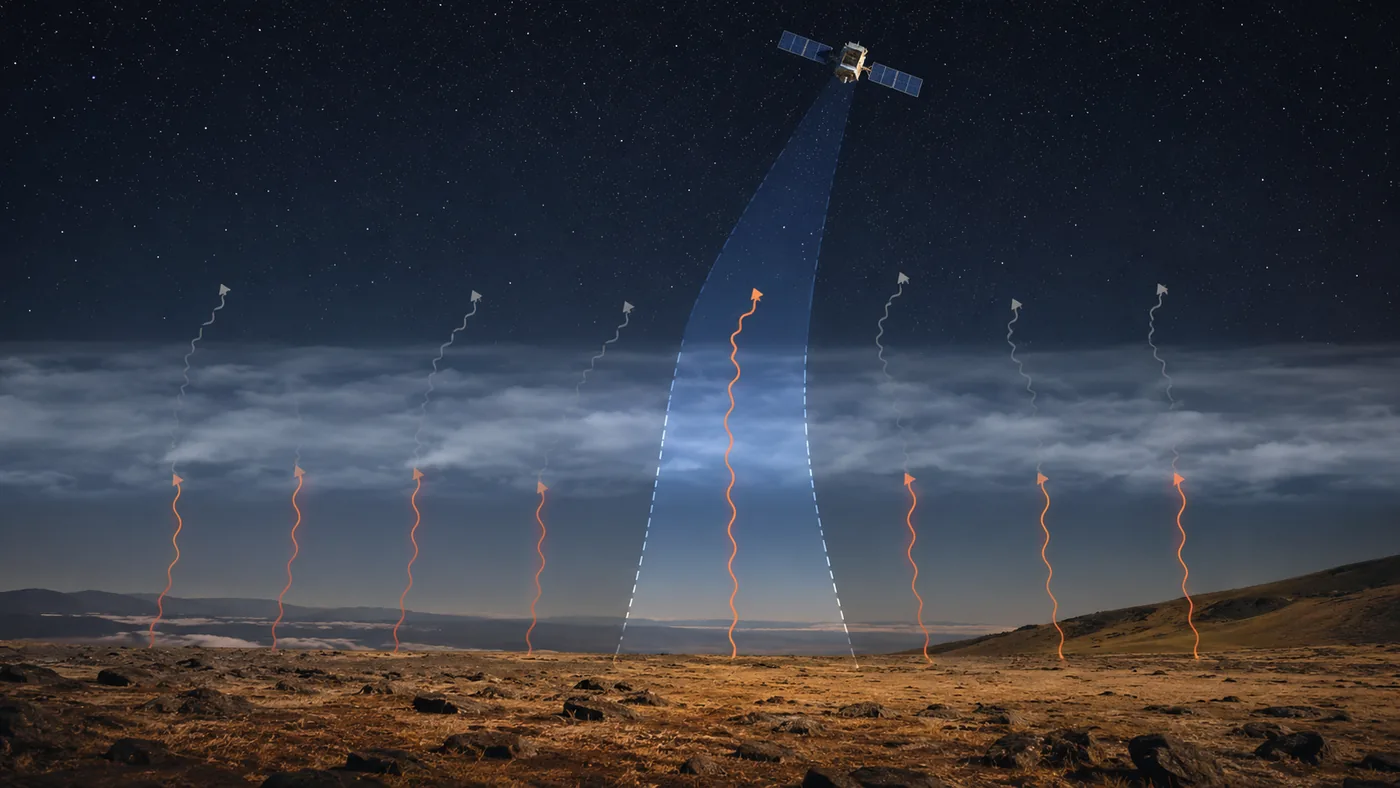
Atmospheric window is a range of wavelengths where gases in the air absorb little radiation, allowing energy to pass through the atmosphere with relatively low attenuation. In Earth science the most important infrared window lies near 8-13 micrometers, where much surface thermal emission can escape toward space. A useful relation is lambda_peak = b / T, which links a warm object’s emission peak to temperature.
In real atmospheres, the window is shaped by water vapor, carbon dioxide, ozone, clouds, aerosols, and viewing angle. It is never perfectly transparent, because absorption lines, humidity, and cloud cover change with altitude and weather. Engineers and scientists use spectral models to calculate how much radiation moves through the window under different surface temperatures and atmospheric columns.
The concept matters because it governs remote sensing, thermal imaging, radiative cooling, and climate energy balance. In radiative climate engineering, the atmospheric window defines which infrared bands can carry heat away most directly. Used in devices include infrared cameras, satellite radiometers, thermal emitters, radiative cooling panels, and atmospheric spectrometers.
Measurements usually compare spectral radiance across wavelength bands to identify where absorption is weak or strong, then combine that with temperature and humidity profiles to estimate transmission.
Example:
A rooftop cooling surface can lose heat to clear night sky when it emits strongly in the infrared atmospheric window.
Related Terms:
NoSuchDevice is a free archive of machines that do not exist yet but already have a shadow in physics. I research and write every entry alone, with no ads. Take a look around the archive, or help keep it free.