



What Is Radiative forcing?
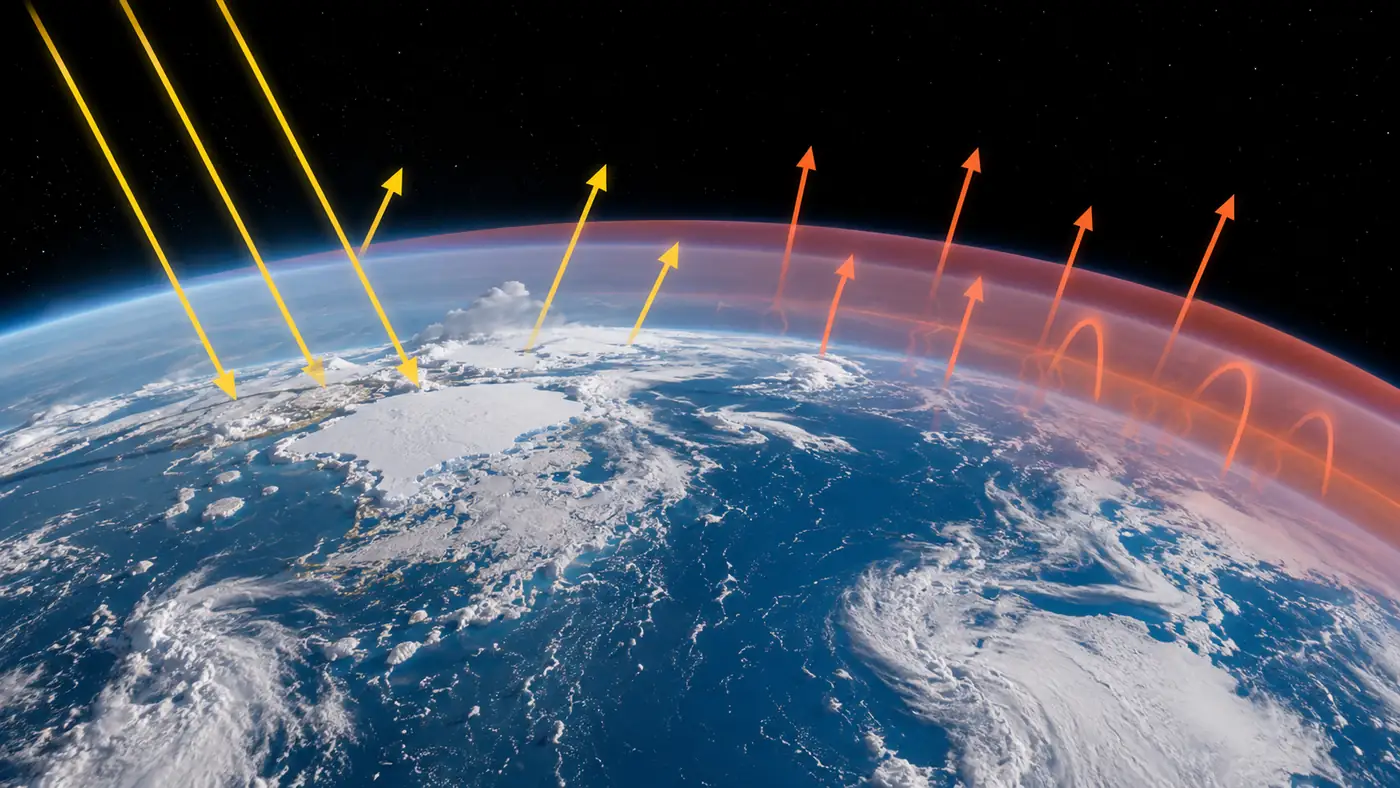
Radiative forcing is the change in Earth’s energy balance caused by a factor that alters incoming solar radiation or outgoing infrared radiation. It is measured as power per unit area, usually watts per square meter, at the top of the atmosphere or tropopause. A compact expression is Delta F = F_after – F_before, where positive values tend to warm the climate system.
In real climate models, radiative forcing can come from greenhouse gases, aerosols, land reflectivity, volcanic particles, solar variation, or engineered changes to emission and reflection. The response depends on feedbacks involving water vapor, clouds, ice, ocean heat uptake, and circulation. Forcing is therefore a driver, while temperature change is the system response that follows over time.
The concept matters because it gives different climate influences a common physical scale. In planetary energy balance modeling, radiative forcing helps compare absorption changes with emission changes. Used in devices include satellite radiometers, climate monitoring buoys, infrared spectrometers, aerosol sensors, and Earth-observation calibration systems.
Researchers estimate forcing by combining measured concentrations, optical properties, cloud data, and radiative transfer calculations, then test whether modeled heat uptake matches observed atmospheric and ocean trends.
Example:
An increase in carbon dioxide creates positive radiative forcing by reducing the rate at which infrared energy leaves the atmosphere.
Related Terms:
NoSuchDevice is a free archive of machines that do not exist yet but already have a shadow in physics. I research and write every entry alone, with no ads. Take a look around the archive, or help keep it free.