






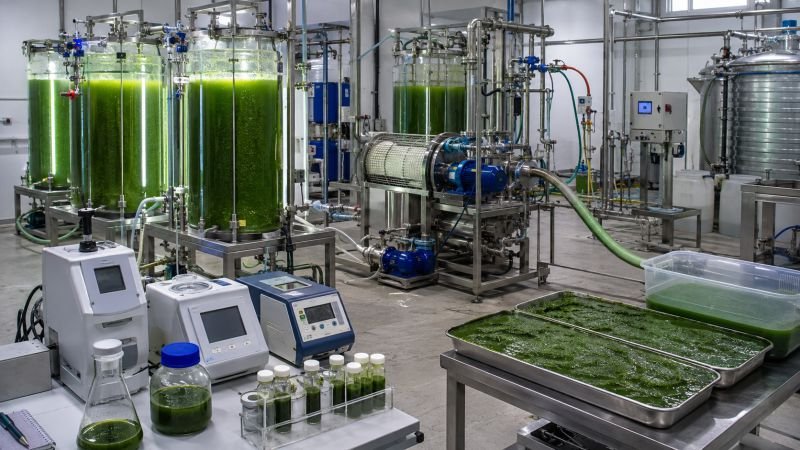
What Is Biomass productivity?
Biomass productivity is the rate at which a biological cultivation system generates new cell mass over time, usually normalized to reactor volume, area, or both. It is a core measure of how effectively light, nutrients, carbon, and operating conditions are converted into usable biological material. A common expression is Bp = Delta m / (V Delta t), where produced mass is divided by culture volume and elapsed time.
In real systems, biomass productivity changes with species selection, light delivery, mixing, temperature, nutrient balance, gas transfer, contamination, and harvesting strategy. Used in devices include algae raceway ponds, photobioreactors, fermenters, carbon-capture cultivation loops, and biomass-fed materials plants. The metric is especially important in algal polymer feedstock production because low culture density or slow growth can erase the environmental advantage of a promising bioplastic through excessive land, water, or energy demand.
The concept matters because product yield is often limited before chemistry even begins. If too little biomass is generated per unit infrastructure, downstream extraction and polymer recovery cannot become economical no matter how attractive the polymer looks on paper.
Engineers therefore pair biomass productivity with product fraction, since a fast-growing culture is not automatically useful if only a small share of its dry mass is the target material.
Example:
An algae cultivation system can show better economics after a modest productivity increase even if the extraction chemistry downstream remains unchanged.
Related Terms:
NoSuchDevice is a free archive of machines that do not exist yet but already have a shadow in physics. I research and write every entry alone, with no ads. Take a look around the archive, or help keep it free.