




What Is Polyhydroxybutyrate?
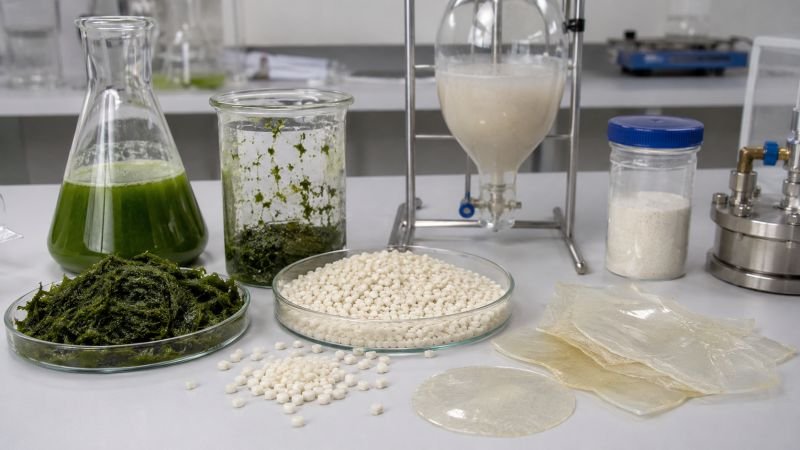
Polyhydroxybutyrate, or PHB, is a biodegradable polyester that many microorganisms synthesize as an intracellular carbon and energy storage material. Chemically, it belongs to the polyhydroxyalkanoate family and can be processed as a thermoplastic after extraction from biomass. A useful composition relation is w_PHB = m_PHB / m_dry biomass, which expresses how much of the dry cell mass is stored polymer.
In real systems, PHB accumulation rises when cells have abundant carbon but limited nutrients such as nitrogen or phosphorus, causing metabolism to divert resources into polymer granules instead of continued growth. Used in devices include biodegradable films, molded trays, marine-adjacent packaging, resorbable medical parts, and controlled-lifetime coatings. This behavior is particularly relevant in marine bioplastic production systems that aim to pair renewable cultivation with environmental degradation after disposal.
The material matters because it combines biological synthesis with genuine biodegradability in active natural environments. That gives it a different end-of-life profile from plastics that are bio-based in feedstock but still depend on narrowly managed composting conditions to break down.
Its main limitation is mechanical: neat PHB is comparatively stiff and brittle, so engineers often modify formulation, crystallinity, or copolymer composition when they need more toughness or flexibility.
Example:
A PHB film lost in seawater can be colonized by microbes and gradually mineralized instead of persisting for centuries like polyethylene.
Related Terms:
NoSuchDevice is a free archive of machines that do not exist yet but already have a shadow in physics. I research and write every entry alone, with no ads. Take a look around the archive, or help keep it free.