





What Is PHBV copolymer?
PHBV copolymer is a polyhydroxyalkanoate made from hydroxybutyrate and hydroxyvalerate repeat units within the same polymer chain. By changing the fraction of hydroxyvalerate, chemists can shift crystallinity, flexibility, and brittleness relative to neat PHB. A useful composition relation is x_HV = n_HV / (n_HB + n_HV), which expresses the hydroxyvalerate share of the copolymer.
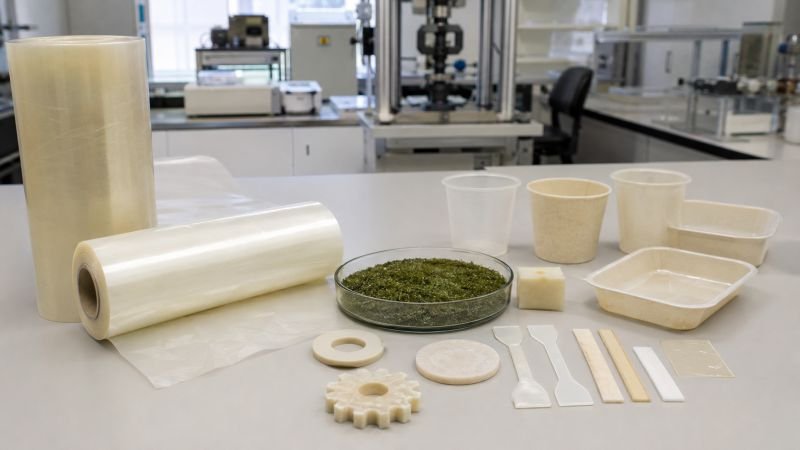
In real materials, increasing hydroxyvalerate content usually lowers stiffness and raises elongation at break, helping the polymer behave more like practical packaging plastics rather than a rigid brittle solid. Used in devices include flexible films, molded food-contact parts, marine-adjacent wrapping, temporary biomedical components, and agricultural materials. This tunability is especially important in algae-based biodegradable packaging materials where the polymer must balance processability, service life, and environmental breakdown.
The copolymer matters because it shows how performance can be improved without abandoning the biodegradable PHA platform. Instead of switching to a different chemistry entirely, engineers adjust the internal composition of the chain to broaden the useful property window.
The tradeoff is more complex production and control, since fermentation conditions, precursor supply, and purification all influence whether the target copolymer composition is reached consistently. Thermal behavior also shifts with composition.
Example:
A packaging film made from PHBV can flex more during handling than a comparable film made from neat PHB while still remaining biodegradable.
Related Terms:
NoSuchDevice is a free archive of machines that do not exist yet but already have a shadow in physics. I research and write every entry alone, with no ads. Take a look around the archive, or help keep it free.