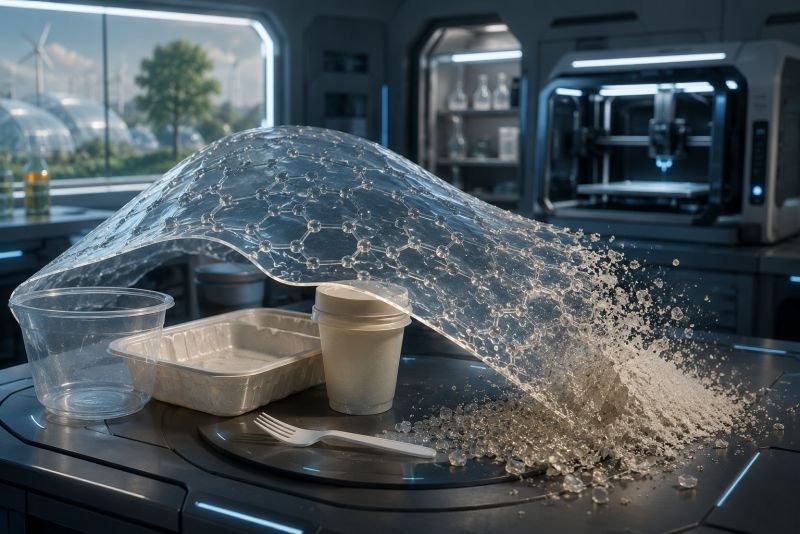




Eight million tonnes of plastic enter the ocean every year. The organisms that have lived in that ocean for three billion years are, in a specific biochemical sense, already synthesizing the answer. Certain microalgae produce polyhydroxyalkanoates – PHAs – as a routine metabolic function: long-chain polymer molecules with properties that chemists classify as biodegradable thermoplastics. The synthesis already happens. The engineering question algae-derived bioplastics ask is whether those polymers can be extracted, processed, and deployed at scale as a replacement for the material that is currently accumulating in the same water where algae lives.
That is not a rhetorical setup. It is an actual engineering proposition.
The short version: Algae-derived bioplastics use fast-growing aquatic microorganisms as a feedstock for PHA polymers that degrade in marine environments in 6-18 months – where conventional polyethylene persists for four centuries under identical conditions. The feedstock grows in seawater or wastewater, requires no agricultural land, and competes with no food supply. The barriers are not in the biochemistry, which already works in laboratory settings. They live in the dewatering step, the yield per unit of growing volume, and the mechanical properties gap that still separates algae-based PHA from the performance envelope of standard packaging plastic.
Key Takeaways
- Algae synthesize biodegradable PHA polymers naturally – extraction and scale-up are the engineering challenge, not the biochemistry
- Algae-derived PHA degrades in marine environments in 6-18 months; conventional polyethylene requires 400+ years in the same water
- Dewatering harvested microalgae biomass accounts for up to 30% of total production energy – a physical constraint that genetics alone cannot dissolve
- Genetic modification can raise PHA yield from around 35% to 65% of dry cell weight, tripling effective output from the same cultivation infrastructure
- The integrated production model – algae farm paired with industrial CO2 flue gas – is the configuration where the carbon and energy arithmetic actually balances
Table of Contents
Why Conventional Bioplastics Left This Problem Unsolved
The word “biodegradable” on a plastic label is technically accurate in roughly the same way that describing a swimming pool as “close to the ocean” is accurate. Defensible under specific conditions. Practically useless under the conditions where it matters.
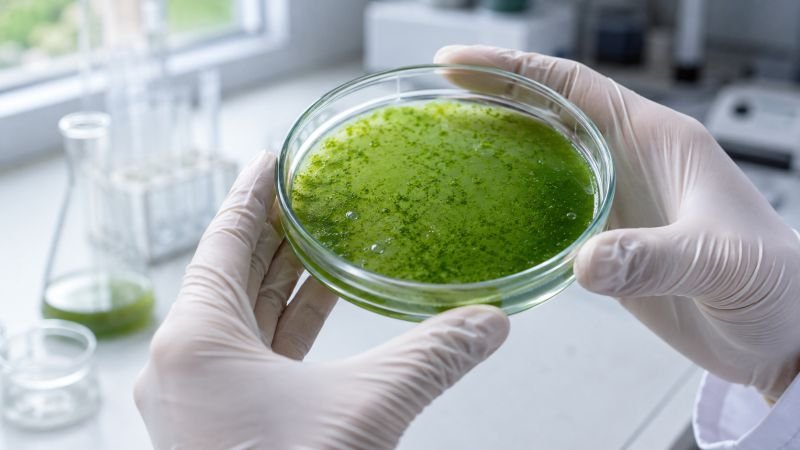
Most bioplastics currently available – PLA from corn starch, starch-blend composites, cellulose-derived films – degrade under industrial composting conditions: 55-60 degrees Celsius, controlled humidity, specific microbial populations. Place those same materials in seawater at 15 degrees, and the degradation timeline extends to decades. The certification infrastructure for biodegradable plastics was written for a world where industrial composting is universal. That world does not exist. An estimated 91% of plastic waste globally never reaches any recycling or composting facility.
The underlying chemistry of bioplastics degrades through bulk hydrolysis or surface erosion, both driven by ambient temperature, moisture, and microbial activity. None of those factors are consistent in natural environments. A PLA container buried in cold seawater will still be structurally intact after fifty years. The same container in an industrial composter is gone in ninety days.
Starch-based bioplastics add a second problem: the feedstock competes with food. Corn-derived PLA requires roughly 2.65 kg of corn per kilogram of plastic produced. In a world where agricultural land is already constrained, building a parallel plastic supply chain on top of food production is a conflict that will not resolve quietly as demand scales.
Algae-derived bioplastics are, by design, shaped around both of these gaps. The degradation pathway activates in marine environments specifically, not under industrial conditions that rarely exist at the point of discard. The feedstock grows in seawater, brackish water, or wastewater where no food crop is being displaced. Whether those two design advantages survive the translation to production economics is the harder and more interesting question.
The Biochemistry Behind the Material
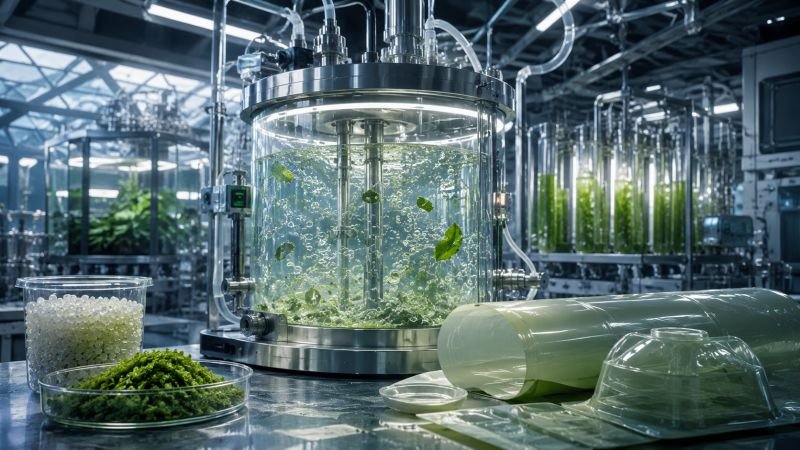
PHA polymers are not a laboratory invention. Microorganisms have synthesized them for hundreds of millions of years as internal carbon and energy storage – a microbial analog to how mammals store body fat. Certain cyanobacteria and microalgae accumulate PHA granules inside their cells when nitrogen or phosphorus levels drop while carbon remains available. The organism, denied the nutrients needed for cell division, redirects carbon metabolism toward storage polymers instead.
Microalgae or Macroalgae – The Distinction That Changes Everything
The split between microalgae and macroalgae is not a taxonomic detail. It determines the entire production pathway.
Microalgae – unicellular organisms like Spirulina, Chlorella, or Synechococcus – grow in suspension in liquid. Individual strains accumulate PHA at 20-40% of dry cell weight under optimized stress conditions. High productivity per unit volume. The cells are small, which means extraction requires disrupting cell walls. The cultivation suspension is dilute, which means removing water before extraction is mandatory and expensive.
Macroalgae – seaweeds – grow as large organized structures and can be harvested like an aquatic crop. They do not accumulate PHA directly in useful quantities, but their carbohydrate content can be fermented into platform chemicals and then polymerized. Easier to harvest in bulk. Lower direct polymer yield. More conversion steps between organism and final material.
The device described here is built primarily around microalgae and direct PHA extraction. Macroalgae-derived bioplastic is a parallel track with different constraints and a lower ceiling on marine degradation performance – worth watching, but not the same machine.
Genetic Engineering as a Yield Calculation, Not a Research Frontier
Unmodified algae strains accumulate PHA at roughly 20-40% of dry cell weight. The metabolic pathway that produces PHA is understood at the enzyme level. Genetic modifications redirecting more carbon flux toward PHA synthesis while maintaining growth rates have already demonstrated yield increases to 50-60% in controlled conditions.
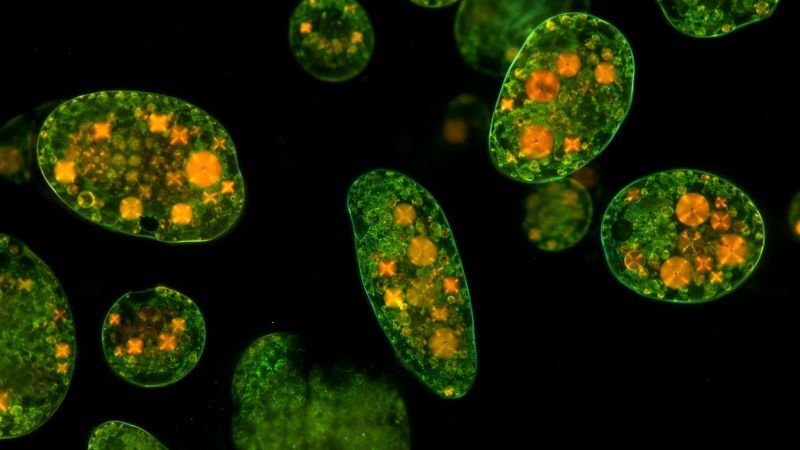
The concept device assumes engineered strains operating at 60-70% PHA content – a figure supported by laboratory trajectory. The practical barrier is not whether such strains can be built. It is whether modified organisms can be deployed in open outdoor cultivation systems without ecological risk, and whether the yield improvements demonstrated at bench scale hold across the noisier conditions of large-scale outdoor production.
How Algae-Derived Bioplastic Could Operate
The production pathway has four distinct stages. Getting through all four at commercially useful efficiency is what separates this device from a laboratory result.
The Dewatering Problem Nobody Puts in the Headline
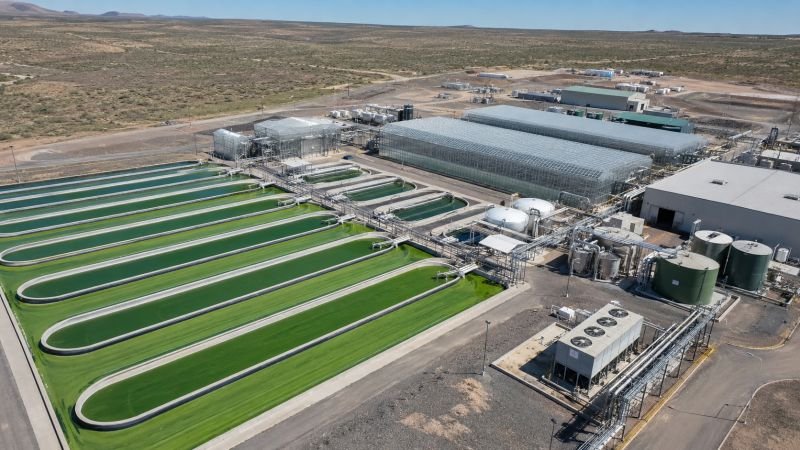
Microalgae grow in dilute aqueous suspension. A productive open raceway pond at peak operation reaches a biomass concentration of roughly 0.5-1.0 g per liter. Harvesting one kilogram of algae biomass therefore requires processing somewhere between 1,000 and 2,000 liters of water. Centrifugation, flocculation, and membrane filtration reduce this burden, but dewatering consistently accounts for 20-30% of total production energy. Genetic engineering of the algae strain changes the yield of what comes out. The physics of separating microscopic organisms from dilute suspension does not change.
The integrated production model partially addresses the energy balance by co-locating algae cultivation with industrial CO2 sources – cement facilities, power plants, fermentation operations. Flue gas bubbled through the cultivation system supplies the carbon the organisms need while capturing an emission stream that would otherwise enter the atmosphere. The carbon cost of producing the plastic is partially offset before extraction begins. Without this pairing, the energy and carbon arithmetic for algae-derived bioplastic is substantially less favorable than it appears on paper.
The Yield Formula and What Genetic Engineering Actually Changes
The volumetric PHA yield from a production system is expressed as:
Y_PHA = B_p x C_PHA
Where B_p is biomass productivity in grams per liter per day, and C_PHA is the PHA fraction of dry cell weight.
At current unmodified laboratory-scale performance: B_p = 1.2 g/L/day, C_PHA = 0.35
Y_PHA = 1.2 x 0.35 = 0.42 g/L/day
With a high-yield engineered strain at projected performance: B_p = 2.0 g/L/day, C_PHA = 0.65
Y_PHA = 2.0 x 0.65 = 1.30 g/L/day
A 10,000 m² outdoor raceway pond system at current performance yields approximately 1,500 kg PHA per year. With engineered strains at projected yield, the same infrastructure produces approximately 4,700 kg per year. The genetic engineering contribution is not incremental. It triples effective output without changing footprint, water use, or capital equipment. That is where the economic case for this device lives or dies.
What the Residue Does
After PHA extraction, the algae biomass retains 35-65% of its original mass as carbohydrates, proteins, and lipids. In a linear production model, this is a disposal cost. In the integrated model, lipid fractions enter biodiesel streams, protein fractions become animal feed or fertilizer supplements, and carbohydrate fractions are available for anaerobic digestion to produce biogas. Algae-derived PHA currently costs $4-6 per kilogram versus roughly $1 per kilogram for conventional polyethylene. The multiple co-product revenue streams from the residue are not a bonus. They are a structural requirement for the production economics to approach viability.
Everything here is free. Readers are the reason it stays that way.
I make all of it alone, with no ads. If it is worth a coffee a month to you, that keeps the next one coming.
Keep it alive →What the Material Does in the Environment
A bioplastic that degrades only under specific managed conditions is not solving the problem it claims to solve. The performance claim for algae-derived PHA is degradation in marine environments – specifically, in the water where conventional plastic accumulates and where food-based bioplastics perform nearly as badly.
Degradation Speed Versus Mechanical Reality
PHA in marine environments degrades through enzymatic attack by PHA-depolymerase-producing bacteria found throughout seawater and marine sediments. Polyhydroxybutyrate (PHB) – the simplest PHA variant – reaches 50% mass loss in approximately 6-10 weeks under warm seawater conditions, and complete mineralization to CO2 and water within 6-18 months depending on temperature and microbial community density. Conventional polyethylene in the same environment: 400+ years, unchanged.
The mechanical reality is harder to dismiss. Standard PHB has tensile strength of 25-40 MPa and elongation at break of 3-8%. Packaging polyethylene runs 20-40 MPa tensile strength but 100-600% elongation. PHB is harder and more brittle than what it aims to replace. Copolymerization – incorporating hydroxyvalerate units into the chain to produce PHBV – shifts the elongation toward 20-30%, closer to practical packaging requirements. The tradeoff is more complex fermentation control and higher production cost per kilogram.
| Material | Marine Degradation | Feedstock Land Use | Tensile Strength (MPa) | Elongation at Break |
|---|---|---|---|---|
| Algae PHB | 6-18 months | None | 25-40 | 3-8% |
| Algae PHBV copolymer | 8-24 months | None | 20-30 | 20-30% |
| Corn-based PLA | 50+ years in seawater | High | 40-60 | 4-7% |
| Starch blend composite | 2-5 years | High | 10-20 | 15-40% |
| Conventional HDPE | 400+ years | None (fossil) | 20-37 | 100-600% |
The Biodegradable Versus Compostable Distinction That Actually Matters
The regulatory and marketing language around plastic degradation has collapsed two distinct concepts into one word. Compostable plastic degrades under managed industrial conditions – high heat, controlled humidity, specific microbial populations. Biodegradable plastic, properly defined, degrades in natural environments under ambient conditions. PHA from algae falls into the second category in marine environments. Corn-based PLA – frequently sold as biodegradable – falls into the first. The difference is not a labeling technicality. It determines whether the material actually solves the ocean plastic problem or only solves the industrial composter problem.
The concept of pushing this further – encoding a specific degradation schedule into the material at the molecular level – is explored separately in Bio-Programmable Polymers, which addresses the broader question of plastics that degrade on a preset timeline regardless of environment.
What the Degradation Products Are
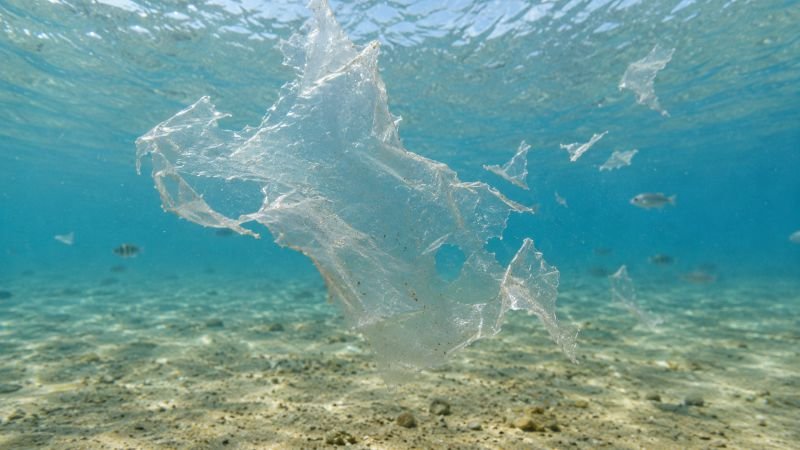
PHA mineralizes to CO2, water, and hydroxybutyrate as an intermediate compound. Hydroxybutyrate is a normal metabolic molecule found naturally in most organisms, including humans. Current evidence supports the non-toxicity of PHA degradation intermediates in marine environments. Systematic ecotoxicological testing across the full range of PHBV copolymer formulations needed for practical applications has not yet been conducted at the depth that regulatory approval for food contact materials would require. That is the gap between “likely safe” and “approved for use.”
Where This Plastic Would Actually Go
Packaging as the First and Most Demanding Battleground
Single-use packaging accounts for roughly 40% of total plastic production globally, and most of it – food wrappers, films, bags – ends in landfill, waterways, or open environments. Algae-derived bioplastic does not need to win the entire packaging market to matter. It needs to win the fraction that fails to reach disposal infrastructure and ends up in water.
Rigid food packaging requires PHBV copolymers with tighter mechanical tolerances. Films and flexible packaging can tolerate lower elongation at break. The near-term deployment target for algae-derived bioplastic is flexible marine-adjacent packaging – fishing industry supplies, aquaculture equipment wrapping, coastal food service items – where the probability of ocean contact is high and the mechanical requirements are moderate. The materials processing infrastructure needed for this transition does not start from zero. Existing fermentation and polymer processing equipment shares significant overlap with PHA production requirements.
The Marine Environment as a Specific Deployment Target
There is a case that algae-derived bioplastic should be understood as a material specifically designed for marine-adjacent use rather than a universal plastic replacement. Fishing lines, nets, aquaculture cage components, buoy coatings – these items enter the ocean deliberately and currently persist there for decades when lost or discarded. A material that degrades in 6-18 months under saltwater conditions does not need to compete with conventional plastic across all performance dimensions. It only needs to outlast its intended use period, then disappear.
The counterargument is worth stating directly. A plastic designed to degrade in marine environments raises a question about environments it was not designed for. An agricultural film made of marine-degradable PHA installed in a humid coastal field might begin degrading before the growing season ends. Tuning degradation specifically to saltwater conditions while maintaining stability in freshwater and dry environments is a material science problem the device has not yet solved.
Medical Applications and a Different Requirements Profile
PHA polymers are biocompatible. The human body metabolizes hydroxybutyrate normally, which means PHA degradation in tissue does not generate toxic intermediates. Surgical sutures made from PHA degrade predictably over weeks to months, with timeline controlled by copolymer composition. Bone scaffolds, temporary implants, and drug delivery matrices represent an application class where marine degradation performance is irrelevant, but controlled degradation timeline and biocompatibility are exactly what conventional medical plastics lack.
Medical-grade PHA requires purity standards several orders of magnitude above packaging grades, which means closed photobioreactor cultivation rather than open ponds, and pharmaceutical-grade extraction processes. A higher-cost pathway producing a higher-value product. Medical applications will not drive the scale-up needed to bring down production costs. But they provide a market where PHA’s current production cost is not a competitive disadvantage – a commercial foundation while the packaging economics improve.
Open Questions for the Engineers Who Build This
The infrastructure question for algae-derived bioplastic is not whether new production facilities are needed. They are – existing petrochemical plastic lines cannot be directly converted to PHA processing. The question is how much of the supply chain can be built on capital that already exists: fermentation bioreactors, centrifugal separation equipment, extrusion lines. The answer determines whether this device requires a new industrial civilization or an adaptation of an existing one.
The stability question has not been resolved at production scale: how does PHBV copolymer perform over extended dry storage at varying temperatures? A packaged product sitting in a warehouse for eighteen months before sale needs the material to hold. PHB shows acceptable dry stability. PHBV shows slightly lower thermal stability at higher hydroxyvalerate content. The formulation that is stable in storage, functional during use, and degradable after discard must satisfy all three windows simultaneously without overlap. Getting all three right in a single material is harder than getting any one of them right.
The risk embedded in question 20 from the design brief deserves attention here: a plastic that degrades everywhere degrades in contexts that were not intended. The same aquatic degradation pathway that makes algae-derived PHA valuable in the ocean creates a stability question in humid freshwater environments. Selective degradation – responsive to saltwater salinity and microbial community composition specifically – is a design target the device needs but does not yet have a clean solution for.
The evolutionary arc from where this device starts to where it could end points toward something larger than a packaging material. An algae-derived bioplastic supply chain operating at genuine scale – 10-15% of single-use packaging markets – implies a bioproduction infrastructure that simultaneously fixes industrial CO2 emissions, produces food-grade protein as a byproduct, and feeds agricultural systems with organic residue from extraction. The plastic is the economic mechanism that makes that larger system viable. The decarbonization and food production effects arrive as a consequence of the plastics business working financially. That is a different relationship between a material and its effects than any previous plastic has carried.
The View From NoSuchDevice
I find algae-derived bioplastics interesting for a reason that has nothing to do with environmental messaging, which is usually where this conversation gets stuck and stops being worth following.
What genuinely interests me is the feedstock coherence. Every bioplastic developed before this one solved the degradation problem while generating a different problem: it needed farmland, or freshwater, or industrial composting infrastructure that barely exists. Algae-derived PHA is the first approach where the feedstock grows in the same environment the material is designed to degrade in. The organism lives in seawater. The plastic degrades in seawater. That alignment is not a marketing coincidence. It is an engineering coherence the alternatives lack.
What I am less optimistic about is the timeline to cost parity. The dewatering energy cost is a physical reality, not an optimization target that better genetics can dissolve. At 0.5 g/L biomass concentration and a cultivation system footprint that cannot simply be made arbitrarily large, the production cost curve moves slowly. Algae-derived PHA at $4-6/kg competing with polyethylene at $1/kg requires either significant carbon pricing or a scale of production investment that moves on its own timescale. I do not see either arriving quickly.
The near-term version of this device will probably be expensive and deliberately targeted. Fishing industry. Aquaculture infrastructure. Marine-adjacent packaging for coastal operations where the probability of ocean contact is near-certain and buyers will pay for material that actually disappears when lost. That is not a failure condition. Materials transitions historically begin exactly at the edge where the old material is most obviously wrong – where its persistence is the most visible liability – and move inward from there.
If algae-derived bioplastic closes to the cost range of existing bioplastics within fifteen years, something meaningful shifts. At that point the conversation stops being about environmental responsibility and starts being about which material performs better in the application. That shift changes who is buying and why. A material chosen because it works, not because it signals something, has a different and more durable market position than one chosen out of conscience. I think the device gets there eventually. I would not confidently predict when.
You read the whole thing.
That is rarer than it should be, and it is the exact kind of attention I built this archive for. I make every piece alone, with no ads and no investor deciding what gets written. If you want the next machine taken apart like this one, you can help me make it.
A coffee a month is enough to keep it free for everyone.
Prefer crypto or a one time gift? Other ways to give →