





What Is Bosch Reaction?
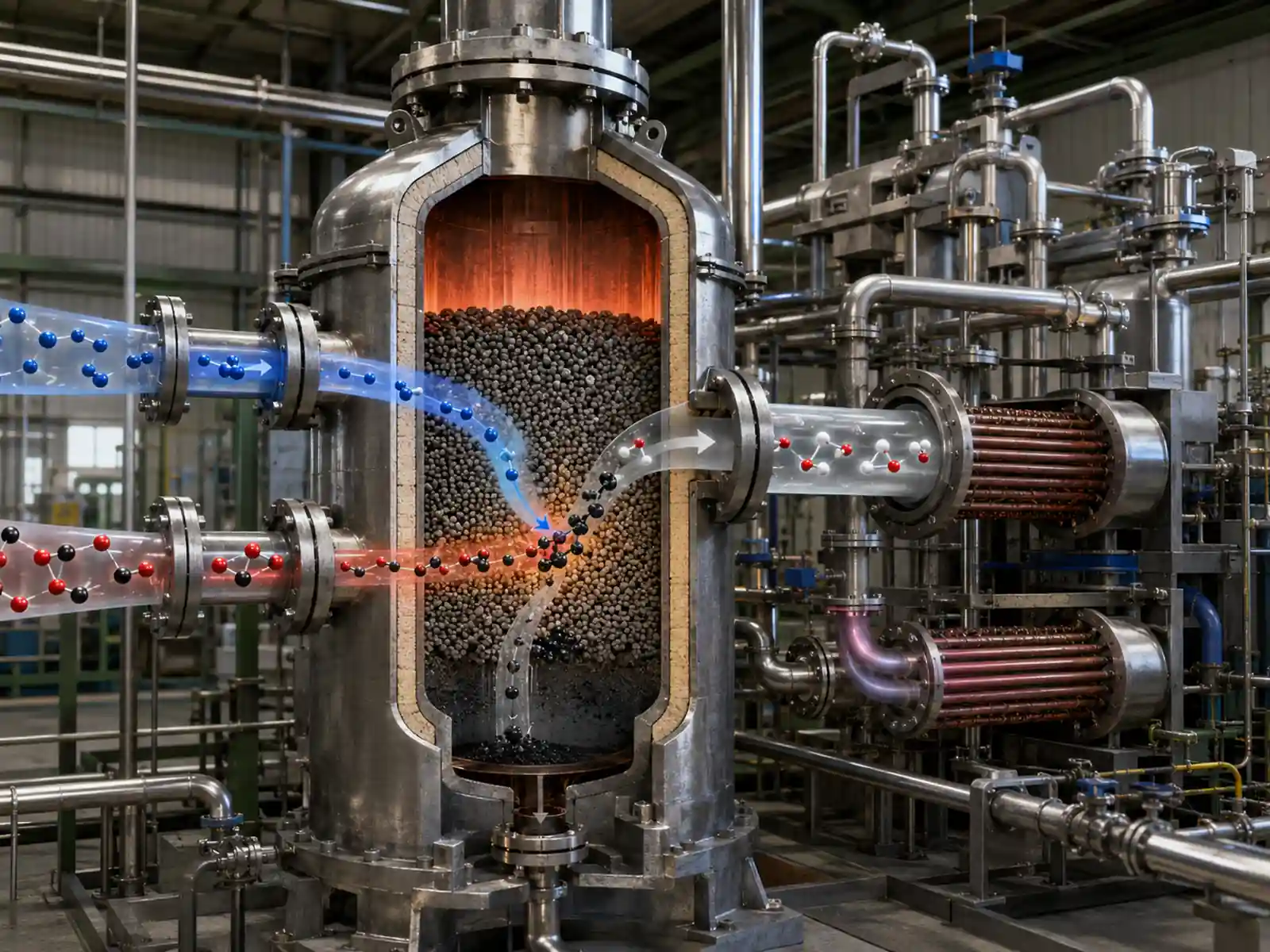
Bosch Reaction is a thermochemical process that reduces carbon dioxide with hydrogen to form solid carbon and water. The simplified reaction is CO2 + 2H2 -> C + 2H2O, usually requiring high temperature and a catalyst that can support carbon formation. It converts oxidized carbon into elemental carbon, so reaction conditions strongly affect yield, catalyst life, and carbon structure.
In real reactors, the process competes with side reactions and can be limited by catalyst deactivation as carbon deposits cover active sites. Iron, nickel, or related catalytic surfaces may be used, while temperature, gas ratio, residence time, and water removal control performance. It is relevant to solid carbon sequestration chemistry because the product can be handled as a material rather than a compressed gas. Used in devices include fixed-bed reactors, catalytic furnaces, hydrogen feed systems, carbon black collectors, gas analyzers, and heat recovery units.
The concept matters because it offers a route from captured CO2 to a stable or commercially useful solid. Its climate value depends on clean hydrogen, low-carbon heat, and whether the carbon product remains out of the atmosphere. Engineers also consider reactor fouling, catalyst replacement, and product morphology.
Example:
A hydrogen-fed catalytic reactor can convert a purified CO2 stream into water vapor and fine carbon powder.
Related Terms:
- Direct Air Capture
- Sabatier Reaction
- Catalysis
NoSuchDevice is a free archive of machines that do not exist yet but already have a shadow in physics. I research and write every entry alone, with no ads. Take a look around the archive, or help keep it free.