
What Is Direct Air Capture?
Direct Air Capture is a carbon removal process that separates carbon dioxide directly from ambient air rather than from a concentrated exhaust stream. Because atmospheric CO2 is dilute, the separation must contact very large air volumes and use selective chemistry. A simple material balance is m_CO2 = C_air x V_air x eta, where capture depends on concentration, processed air volume, and removal efficiency.
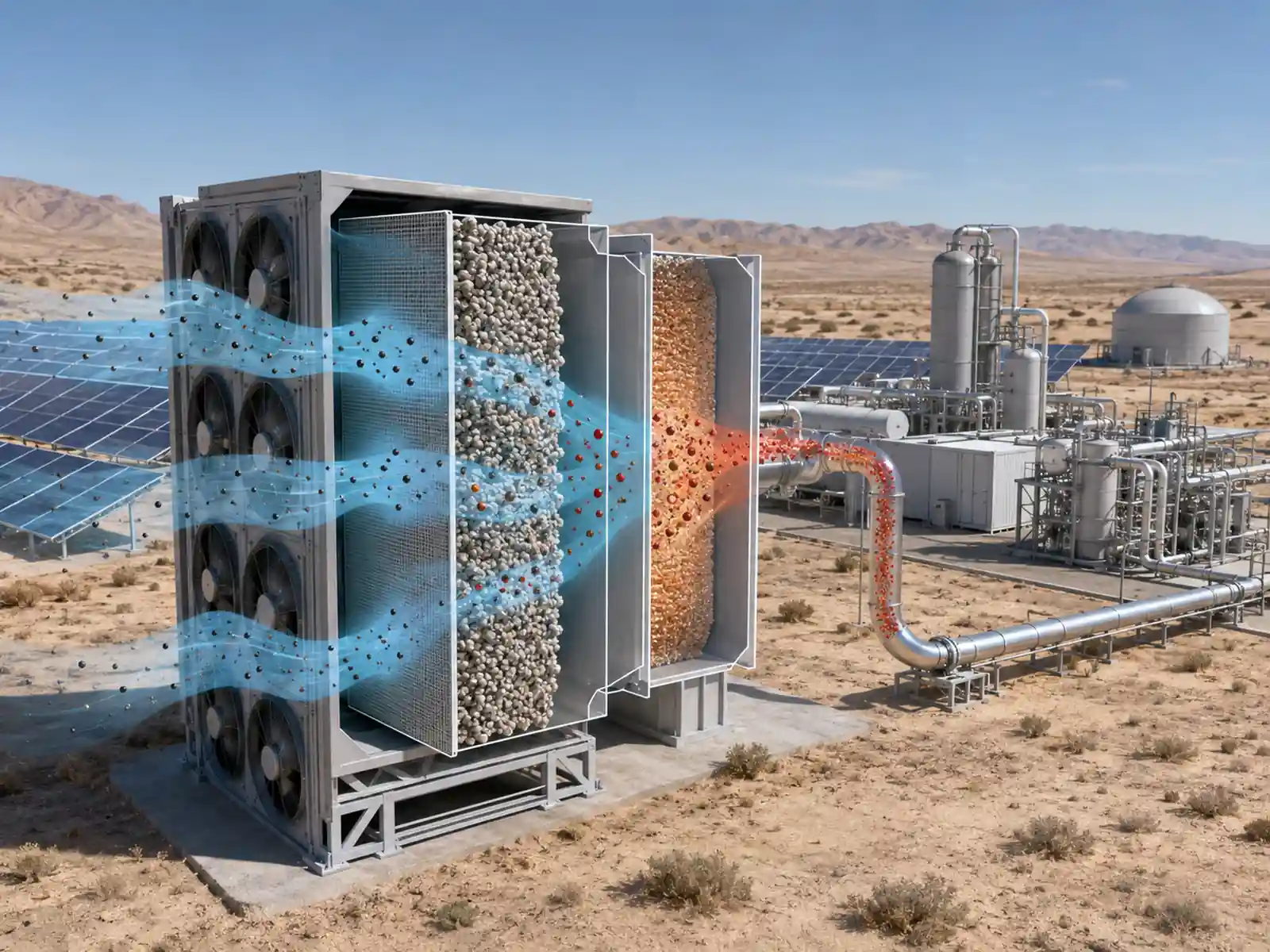
In real systems, fans move air across liquid solvents or solid sorbents that bind CO2 and later release it under heat, vacuum, humidity change, or electrochemical control. The concentrated gas can then be compressed, stored, mineralized, or converted into useful products. It appears in atmospheric carbon removal systems where capture is paired with durable downstream handling. Used in devices include air contactors, sorbent beds, vacuum desorption modules, CO2 compressors, mineralization reactors, and monitoring instruments.
The concept matters because it can address dispersed historical emissions that cannot be captured at a smokestack. Its limits are energy demand, sorbent lifetime, land use, water use, and the permanence of whatever happens to the captured carbon. Good designs therefore treat power source and storage pathway as part of the capture system.
Example:
A desert capture plant can pull CO2 from dry air and send the concentrated stream to a mineralization unit powered by solar electricity.
Related Terms:
NoSuchDevice is a free archive of machines that do not exist yet but already have a shadow in physics. I research and write every entry alone, with no ads. Take a look around the archive, or help keep it free.