




What Is Catalytic degradation?
Catalytic degradation is the chemical breakdown of a compound at the surface of a catalyst that lowers the activation barrier for reaction. The catalyst participates in intermediate steps without being consumed in the overall stoichiometry, allowing unwanted molecules to be transformed into smaller or less harmful products. The process can involve oxidation, reduction, hydrolysis, or bond scission depending on the material and surrounding chemistry.
Reaction rate is often approximated as r = kC when concentration is low and active sites are far from saturation. In real reactors, performance depends on catalyst surface area, light or temperature input, residence time, fouling, and access of reactants to active sites. Catalytic degradation appears in emission control, polymer breakdown, wastewater treatment, and surface remediation systems where direct bulk chemistry would be too slow or too energy intensive.
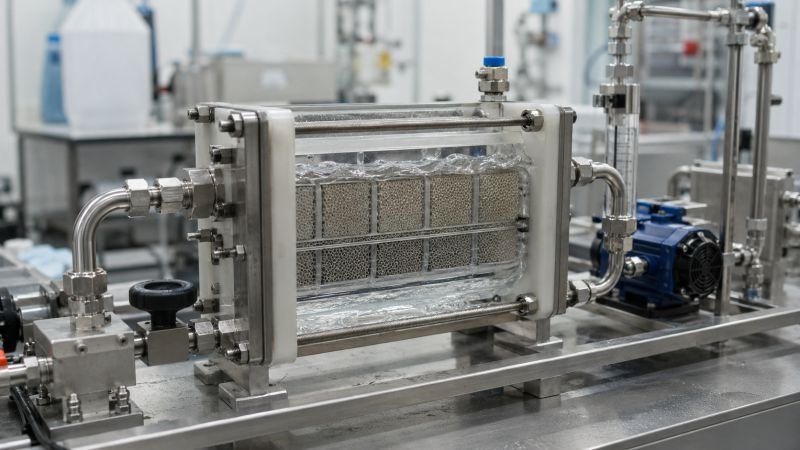
The concept matters because it allows engineered surfaces to convert persistent chemicals under controlled operating conditions rather than simply trap them. In pollutant neutralization systems, catalytic degradation can reduce organic contaminants after detection and contact at small scales. Used in devices include catalytic converters, photocatalytic reactors, coated filtration media, and chemical treatment modules designed for continuous flow environments.
Example:
A titanium dioxide coated surface can accelerate breakdown of hydrocarbon residues when exposed to ultraviolet light and flowing water.
Related Terms:
- Electrodeposition
- Chelating Ligands
- Catalyst Surface Area
NoSuchDevice is a free archive of machines that do not exist yet but already have a shadow in physics. I research and write every entry alone, with no ads. Take a look around the archive, or help keep it free.