



What Is Cavitation?
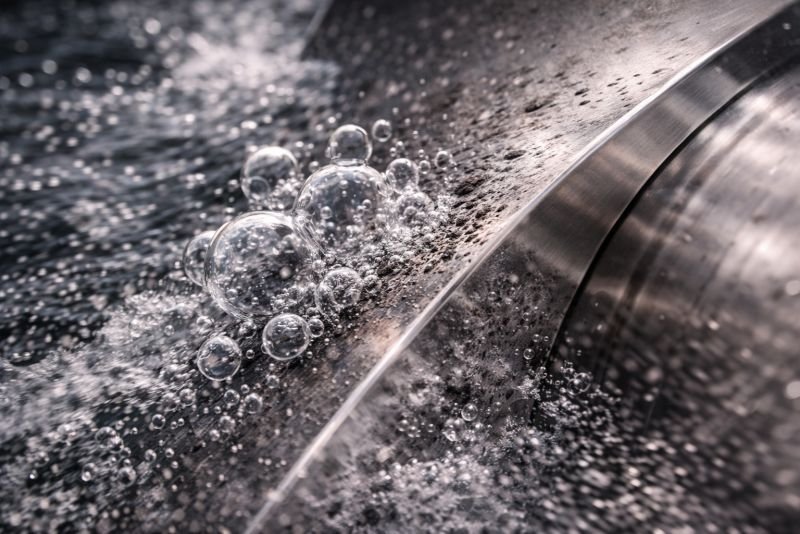
Cavitation is the formation of vapor bubbles inside a liquid when local static pressure falls below the liquid’s vapor pressure. In hydro power, this usually happens where water accelerates sharply around runner blades, guide vanes, or nozzles. A useful indicator is the cavitation number, sigma = (p – p_v) / (0.5 rho v^2), which compares pressure margin to dynamic loading in the flow.
The danger is not the bubbles themselves but their collapse. When they move into a region of higher pressure, they implode and create intense micro-jets and shock loads at the metal surface. In a long Penstock or inside a turbine runner, rough flow, rapid curvature changes, and local Turbulence can make these low-pressure pockets more likely.
The concept matters because cavitation limits how much head and velocity a machine can use before efficiency and durability begin to fall. In hydroelectric turbine fluid design, engineers use pressure margins, blade geometry, submergence, and operating envelopes to prevent pitting damage, vibration, acoustic noise, and costly maintenance across real operating ranges. It also influences material choice, inspection intervals, and acceptable off-design operation during changing demand.
Example:
A Pelton nozzle operating at very high jet speed can trigger bubble collapse near metal surfaces and gradually pit the surrounding hardware.
Related Concepts:
- Vapor Pressure
- Pressure Recovery
- Runner Erosion
NoSuchDevice is a free archive of machines that do not exist yet but already have a shadow in physics. I research and write every entry alone, with no ads. Take a look around the archive, or help keep it free.