





What Is Chemical Oxygen Demand (COD)?
Chemical oxygen demand (COD) is a laboratory measure of the oxygen equivalent required to chemically oxidize organic and oxidizable inorganic compounds in water or sludge samples. It is reported in mg/L as O2 and serves as a fast proxy for pollution strength and biodegradable load entering treatment systems. A basic removal metric is COD removal (%) = ((COD_in – COD_out) / COD_in) x 100.
In digestion and wastewater operations, COD is used to set loading rates, compare influent variability, and evaluate conversion efficiency across process stages. While it does not directly measure biodegradability, trend data helps operators identify overload conditions and treatment bottlenecks. Engineers apply organic load quantification in bioenergy treatment engineering to link COD mass balance with gas production expectations.
Why It Matters: COD provides a standardized control variable for process design, compliance reporting, and plant optimization across municipal and industrial facilities. Reliable COD tracking improves feed blending, reactor sizing, and energy recovery forecasting, and it supports decisions that reduce discharge impacts while maintaining robust treatment performance.
Used In Devices:
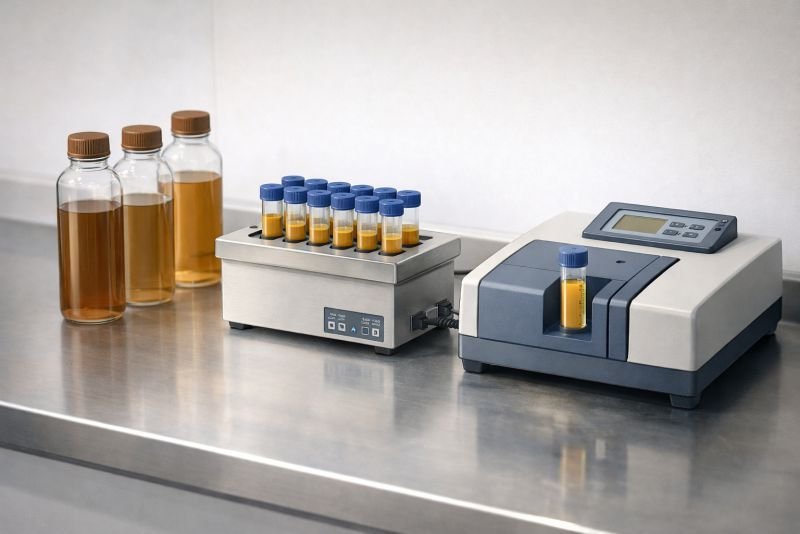
- COD Digestion Reactor Block
- Spectrophotometric COD Analyzer
- Automated Wastewater Sampler
Example:
A plant compares influent and effluent COD daily to verify that digester loading remains within design limits.
Related Concepts:
- Anaerobic Digestion
- Volatile Fatty Acids
- Biochemical Oxygen Demand
NoSuchDevice is a free archive of machines that do not exist yet but already have a shadow in physics. I research and write every entry alone, with no ads. Take a look around the archive, or help keep it free.