




What Is Volatile Fatty Acids?
Volatile fatty acids are short-chain carboxylic acids, mainly acetic, propionic, and butyric acids, formed during fermentation of organic matter in oxygen-free systems. They are key intermediates between hydrolysis and methane formation, and their concentration reflects microbial balance in digesters. A common relationship is alkalinity ratio = VFA / Alkalinity, used as a practical stability indicator.
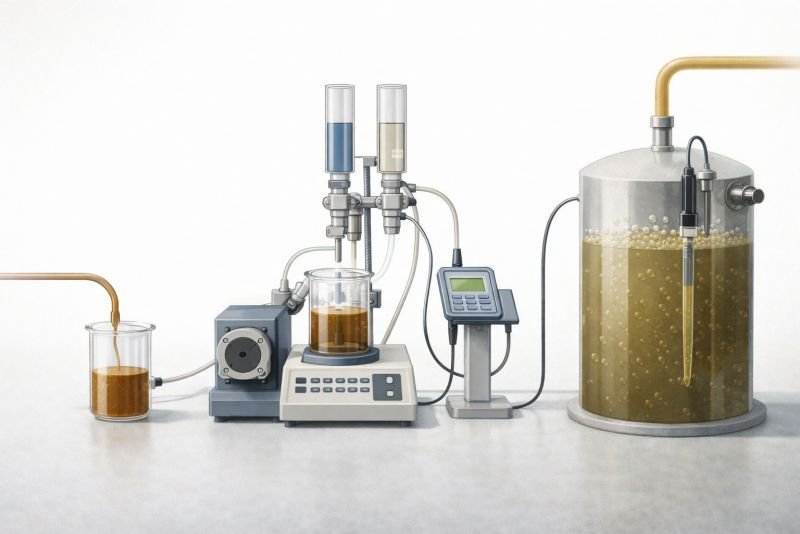
In full-scale plants, VFAs rise when acid-forming bacteria produce intermediates faster than methanogens consume them. This causes pH decline, inhibition risk, and lower methane yield unless loading and buffering are adjusted. Operators use sampling and titration data to interpret anaerobic process chemistry in biomass conversion systems and keep conversion pathways coupled.
Why It Matters: VFA accumulation is one of the earliest warning signs of digester instability, so it supports preventive control before severe souring occurs. Tracking these acids improves feed strategy, supports reliable gas output, and helps avoid long recovery periods after overload events in municipal and industrial treatment operations.
Used In Devices:
- Digester Sampling Manifold
- Online Titration Analyzer
- pH And Alkalinity Control System
Example:
After a sudden increase in food waste feed, propionic acid concentration rises and operators reduce loading to restore balance.
Related Concepts:
- Methanogenesis
- Chemical Oxygen Demand (COD)
- Buffer Capacity
NoSuchDevice is a free archive of machines that do not exist yet but already have a shadow in physics. I research and write every entry alone, with no ads. Take a look around the archive, or help keep it free.