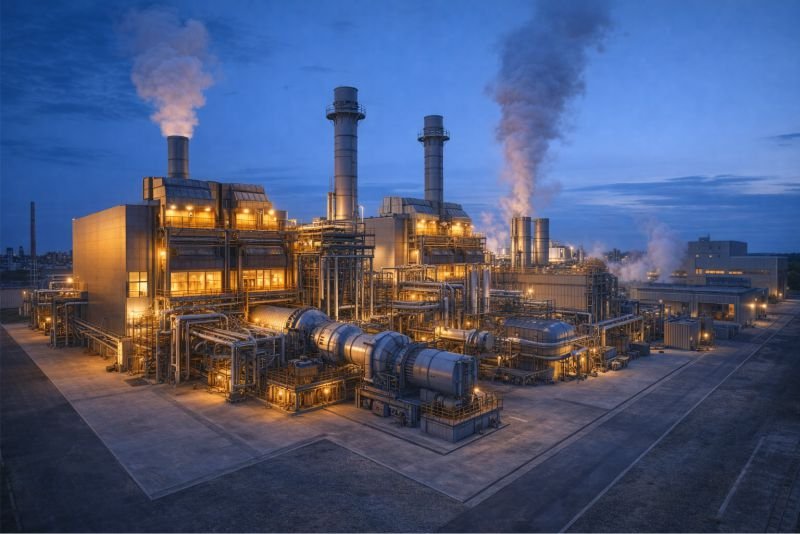


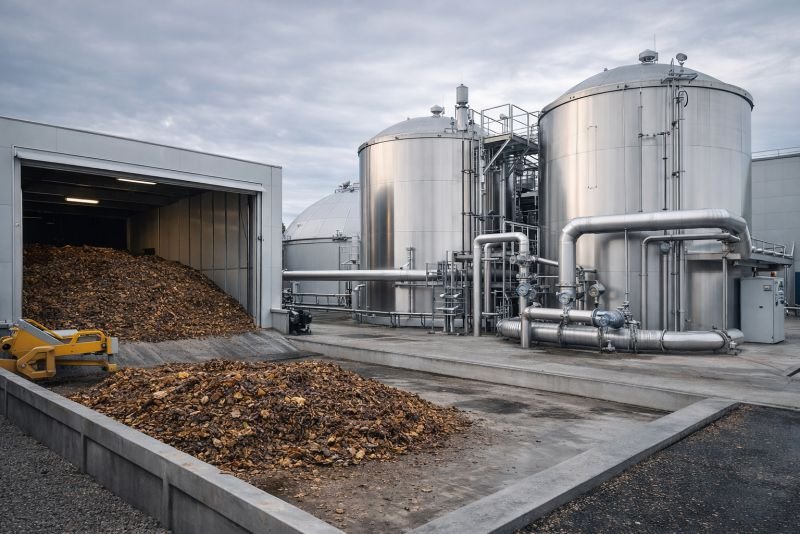
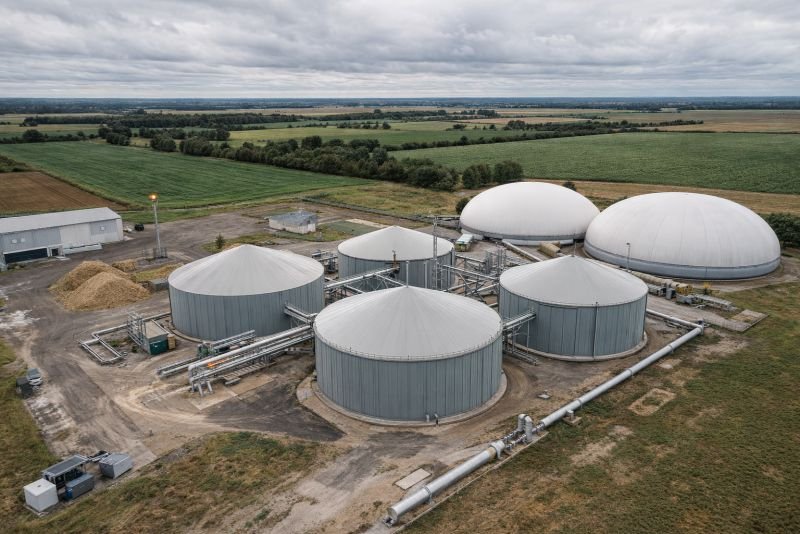
Every day, the Geesink biogas plant on the outskirts of Amsterdam receives truckloads of kitchen scraps, crop residues, and food processing waste. The trucks tip their loads into sealed receiving halls. The material is shredded, diluted with water, and pumped into tall cylindrical tanks where it disappears from view. Several weeks later, a mixture of gases rises from the same material and is fed into the local energy grid. The organic matter has not been burned. No flame was involved at any point.
A population of microorganisms invisible to the naked eye carried out the entire conversion in the dark, in sealed vessels, without a single molecule of oxygen.
The short version: Anaerobic digestion is a biological process in which microorganisms break down organic matter in the absence of oxygen and produce methane-rich biogas as a byproduct. A well-operated digester running on food waste or manure typically converts 50 to 70 percent of the organic material into gas, yielding biogas that is 55 to 70 percent methane by volume. The remaining solid material, called digestate, is a nutrient-rich substance usable as agricultural fertilizer. The process occurs naturally in swamps, wetlands, and the digestive tracts of ruminant animals. Engineers have been running controlled versions of it for over a century.
Table of Contents
What Anaerobic Digestion Actually Is
The word anaerobic describes conditions without oxygen. In any environment where organic matter accumulates and oxygen is excluded, a specific community of microorganisms begins to consume the material and release gases. Wetland sediments do this. Lake beds do this. The rumen of a cow does this continuously. The process is not an invention. It is a feature of microbial life that has operated on Earth for billions of years, long before oxygen became abundant in the atmosphere.
What anaerobic digestion produces is not a single gas but a mixture. Methane is the dominant component, typically comprising 55 to 70 percent of the output by volume. Carbon dioxide makes up most of the remainder. Trace quantities of hydrogen sulfide and ammonia are also present. The methane fraction is what gives the gas its energy value. Raw biogas has a lower heating value of approximately 20 to 25 megajoules per cubic meter, compared to natural gas at around 36 megajoules per cubic meter. Upgraded biogas, from which the carbon dioxide has been removed, approaches the energy density of pipeline-quality natural gas.
The Four Microbial Stages of Biogas Production
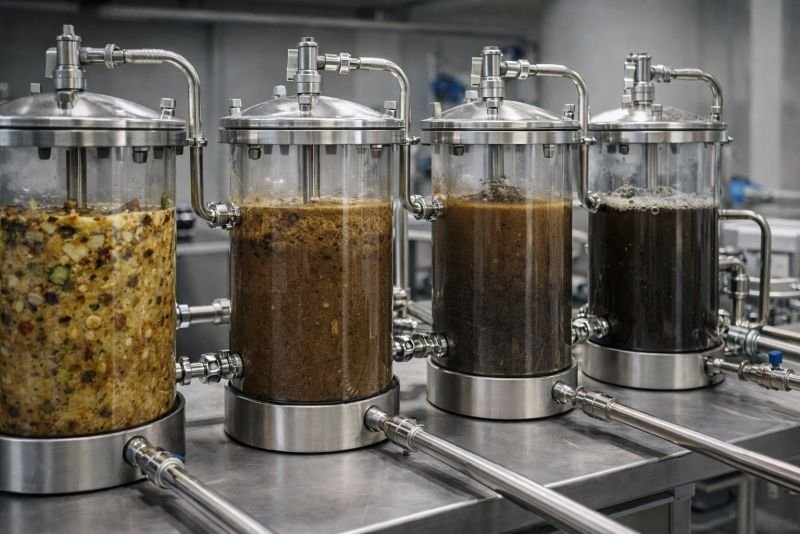
Anaerobic digestion is not a single reaction. It is a cascade of four distinct biological stages, each carried out by a different community of microorganisms, each producing outputs that the next community consumes. Understanding this sequence is essential to understanding both how the process works and where it can fail.
Hydrolysis: Breaking Polymers Into Monomers
Organic matter in its raw form is mostly composed of large, complex molecules: cellulose, hemicellulose, proteins, and fats. Bacteria cannot consume these directly. In the first stage, a group of hydrolytic bacteria secrete enzymes that break these polymers into their component monomers. Cellulose becomes glucose. Proteins become amino acids. Fats become glycerol and long-chain fatty acids. The rate of hydrolysis is often the slowest step in the entire chain, especially for lignocellulosic feedstocks like straw or wood, where the cellulose is bound tightly within a lignin matrix that resists enzymatic attack.
Acidogenesis and Acetogenesis: The Intermediate Conversions
The monomers produced by hydrolysis are consumed by a second group of bacteria called acidogens. These organisms convert sugars, amino acids, and fatty acids into a range of volatile fatty acids, primarily acetic acid, propionic acid, and butyric acid, along with hydrogen gas and carbon dioxide. The volatile fatty acids are then taken up by acetogens, which convert the longer-chain acids into acetate, hydrogen, and carbon dioxide. This step is thermodynamically unfavorable under many conditions. Acetogens can only complete it when hydrogen is rapidly consumed by another organism nearby, keeping the hydrogen concentration low enough for the reaction to proceed.
Methanogenesis: Where Methane Is Made
The final stage belongs to the methanogens, a group of archaea that are among the most ancient organisms on Earth. Methanogens consume two types of substrates. Acetoclastic methanogens split acetate into methane and carbon dioxide. Hydrogenotrophic methanogens combine hydrogen with carbon dioxide to produce methane. Most of the methane in a biogas reactor, roughly 70 percent, comes from the acetoclastic pathway.
Methanogens are strict anaerobes. Even a brief exposure to oxygen kills them. They are also sensitive to temperature fluctuations, low pH, and the accumulation of ammonia or sulfide. When the upstream stages of digestion run faster than methanogens can process the products, volatile fatty acids accumulate, pH drops, and the process becomes inhibited. This instability is one of the primary engineering challenges in running a digester reliably.
The Biochemistry of Methane Yield
How much methane can a given feedstock theoretically produce? The answer depends on the elemental composition of the organic material, and it can be calculated from a stoichiometric formula known as the Buswell equation.
For any organic compound with the formula C_n H_a O_b N_c, the theoretical methane yield is:
Methane yield (L/g VS) = (22.4 / M) x (n/2 + a/8 – b/4 – 3c/8)
Here, M is the molecular weight of the compound in grams per mole, n is the number of carbon atoms, a is the number of hydrogen atoms, b is the number of oxygen atoms, and c is the number of nitrogen atoms. The result gives the volume of methane produced per gram of volatile solids destroyed, under standard conditions.
Apply this to glucose, a simple sugar with the formula C6H12O6, and a molecular weight of 180 g/mol:
Methane yield = (22.4 / 180) x (6/2 + 12/8 – 6/4) = (0.124) x (3 + 1.5 – 1.5) = 0.124 x 3 = 0.373 L CH4 per gram VS
One gram of glucose, completely digested, should theoretically yield 0.373 liters of methane at standard temperature and pressure. In practice, real feedstocks are more complex and digesters never reach theoretical efficiency. Food waste typically yields 400 to 500 liters of biogas per kilogram of volatile solids. Cattle manure, which is already partially degraded by the animal’s own digestion, yields closer to 200 to 300 liters. The Buswell calculation establishes the ceiling. Real systems operate somewhere below it.
Everything here is free. Readers are the reason it stays that way.
I make all of it alone, with no ads. If it is worth a coffee a month to you, that keeps the next one coming.
Keep it alive →Variables That Control Anaerobic Digestion Performance
Several environmental parameters determine whether a digester runs at full capacity, reaches inhibited equilibrium, or fails completely.
| Parameter | Optimal Range | Effect of Deviation |
|---|---|---|
| Temperature | 35-37°C (mesophilic) or 52-55°C (thermophilic) | Outside range: methanogen activity drops sharply |
| pH | 6.8 to 7.2 | Below 6.5: acid inhibition; above 8.0: ammonia toxicity |
| C:N ratio | 20:1 to 30:1 | Too low: ammonia buildup; too high: nutrient limitation |
| Hydraulic retention time | 15 to 30 days (mesophilic) | Too short: washout of slow-growing methanogens |
| Volatile solids loading | 2 to 4 kg VS/m3/day | Overloading causes acid accumulation and pH crash |
Temperature is the most significant single variable. Anaerobic digestion operates in two main temperature regimes. Mesophilic digestion, at around 35 to 37 degrees Celsius, is slower but more stable. Thermophilic digestion, at 52 to 55 degrees, produces gas faster and sanitizes the feedstock more thoroughly, but is more sensitive to disturbance and costs more energy to maintain. The choice between the two is an engineering decision that depends on feedstock type, required throughput, and available heat sources.
What happens to pH directly determines what happens to the microbial community. Acidogenic bacteria are relatively tolerant of low pH. Methanogens are not. If volatile fatty acids accumulate faster than methanogens can convert them, pH drops below 6.5 and methanogenesis becomes inhibited in a feedback loop that can crash the entire reactor within days. Preventing this requires monitoring and adjusting feeding rates continuously.
Physical Limits the Biology Cannot Escape
Every biochemical system is subject to thermodynamic constraints that no engineering improvement can remove. Anaerobic digestion faces several of these.
The conversion of organic matter to methane is an exothermic process overall, but some intermediate reactions are endothermic and require continuous energy input in the form of metabolic coupling between organisms. Acetogens and hydrogenotrophic methanogens must live in close physical proximity for interspecies hydrogen transfer to maintain the low hydrogen partial pressures that make acetogenesis thermodynamically possible. The maximum practical hydrogen partial pressure for this to work is below 10 to 100 Pascal. Above this threshold, acetogenesis stops.
Lignin is biologically inert under anaerobic conditions. The enzymes and radical chemistry needed to break lignin bonds require oxygen. This means that lignocellulosic feedstocks such as wood, straw, and many agricultural residues cannot be fully digested without some form of pre-treatment to open the cellulose structure before feeding. Even with pre-treatment, the lignin fraction passes through the digester essentially unchanged.
The maximum methane yield from a real organic substrate is always lower than the theoretical value because a fraction of the organic material is consumed by the microbial community itself for cell growth and maintenance. Typically, 5 to 10 percent of the volatile solids are incorporated into new biomass and never converted to gas. This microbial growth is not waste: the resulting biomass contributes to the digestate, which retains its fertilizer value.
How Engineers Turn Microbial Chaos Into a Controlled Process
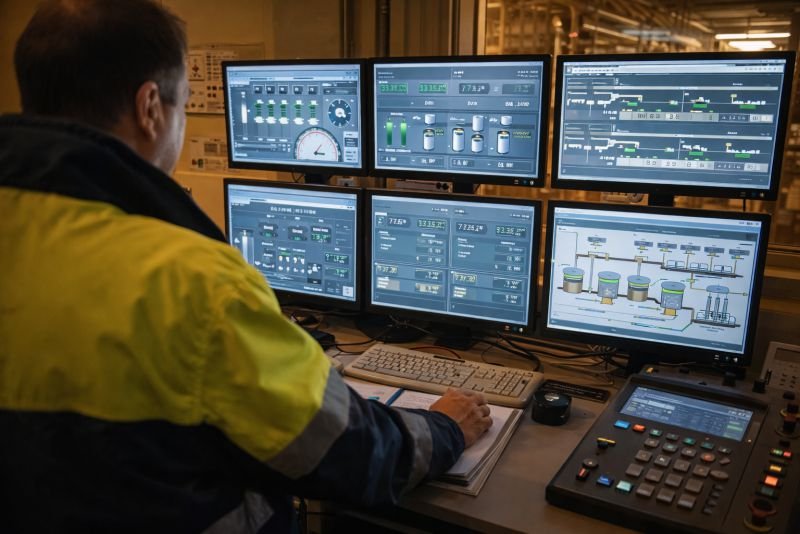
Running a large-scale digester means managing a community of tens of thousands of microbial species that have never been domesticated and cannot be directly instructed. Engineers do not control the microbes. They control the environment until the microbes do what is needed.
The primary control tools are temperature, feedstock composition, mixing, and retention time. Temperature is maintained using heat exchangers and waste heat from the combustion of biogas, which creates a partial energy recycling loop. Feedstock composition is managed by blending different input streams to hit target carbon-to-nitrogen ratios and avoid overloading with any single substrate. Mixing ensures that fresh substrate reaches the microbial community and that gas bubbles are released from the liquid surface rather than trapped in floating scum layers.
Hydraulic retention time, the average time a unit of feedstock spends inside the digester, is set by the volume of the tank and the daily feedstock input volume. For mesophilic digesters, 20 to 30 days is typical. Setting the retention time too short risks washing out methanogens, which divide slowly and need time to establish stable populations. Setting it too long increases the required tank volume and capital cost without proportionate gains in gas yield.
Digestate management is the part of anaerobic digestion most often overlooked in discussions of biogas. The liquid and solid fractions that leave a digester are rich in nitrogen, phosphorus, and potassium. Applied to agricultural land, digestate performs comparably to synthetic fertilizer while also returning organic matter to the soil. In regions where synthetic fertilizer use is regulated, digestate has direct economic value. Getting that value realized requires separation equipment, storage capacity, and transport logistics that add to the cost and complexity of a digester operation.
Unanswered Questions in Anaerobic Digestion Science
For a process that has been industrially applied since the early twentieth century, anaerobic digestion still holds open scientific questions. The microbial ecology of full-scale digesters is complex enough that researchers cannot fully predict how a given microbial community will respond to a change in feedstock or temperature. High-throughput sequencing has revealed that the communities in operating digesters contain dozens of functionally important species that were not previously identified and whose metabolic roles remain unclear.
Direct interspecies electron transfer is one mechanism that is still being characterized. Certain microorganisms in anaerobic digesters appear to exchange electrons directly through conductive structures or through conductive minerals, bypassing the hydrogen transfer pathway entirely. This could explain why some digesters perform better than standard models predict and could eventually be exploited to improve efficiency.
The degradation of microplastics in anaerobic digesters is an emerging concern. Sewage sludge digesters receive large quantities of microplastic particles from wastewater treatment influent. Whether the digestion process degrades, fragments, or concentrates these particles, and what effect they have on the microbial community, is an active area of research without fully settled answers.
What Anaerobic Digestion Makes Possible at Scale
Anaerobic digestion is already a mature technology in Europe and parts of Asia, with thousands of operating plants ranging from farm-scale units processing hundreds of tonnes per year to centralized facilities handling hundreds of thousands. Germany has over 9,000 agricultural biogas plants. The UK uses anaerobic digestion to process more than 50 percent of its municipal sewage sludge. What remains undeveloped is the upper limit of what the process could do if applied more systematically.
The global potential for biogas production from agricultural waste, food waste, wastewater sludge, and municipal solid organic fractions is estimated by the International Energy Agency at over 570 billion cubic meters per year. That figure represents an energy quantity equivalent to roughly 14 percent of global natural gas consumption in 2023. Most of that potential currently goes unrealized because the organic material is landfilled, composted aerobically, or left to decompose in open conditions where its methane emissions become a liability.
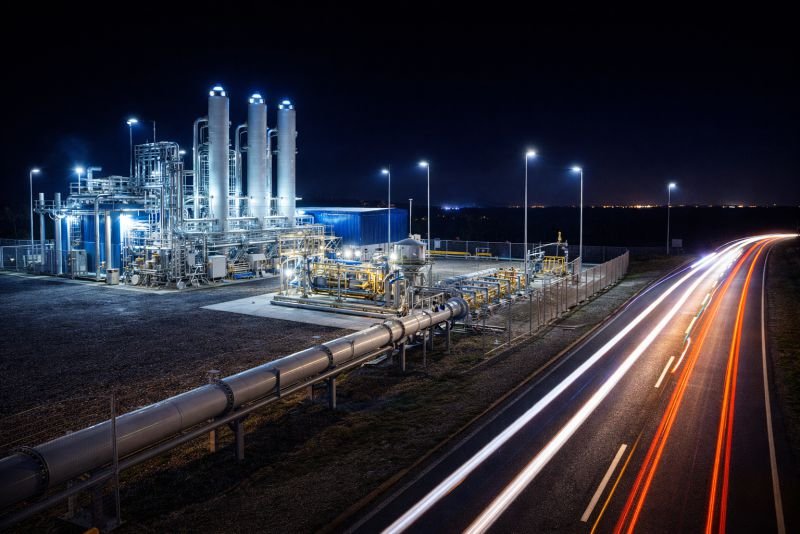
Upgrading biogas to biomethane by removing carbon dioxide produces a gas indistinguishable in composition and energy density from fossil natural gas. Biomethane can be injected directly into existing gas distribution networks, used to fuel compressed natural gas vehicles, or converted to electricity in gas turbines. The process does not require new infrastructure. It runs on waste that is generated continuously. Anaerobic digestion is not an emerging concept waiting for physics to catch up. The science is understood. The biology works. The question is whether the economics and logistics of large-scale deployment can be resolved.
You read the whole thing.
That is rarer than it should be, and it is the exact kind of attention I built this archive for. I make every piece alone, with no ads and no investor deciding what gets written. If you want the next machine taken apart like this one, you can help me make it.
A coffee a month is enough to keep it free for everyone.
Prefer crypto or a one time gift? Other ways to give →
Technologies Related to This Concept
| Technology | Concept |
|---|---|
| Kitchen Waste to Biogas – The Future of Home Cooking | Concept: Compact biogas digesters that convert food scraps into methane gas for cooking. |
| Home Bio-Reactors Utilizing Sewage Waste | Concept: Systems that safely process human waste to generate biogas. |
| Hybrid Bio-Reactors Using Anaerobic and Aerobic Processes | Concept: Combining anaerobic and aerobic digestion for more efficient waste-to-energy conversion. |
| Thermophilic Bio-Reactors for Increased Efficiency | Concept: Using heat-loving bacteria to enhance waste breakdown. |
| Bio-Reactors Utilizing Agricultural Waste | Concept: Processing garden and yard waste to produce bioenergy. |