



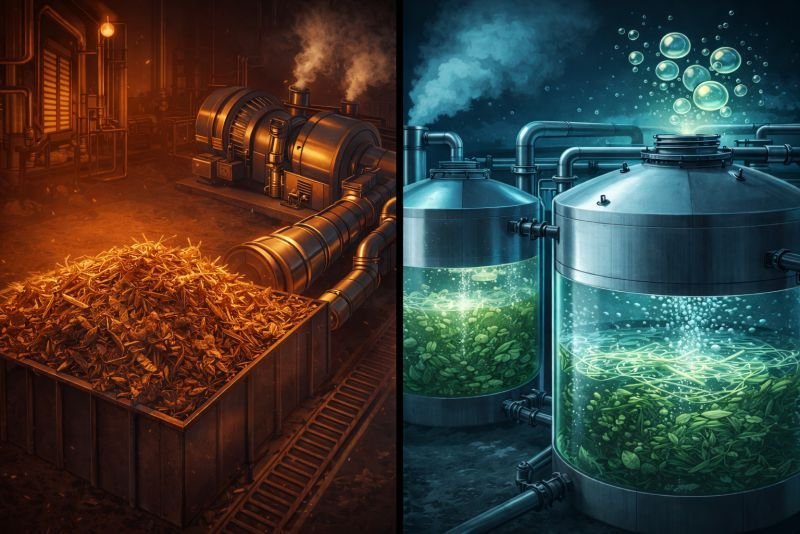
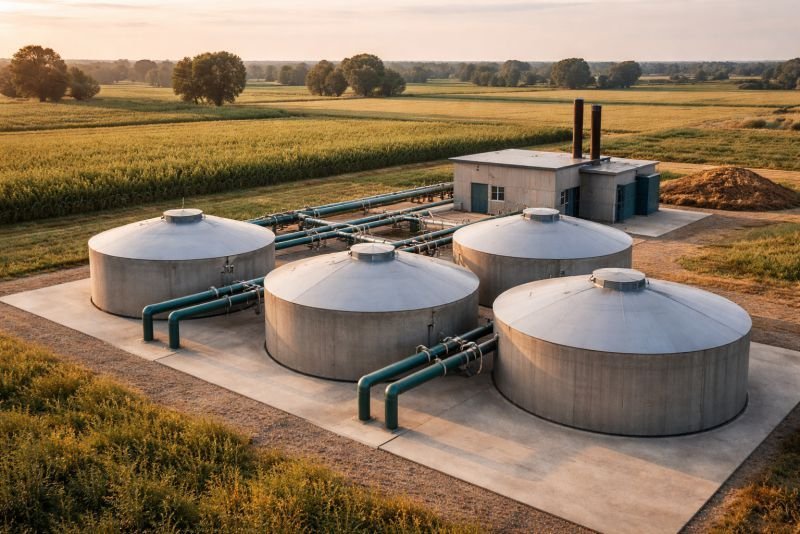
Inside a biogas plant in Rajasthan, India, workers feed tens of tonnes of sugarcane bagasse into sealed concrete tanks every morning. The material is not burned. It is not processed with chemicals. It simply sits in the dark, submerged in water, and within three weeks it begins to produce a combustible gas that powers a small turbine generator serving a nearby village. The tanks look completely unremarkable from the outside. The biology happening inside them is anything but.
What those tanks are doing is unlocking energy that was captured from sunlight months earlier, stored inside the chemical structure of a plant, and is now being released by microorganisms that have been running this same process for hundreds of millions of years. Bioenergy is not a new idea. It is one of the oldest energy transactions on the planet, and we are only just beginning to engineer it seriously.
The short version: Plants capture solar energy and lock it into chemical bonds during photosynthesis. Those bonds can be broken later, either by burning the material or by letting microbes digest it, releasing heat and combustible gas. Dry wood releases around 18 megajoules of energy per kilogram when burned. A tonne of food waste fed into a sealed digestion tank can produce enough biogas to run a 50-kilowatt generator for hours. Which pathway works better depends almost entirely on what the biomass is made of, and one molecule in particular makes everything more complicated than it looks.
Table of Contents
What a Plant Actually Stores When It Grows
Every piece of wood, every straw bale, every tonne of food waste sitting in a landfill contains energy that was once sunlight. The mechanism behind that is photosynthesis – a plant uses light to force a reaction between carbon dioxide from the air and water from the soil, producing glucose. That glucose, with its molecular formula C6H12O6, is then assembled into the structural materials of the plant: cellulose for strength, hemicellulose for flexibility, lignin for rigidity. The solar energy that drove the original reaction is now locked inside the chemical bonds of those materials.
When you combust wood or digest organic waste, you are essentially reversing that process. The bonds break, the energy releases, and carbon dioxide returns to the atmosphere. This is also why bioenergy gets described as carbon-neutral: the CO2 released during conversion is roughly the same amount the plant absorbed while growing.
Why some biomass holds more energy than others
Not all plant material stores energy equally. The key variable is molecular composition, specifically the ratio of carbon and hydrogen to oxygen already present in the molecule. The logic is straightforward: combustion is a reaction with oxygen from the air. If a molecule already contains a lot of oxygen atoms, fewer oxygen molecules need to participate in the reaction, and less energy is released as a result. Those internal oxygen atoms have, in a sense, already done part of the oxidation work before the match is even struck.
Dry wood sits around 50% carbon by mass and releases 18 to 20 megajoules per kilogram. Fats and oils, which are almost entirely carbon-hydrogen chains with very little internal oxygen, release over 37 megajoules per kilogram. Fresh sugarcane bagasse, soaking wet after harvest, delivers only 9 to 10 megajoules per kilogram – not because the organic chemistry is weaker, but because a huge fraction of its mass is water, which contributes no energy and actively absorbs energy during combustion just to evaporate.
That last point matters more than most people expect. It is not a minor efficiency penalty. It is the single largest variable in biomass combustion, and it determines which feedstocks should be burned and which should be digested instead.
Combustion: Burning the Stored Sun
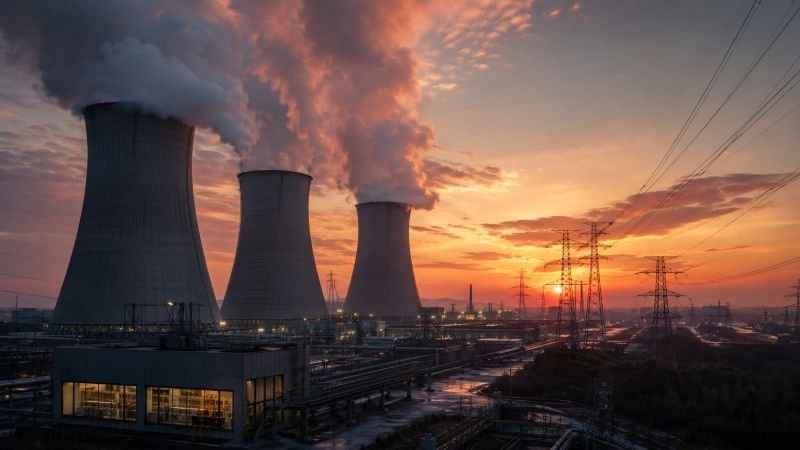
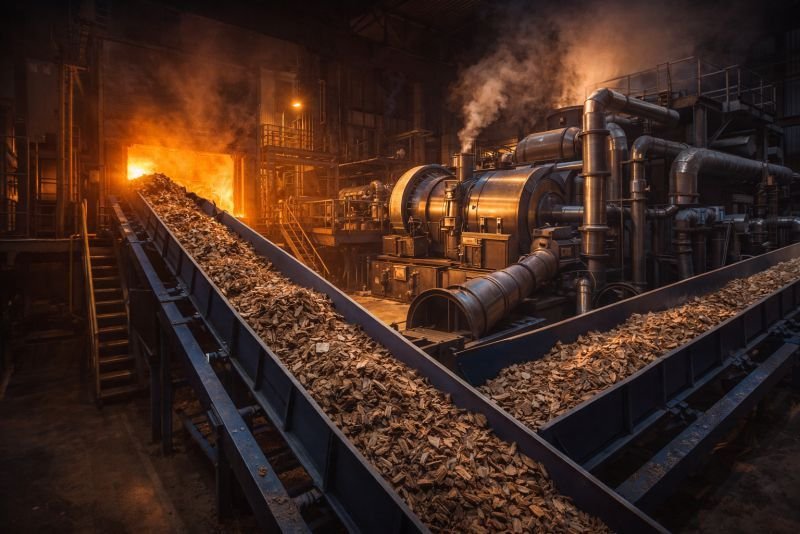
Direct combustion is the oldest and most widely used form of bioenergy conversion. A biomass fuel ignites in the presence of oxygen, the carbon and hydrogen in the material react rapidly, and the heat released drives a steam turbine or heats a building. Simple in concept. Considerably more complex in practice.
The chemical reaction for complete combustion of glucose looks like this:
C6H12O6 + 6O2 → 6CO2 + 6H2O + energy
One glucose molecule reacts with six oxygen molecules and produces six carbon dioxide molecules, six water molecules, and a release of 2,803 kilojoules per mole. To translate that into something tangible: one kilogram of dry wood contains roughly 3.1 moles of cellulose-equivalent glucose units. Combustion of that kilogram releases around 17,500 kilojoules, or about 4.9 kilowatt-hours. A modern wood-chip boiler captures roughly 85% of that as usable heat, meaning 4.2 kilowatt-hours per kilogram of dry fuel actually reaches the system.
That is enough heat to keep a well-insulated room warm for most of a winter day. From one kilogram of wood chips.
The water problem that engineers cannot work around
Every kilogram of water inside the fuel absorbs 2,260 kilojoules just to evaporate before any useful heat reaches the heat exchanger. A wood chip at 50% moisture content by weight spends almost half its gross combustion energy drying itself. That energy does not come back. It leaves the system as exhaust steam.
Industrial biomass plants pre-dry feedstock to below 15% moisture before combustion, which brings output close to the theoretical maximum. Field residues harvested wet, like rice straw cut directly after rain, often contain 60 to 70% moisture. At that level, direct combustion becomes energetically marginal. The fuel barely pays back the energy cost of burning it.
This is not a solvable problem through better boiler design. It is a thermodynamic constraint. The only solutions are to dry the material first, or to use a conversion pathway that tolerates water rather than fighting it. That second option is exactly where anaerobic digestion becomes relevant.
Beyond burning: gasification and pyrolysis
Combustion is not the only thermochemical option. Gasification heats biomass to between 700 and 1,000 degrees Celsius in a low-oxygen environment – not enough oxygen to combust it fully, but enough to break it apart into a mixture of carbon monoxide, hydrogen, and methane called syngas. This gas can be burned directly in a turbine or processed further into liquid fuels through chemical synthesis. Pyrolysis goes further still, applying heat in the complete absence of oxygen and producing bio-oil, biochar, and syngas in proportions that shift depending on temperature and heating rate. These routes are interesting precisely because they convert solid biomass into something a chemical engineer can handle as a feedstock, not just as a fuel to be incinerated.
Anaerobic Digestion: When Microbes Do the Work
Sealed concrete tanks in the dark, filled with organic slurry, kept at body temperature. It does not sound like an energy technology. But anaerobic digestion is, in many ways, a more elegant solution than combustion for wet organic materials, because it does not fight against the water content – it works in it.
The process relies entirely on communities of microorganisms that break down organic compounds without oxygen. In the absence of oxygen, certain bacteria shift their metabolic chemistry and use other molecules as electron acceptors during respiration. The end product of that metabolic chain is methane – a combustible gas that accumulates above the liquid and can be piped out, burned, or refined into fuel.
The four biological stages running inside every tank
Anaerobic digestion does not happen in a single reaction. Four distinct biological stages run in sequence, each carried out by a different community of microorganisms, each completely dependent on the output of the stage before it.
Hydrolysis comes first: bacteria release enzymes that break apart large complex molecules like cellulose and proteins into simple sugars and amino acids. Acidogenesis follows, where a different set of bacteria convert those simple compounds into volatile fatty acids, hydrogen, and carbon dioxide. Acetogenesis then converts those fatty acids into acetic acid and more hydrogen. Finally, methanogenesis – carried out by a group of ancient single-celled organisms called archaea – consumes the acetic acid and hydrogen and produces methane and carbon dioxide as end products.
Each stage depends on the previous one staying in balance. If acidogenesis accelerates faster than the methanogens can keep pace, acids accumulate in the tank, the pH drops, and the archaea die. The whole system collapses into an inert acidic slurry. Managing the stability of these microbial communities is the central engineering challenge of any biogas plant, and operators who run large digesters treat the microbial balance with the kind of attention a winemaker gives to fermentation.
Why temperature and residence time determine output
Methanogens work within two distinct temperature windows. Mesophilic digestion operates between 30 and 38 degrees Celsius and is the most common configuration in agricultural biogas plants. Thermophilic digestion runs hotter, between 50 and 57 degrees Celsius, and produces gas about 25% faster. The trade-off is sensitivity: thermophilic systems destabilize more easily under changes in feedstock composition or temperature, and they consume more energy to maintain operating conditions. Whether the speed gain justifies the added complexity depends on feedstock consistency and plant scale.
The other key variable is how long material spends inside the digester before being discharged. A cattle manure digester typically holds its feedstock for 20 to 30 days. Too short and the microbes have not finished processing the organic matter. Too long and the remaining material has become so resistant to digestion that extending the time yields almost nothing. Finding that window is part thermodynamic calculation, part operational experience built up over months of running the system.
Everything here is free. Readers are the reason it stays that way.
I make all of it alone, with no ads. If it is worth a coffee a month to you, that keeps the next one coming.
Keep it alive →How the Two Pathways Compare in Practice
Choosing between combustion and digestion is essentially a question about feedstock composition and water content. The numbers make the decision fairly clear.
| Feedstock | Pathway | Energy Yield | Notes |
|---|---|---|---|
| Dry wood chips (15% moisture) | Combustion | 17-19 MJ/kg | High yield, well-suited to direct combustion |
| Wet agricultural residue (60% moisture) | Combustion | 4-6 MJ/kg | Moisture penalty is severe |
| Cattle manure | Anaerobic digestion | 150-250 L biogas/kg VS | Yield varies with animal diet |
| Food waste | Anaerobic digestion | 400-600 L biogas/kg VS | High organic content, fast gas production |
| Lignocellulosic crops | Gasification + syngas | 12-15 MJ/kg | Intermediate step enables liquid fuel synthesis |
VS stands for volatile solids – the organic fraction that microorganisms can actually process, with ash, water, and inert minerals removed from the calculation before comparing yields.
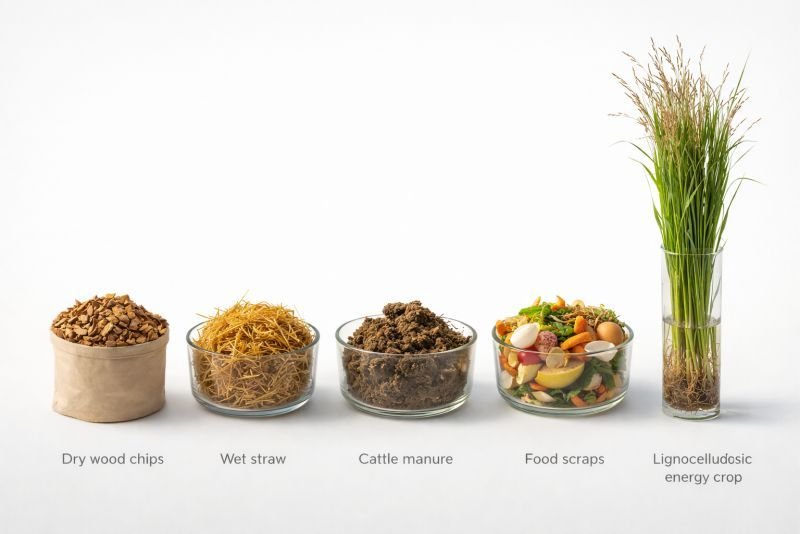
The pattern is consistent. Dry woody material combusts well. Wet organic waste digests well. Trying to combust wet waste produces the worst outcome: the moisture penalty can cut useful energy output by more than half, and the numbers stop making economic sense.
The Molecule That Resists Both Fire and Microbes
Cellulose breaks down reasonably well in a digester. Hemicellulose too. Then there is lignin, and lignin is a genuinely stubborn problem for both pathways.
Lignin is what makes wood hard. It fills the spaces between cellulose fibers, binding the entire structure together into something that can hold up a tree under decades of wind load and resist rot. Chemically, it is a three-dimensional aromatic network with no regular repeating unit – unlike cellulose, which has a clean, predictable structure that enzymes can grip and cleave predictably. Lignin offers no such foothold. Anaerobic microorganisms have almost no ability to break it down, so in a digester it passes through largely unchanged and accumulates in the solid output residue. In combustion it does burn, releasing around 26 megajoules per kilogram, but its aromatic chemistry tends to produce more incomplete combustion products at lower temperatures.
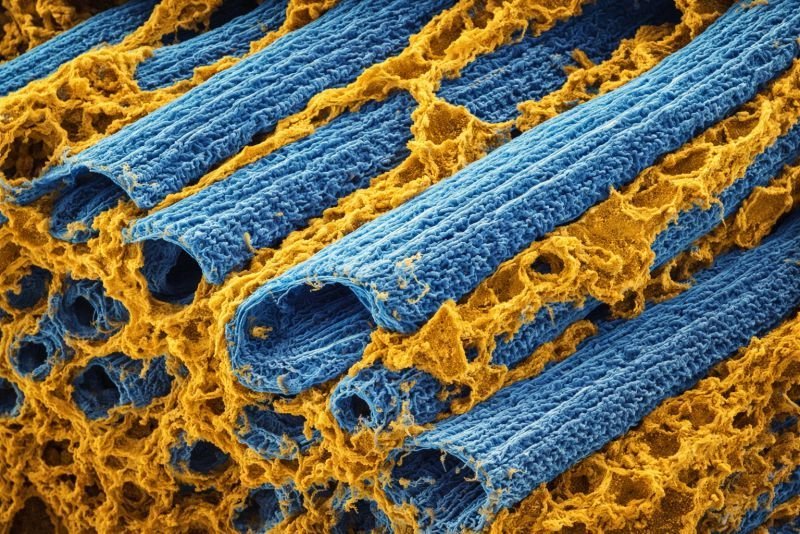
For herbaceous crops like grass or straw, lignin makes up 10 to 20% of dry mass, leaving the majority of the material accessible to microbes. Hardwoods contain 25 to 30% lignin, which substantially reduces how much a digester can convert. This is why woody feedstocks often require pretreatment before digestion – steam explosion, alkaline soaking, or enzymatic hydrolysis all work to disrupt the lignin matrix and expose the cellulose underneath. Each step adds cost and processing time before the digester even starts, and it is a significant reason why agricultural waste and food scraps remain more economically attractive digester feedstocks than wood.
Where the Energy Goes: Efficiency Ceilings and Real Numbers
Neither combustion nor digestion can recover all the energy stored in biomass. Thermodynamics sets hard limits, and knowing where the losses occur is the difference between a plant that makes economic sense and one that does not.
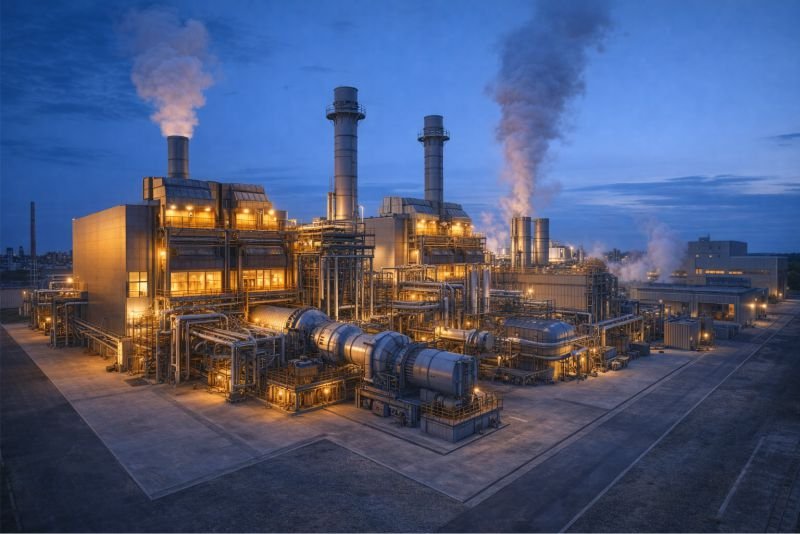
A combustion-based biomass power plant converts 20 to 30% of fuel energy into electricity. The rest exits as flue gas heat, radiation losses, turbine inefficiency, and the auxiliary power the plant consumes running its own fans, pumps, and controls. Combined heat and power systems push overall energy utilization to 70 to 85% by capturing that thermal output and directing it to district heating, industrial process heat, or drying incoming feedstock. The heat that would otherwise leave through a chimney does actual work.
Predicting methane output from feedstock chemistry
In anaerobic digestion, the theoretical methane yield from any organic material can be estimated using a measurement called chemical oxygen demand, or COD. COD quantifies how much oxygen would be needed to fully oxidize all the organic matter in a sample. Since each gram of COD converted to methane produces approximately 0.35 liters of methane at standard conditions, the COD value of a feedstock directly predicts its gas potential.
For a food waste stream with a COD of 250 grams per liter:
Methane yield = 250 g/L × 0.35 L CH4/g COD = 87.5 liters of methane per liter of feedstock
At a methane energy content of 35.8 megajoules per cubic meter, that works out to 87.5 × 10⁻³ m3 × 35,800 kJ/m3 = 3.13 megajoules of recoverable energy per liter of food waste. A 1,000-cubic-meter digester processing that feedstock would produce over 3,000 megajoules per day – enough to run a 50-kilowatt generator continuously, around the clock.
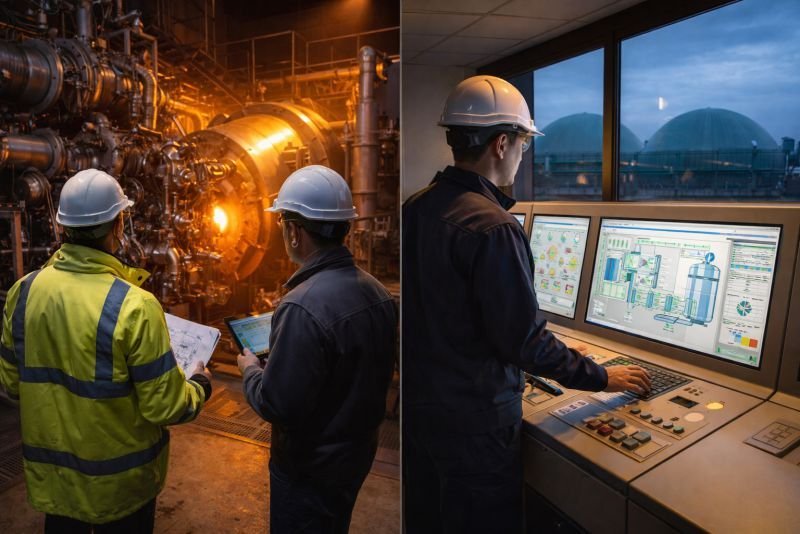
Real digesters reach 50 to 80% of their theoretical COD-derived yield. Some organic matter resists biodegradation. Some is consumed by microbial growth rather than converted to methane. Some methane dissolves in the liquid effluent or leaks before capture. The gap between the theoretical number and the operational result is where most of the engineering work actually lives.
What Bioenergy Research Is Actually Chasing
The most active area in bioenergy right now is not improving combustion or digestion. Those processes are well understood. The open question is whether the range of usable feedstocks can be dramatically expanded without competing with food production for agricultural land.
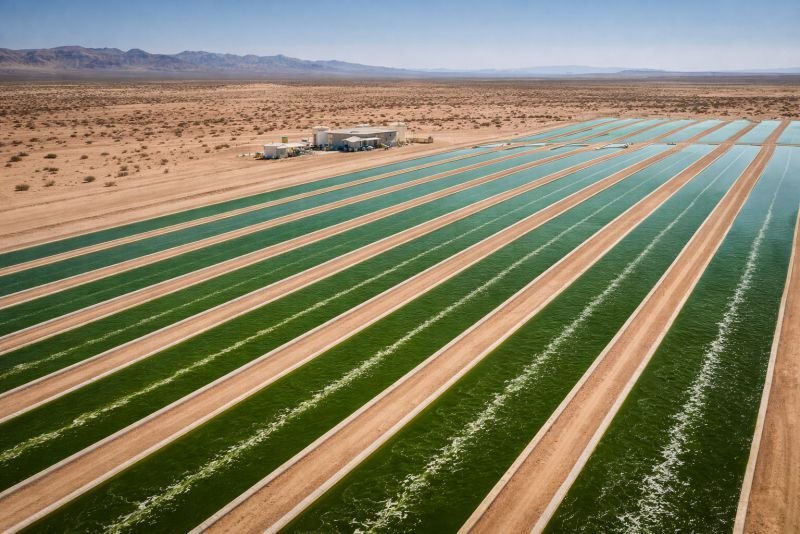
Microalgae look promising on paper. Under nutrient stress, some algae species accumulate lipids exceeding 50% of their dry mass, giving them an energy density approaching biodiesel at around 35 megajoules per kilogram of dry biomass. They can be grown on non-arable land using brackish water that crops cannot use. In principle, they sidestep the land competition problem entirely. In practice, growing, harvesting, and drying algae at industrial scale currently costs far more energy than the algae returns. No commercially viable large-scale system has been demonstrated. The physics supports the idea. The engineering has not yet caught up.
Consolidated bioprocessing takes a different approach. Researchers are engineering microbial strains that can produce the enzymes needed to break down lignin and cellulose, carry out the hydrolysis, and ferment the resulting sugars into fuel, all in a single vessel, without the separate pretreatment steps that currently make lignocellulosic conversion expensive. Laboratory strains have shown the concept works. Scaling it to industrial volumes is still an open problem.
The constraint that shapes every realistic long-term scenario for bioenergy is land. Growing dedicated energy crops requires agricultural area. The only way to avoid that conflict is to use materials that are already waste: crop residues left in fields, food scraps from cities, sewage sludge, organic industrial effluents. These materials currently decompose uncontrolled, releasing their stored carbon into the atmosphere for no useful purpose. Capturing that energy solves two problems simultaneously. It is probably the most defensible long-term trajectory bioenergy production has.
You read the whole thing.
That is rarer than it should be, and it is the exact kind of attention I built this archive for. I make every piece alone, with no ads and no investor deciding what gets written. If you want the next machine taken apart like this one, you can help me make it.
A coffee a month is enough to keep it free for everyone.
Prefer crypto or a one time gift? Other ways to give →
Technologies Related to This Concept
| Technology | Concept |
|---|---|
| Microbial Fuel Cells for Home Waste Management | Purifying raw biogas to pipeline-quality biomethane by removing CO2 |
| Algae-Powered Bio-Reactors for Domestic Energy | Concept: Home systems that use algae to digest organic waste and produce biofuels. |
| Kitchen Waste to Biogas – The Future of Home Cooking | Concept: Compact biogas digesters that convert food scraps into methane gas for cooking. |
| Fermentation-Based Home Energy Systems | Concept: Utilizing fermentation processes to convert waste into ethanol fuel. |
| Home Bio-Reactors Using Plasma Gasification | Concept: Breaking down waste at the molecular level using plasma. |