



What Is Coronal mass ejection?
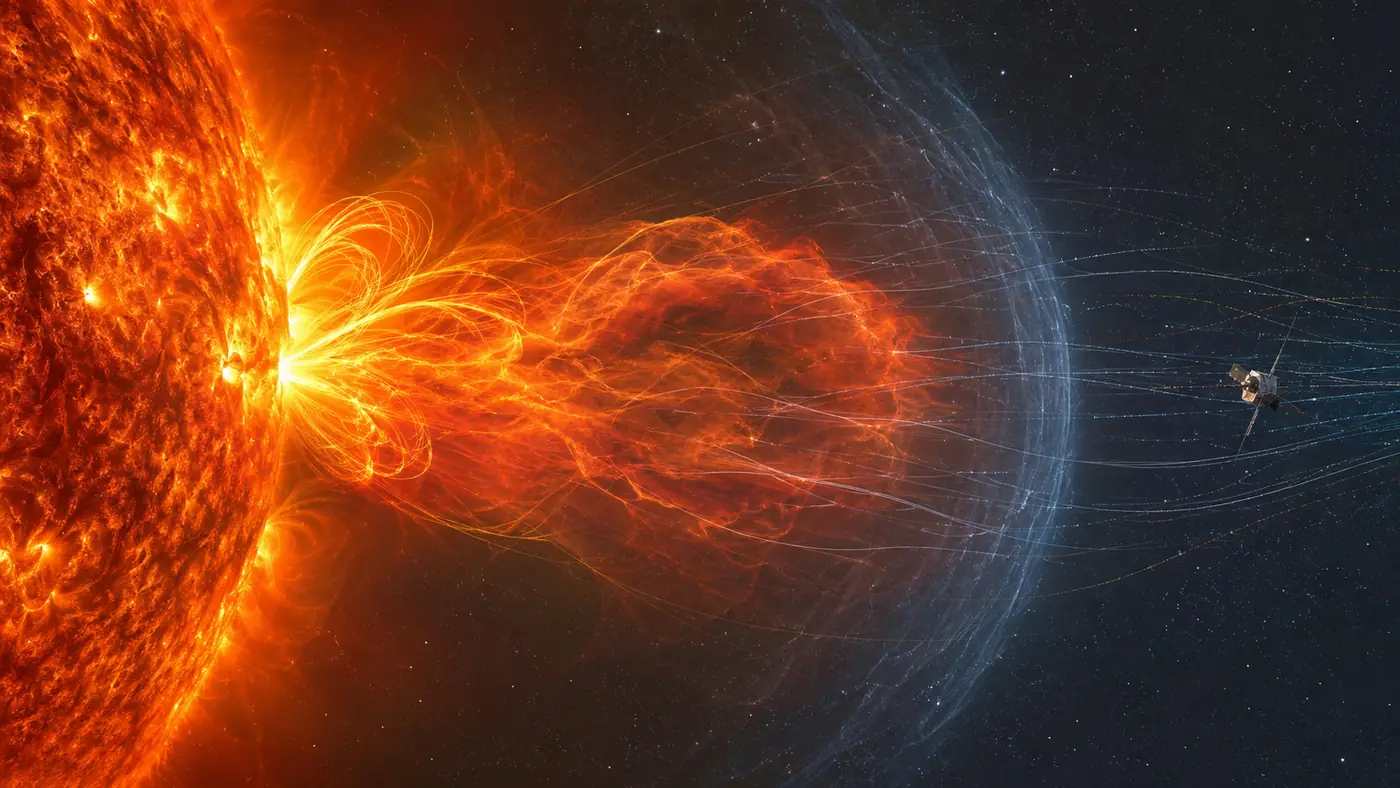
A coronal mass ejection is a large eruption of magnetized plasma from the Sun’s corona into space. It carries charged particles, embedded magnetic fields, and kinetic energy away from the solar atmosphere. A useful impact measure is dynamic pressure, P_dyn = rho v^2, which rises with plasma density and the square of speed.
In real events, a coronal mass ejection can expand into a vast moving cloud, drive a shock ahead of it, and disturb the solar wind for days. Its effects at a planet depend on launch direction, magnetic orientation, speed, and interaction with background plasma. Some eruptions miss Earth entirely, while others compress the magnetosphere and trigger geomagnetic storms.
The concept matters because it is one of the main drivers of severe space weather. In space weather engineering, CME conditions define the particle and magnetic loads that instruments or field structures must survive. Used in devices include coronagraphs, solar imagers, magnetometers, radiation monitors, and heliospheric warning spacecraft.
Forecasters track CMEs with solar imaging, radio bursts, in-situ plasma measurements, and magnetic field data to estimate arrival time and likely geoeffectiveness.
Example:
A fast coronal mass ejection aimed at Earth can increase radiation exposure for spacecraft and disturb high-latitude power systems.
Related Terms:
NoSuchDevice is a free archive of machines that do not exist yet but already have a shadow in physics. I research and write every entry alone, with no ads. Take a look around the archive, or help keep it free.