






What Is Dendrite?
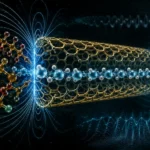
A dendrite is a branch-like metallic growth that can form on an electrode during electrochemical deposition or repeated charging. In rechargeable cells, dendrites often appear when metal ions plate unevenly onto a surface instead of being stored uniformly within the intended structure. A useful relation is J = I/A: higher local current density increases the chance of unstable deposition.
Once nucleated, a dendrite can extend through pores, separators, or electrolyte pathways and concentrate electric field at its tip, which promotes further growth. This behavior reduces efficiency, consumes active material, and raises the risk of internal short circuits. In electrochemical energy storage, dendrite control is one reason charging limits, electrolyte choice, and interface engineering matter.
The term matters in batteries, metal plating, and materials processing because microscopic morphology can determine whether a system remains safe and durable. Engineers suppress dendrites through current control, protective coatings, solid electrolytes, smoother substrates, and additives that guide more uniform deposition. Used in devices include lithium-metal cells, zinc batteries, electroplating tools, and laboratory deposition reactors. Growth is examined with microscopy, impedance testing, and post-cycle failure analysis.
Example:
During aggressive charging of a lithium-metal cell, a dendrite can pierce the separator and create an internal short before the cell is fully charged.
Related Terms:
- Self-Discharge
- Equivalent Series Resistance
- Current Density
NoSuchDevice is a free archive of machines that do not exist yet but already have a shadow in physics. I research and write every entry alone, with no ads. Take a look around the archive, or help keep it free.