



What Is Self-Discharge?
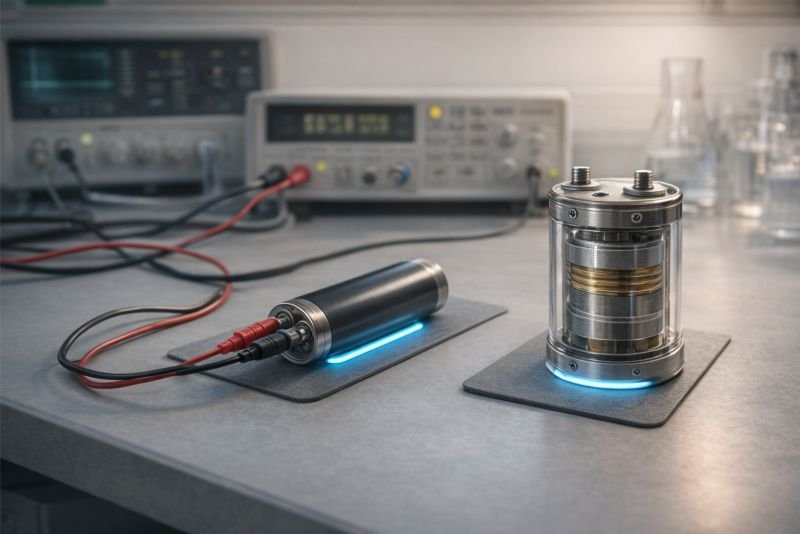
Self-discharge is the gradual loss of stored electrical energy from a battery or capacitor even when no external load is connected. It occurs because internal chemical reactions, leakage currents, parasitic conduction paths, and imperfect insulation slowly redistribute or consume charge. A common way to express it is Q(t) = Q0e^-kt, where k represents the leakage rate over time.
The effect depends on chemistry, materials, temperature, electrode surface area, and state of charge. Higher temperatures usually accelerate the mechanisms that drain stored energy, while contamination and manufacturing defects can increase leakage. In portable energy storage design, self-discharge influences how long a device can sit idle before its stored energy falls below a useful level.
The concept matters because standby life, maintenance intervals, and reserve availability all depend on it. Engineers compare self-discharge when choosing between lithium-ion cells, supercapacitors, primary batteries, and hybrid systems for sensors, vehicles, and backup electronics. Used in devices include phones, smart meters, emergency lights, asset trackers, and implantable monitors. It is measured by tracking open-circuit voltage or retained capacity after a defined storage period under controlled conditions.
Example:
A remote environmental sensor may use a lithium cell with low self-discharge so it remains ready after months between service visits.
Related Terms:
- Equivalent Series Resistance
- Dendrite
- Leakage Current
NoSuchDevice is a free archive of machines that do not exist yet but already have a shadow in physics. I research and write every entry alone, with no ads. Take a look around the archive, or help keep it free.