






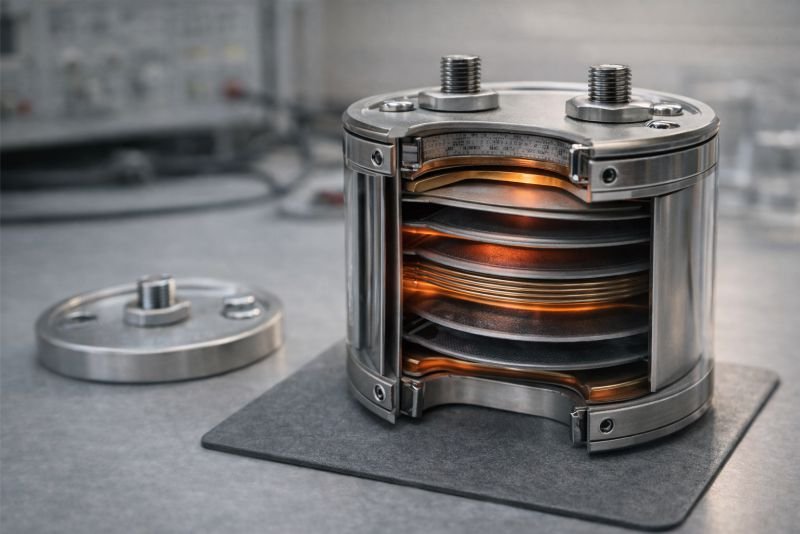
What Is Equivalent Series Resistance?
Equivalent series resistance, usually abbreviated ESR, is the small resistive component that real capacitors and electrochemical storage elements exhibit in addition to ideal capacitance. It represents losses in electrode materials, electrolyte conduction, separators, leads, internal contacts, and packaging. A simple relation is V_drop = I x ESR, so higher current causes larger instantaneous voltage loss and more wasted power.
In practical circuits, ESR limits how effectively a part can deliver or accept pulse current flow. It converts some electrical energy into heat through P_loss = I^2 x ESR, which influences temperature rise, efficiency, ripple handling, and lifespan. In high-power energy storage systems, low ESR supports fast charge and discharge events with less sag under load.
The term matters across electronics because it links materials science to system behavior. Designers use ESR when selecting capacitors for filters, converters, backup power stages, and supercapacitor modules, especially where transient current is large. Used in devices include smartphones, motor drives, UPS units, camera flashes, and regenerative braking hardware. ESR is commonly estimated from impedance measurements or pulse tests at a specified frequency and temperature.
Example:
A supercapacitor bank with lower equivalent series resistance can accept a short high-current recharge pulse with less heating than a comparable bank with higher ESR.
Related Terms:
- Self-Discharge
- Dendrite
- Capacitance
NoSuchDevice is a free archive of machines that do not exist yet but already have a shadow in physics. I research and write every entry alone, with no ads. Take a look around the archive, or help keep it free.