




What Is deuterium-tritium plasma?
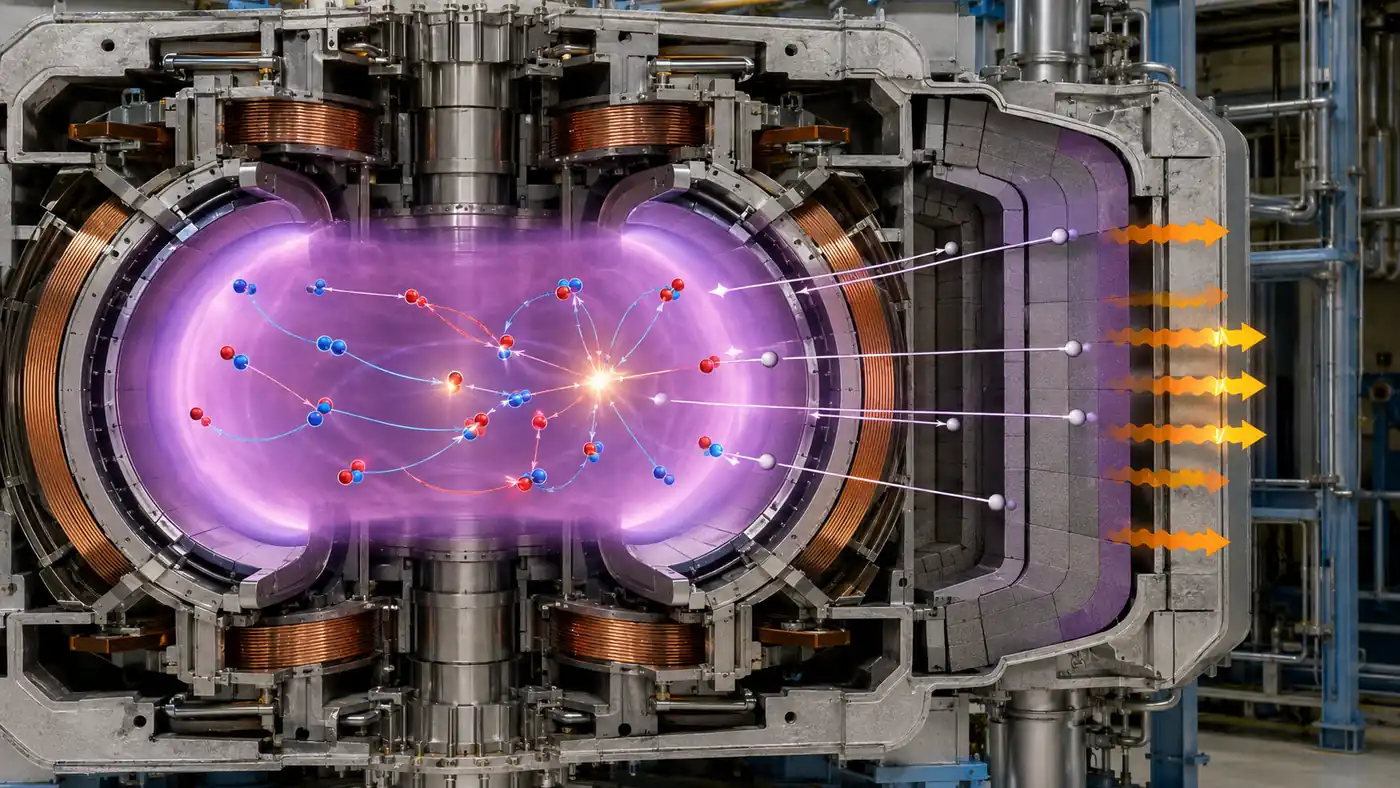
A deuterium-tritium plasma is an ionized fusion fuel made from deuterium and tritium, the heavy isotopes of hydrogen. At very high temperature, electrons separate from the nuclei, leaving charged ions that can collide and fuse. The core reaction is D + T -> He-4 + n + 17.6 MeV. Deuterium-tritium fuel is favored because it has a high fusion reaction rate at lower temperatures than most other practical fuel mixtures.
In real devices, the plasma must be heated, confined, and kept clean enough for reactions to continue. Density, temperature, confinement time, ash removal, and impurity control all affect power output. In deuterium-tritium fusion engineering, neutron energy capture and tritium supply are as important as plasma temperature itself.
The concept matters because deuterium-tritium plasma is the most accessible route to controlled fusion power with current physics and materials. Its neutron output creates engineering challenges, but also carries most of the recoverable energy into surrounding blankets for conversion systems.
Used in devices include experimental tokamaks, stellarators, neutron sources, fusion test reactors, and compact fusion cells designed around high reaction probability and controlled thermal heat recovery.
Example:
In a fusion reactor, deuterium and tritium ions collide inside a confined plasma and release energetic neutrons that heat a surrounding blanket.
Related Terms:
NoSuchDevice is a free archive of machines that do not exist yet but already have a shadow in physics. I research and write every entry alone, with no ads. Take a look around the archive, or help keep it free.