





What Is Deuterium?
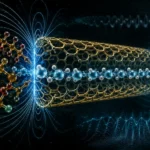
Deuterium is a naturally occurring isotope of hydrogen with one proton and one neutron in its nucleus. It is chemically similar to ordinary hydrogen but has about twice the atomic mass, which changes reaction rates, vibration frequencies, and nuclear behavior. It is often written as D or hydrogen-2. In fusion physics, a common reaction is D + T -> He-4 + n + 17.6 MeV.
In real systems, deuterium can be separated from water, stored as gas or in compounds, and used in fuels, tracers, moderators, or laboratory plasmas. Its extra neutron makes some nuclear reactions more accessible than proton-proton fusion, while its chemistry remains close enough to hydrogen for isotope effects to be measured precisely. In fusion fuel cycles, deuterium is valued because it is available from ordinary water.
The isotope matters because it connects nuclear energy, spectroscopy, chemistry, and materials testing. Used in devices include fusion reactors, neutron generators, isotope separators, mass spectrometers, heavy-water systems, and plasma experiments. Its abundance is low compared with ordinary hydrogen, but the oceans contain enough for large-scale technical use if separation, handling, and reactor systems are practical.
Example:
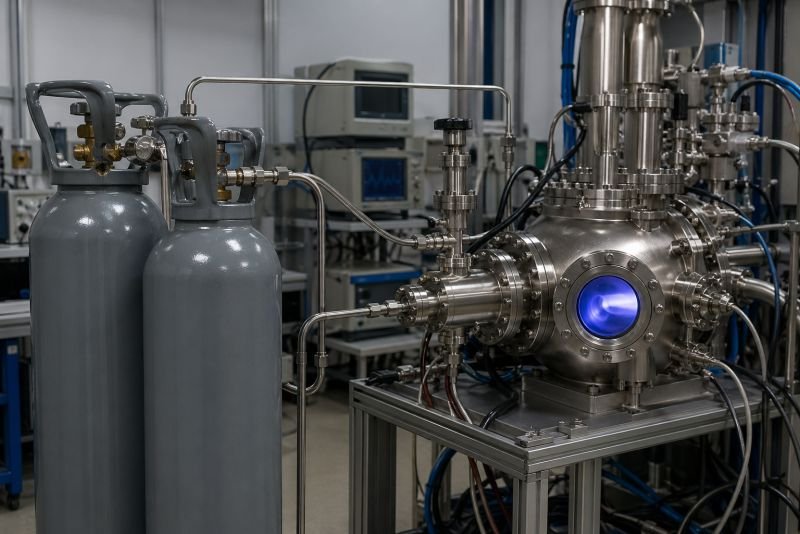
A fusion experiment may inject deuterium gas into a plasma chamber to measure neutron production and ion heating behavior.
Related Terms:
- Inertial Confinement Fusion
- Plasma Confinement
- Hydrogen Isotope
NoSuchDevice is a free archive of machines that do not exist yet but already have a shadow in physics. I research and write every entry alone, with no ads. Take a look around the archive, or help keep it free.