





What Is electrochemical potential?
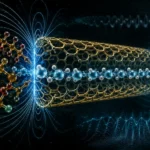
Electrochemical potential is the total energy driving charged species in a system, combining ordinary chemical potential with the electrical energy from local voltage. It is often written as mu_tilde = mu + zFphi for an ion, showing that composition and electric field both matter. In a battery, differences in electrochemical potential are what make electrons and ions move during charge and discharge.
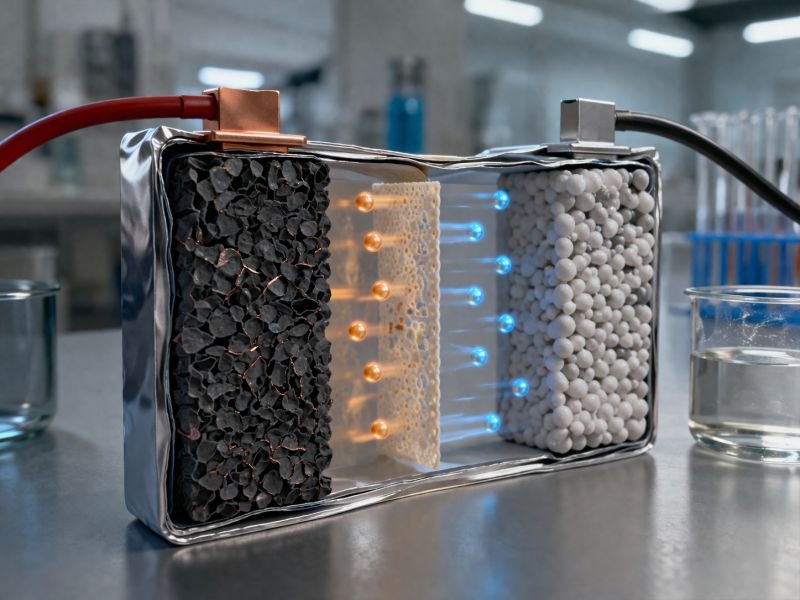
That driving force appears across both electrodes and the separator. When the anode and cathode are connected through a circuit, ions respond through the Electrolyte while electrons take the external path, and reversible Intercalation or deintercalation changes the stored chemical state. The system moves toward lower free energy, but the cell architecture controls how quickly that change can happen.
The concept matters because voltage, equilibrium, and reaction direction all depend on it. In battery electrochemical cell design, engineers use electrochemical potential differences to choose electrode pairs, predict open-circuit voltage, and understand why a cell delivers useful work instead of simply heating itself internally. It also clarifies why two materials with different stored chemical states can produce measurable voltage before current flows.
Example:
A charged lithium-ion cell powers a load because ions and electrons move in directions set by the electrochemical potential difference between its electrodes.
Related Concepts:
- Chemical Potential
- Cell Voltage
- Gibbs Free Energy
NoSuchDevice is a free archive of machines that do not exist yet but already have a shadow in physics. I research and write every entry alone, with no ads. Take a look around the archive, or help keep it free.