






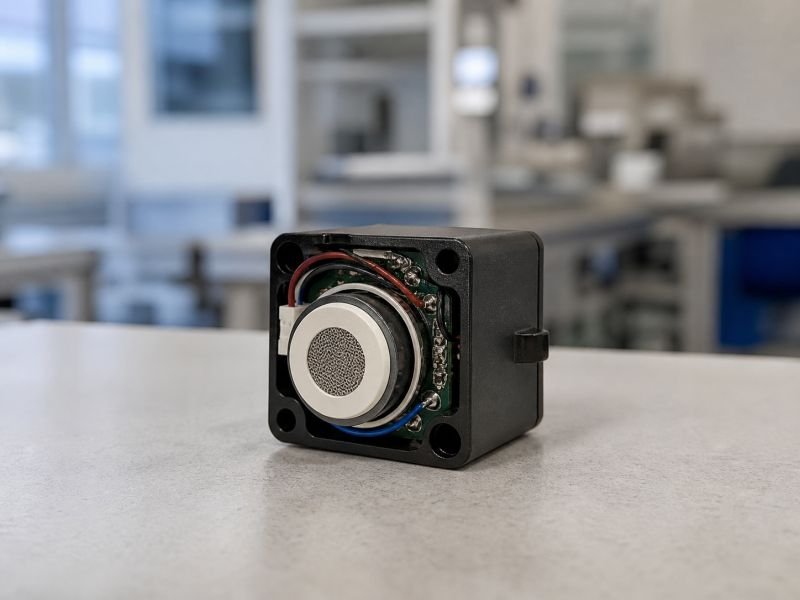
What Is Electrochemical Sensor?
An electrochemical sensor measures a target gas or dissolved species by converting a chemical reaction at an electrode into an electrical signal. Molecules reaching the sensing surface are oxidized or reduced in an electrolyte, and the resulting charge transfer is read as current, voltage, or resistance change. For many diffusion-limited designs, response is approximated by I = S x C, where S is sensitivity and C is analyte concentration.
In real instruments, membranes, catalysts, and electrode geometry control which molecules arrive at the reactive surface and how quickly the signal settles. Temperature, humidity, and interfering gases can shift baseline or selectivity, so calibration and compensation matter as much as the cell chemistry. In distributed air quality sensing, compact electrochemical cells let monitors track reactive pollutants without the bulk of spectroscopic hardware.
The concept matters because it allows low-power chemical measurement in places where large laboratory analyzers are impractical, from wearables to autonomous platforms. Used in devices include portable gas detectors, ventilation controllers, industrial safety badges, and mobile environmental payloads. Engineers choose electrochemical sensing when they need good sensitivity, modest power draw, and direct detection of specific gases, while accepting finite sensor life and cross-sensitivity limits.
Example:
A wearable carbon monoxide monitor can warn a worker when electrode current rises as the surrounding gas concentration increases.
Related Terms:
NoSuchDevice is a free archive of machines that do not exist yet but already have a shadow in physics. I research and write every entry alone, with no ads. Take a look around the archive, or help keep it free.