





What Is VOC?
VOC stands for volatile organic compound, a broad class of carbon-containing molecules that evaporate readily into air under normal conditions. Many VOCs have relatively high vapor pressure and low boiling point, which lets them move quickly from liquids or solids into the gas phase. In practical monitoring, concentration is often expressed as C = n/V, linking the amount of vapor present to the sampled volume of air.
Real environments contain VOCs from fuels, solvents, coatings, cleaning products, vegetation, and industrial processes, so the mixture changes with temperature, sunlight, and ventilation. Some compounds are directly toxic, while others react in the atmosphere to form ozone or secondary aerosols. In mobile air pollution mapping, VOC measurements help separate transient emission plumes from broader background chemistry.
The term matters because exposure, combustion, photochemistry, and sensor design all depend on which organic vapors are present and in what amount. Used in devices include photoionization detectors, indoor air monitors, leak checkers, and environmental sampling platforms. Engineers and scientists track VOC levels to diagnose air quality, process losses, and ventilation performance, while remembering that one total VOC number can hide very different compounds and risks.
Example:
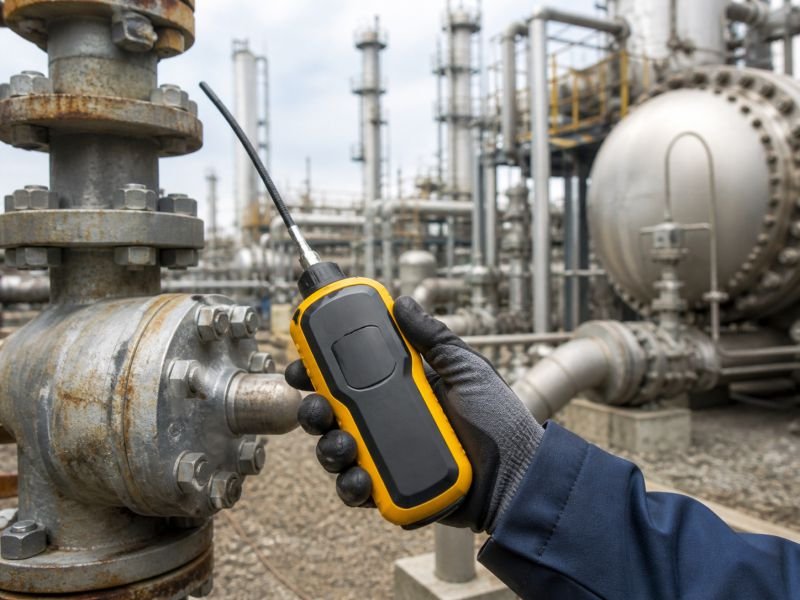
A technician scanning a solvent line may see VOC readings spike near a small seal leak long before the liquid becomes visible.
Related Terms:
- Electrochemical Sensor
- MEMS
- Ground-Level Ozone
NoSuchDevice is a free archive of machines that do not exist yet but already have a shadow in physics. I research and write every entry alone, with no ads. Take a look around the archive, or help keep it free.