

What Is Electrolysis?
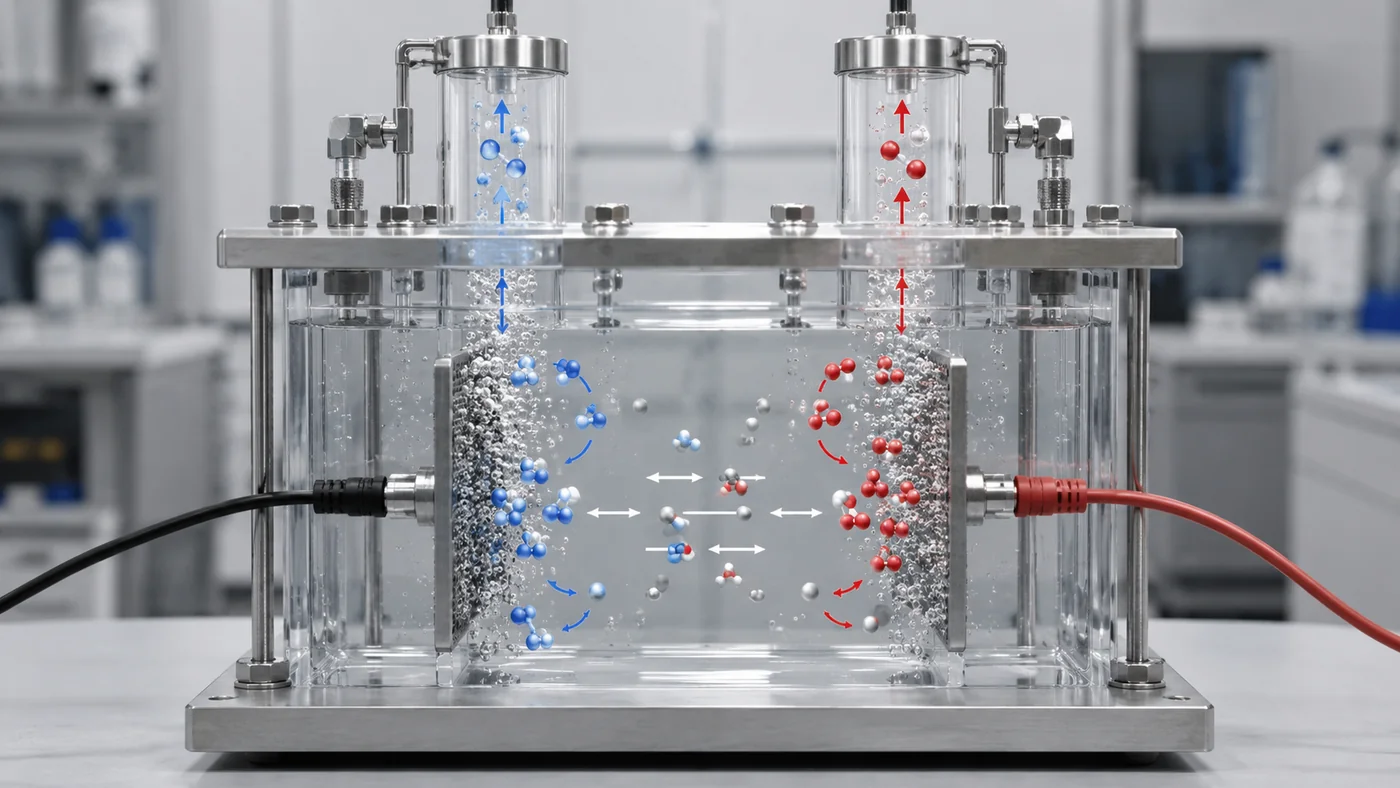
Electrolysis is a process in which an external electric current drives a nonspontaneous chemical reaction. Ions move through an electrolyte toward electrodes, where oxidation and reduction occur. For deposited or released material, Faraday’s relation is m = Q M / (n F), connecting electric charge to chemical amount.
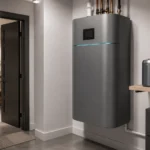
In real systems, voltage must overcome thermodynamic potential, electrode losses, electrolyte resistance, and gas-bubble effects. Electrode materials, catalysts, temperature, and membrane design strongly affect efficiency and product purity. Used in devices include water electrolyzers, electroplating baths, chlor-alkali cells, and on-site hydrogen production systems.
The concept matters because it converts electrical energy into chemical change with precise control over reaction direction. In renewable hydrogen production, electrolysis can turn surplus electric power into a storable fuel or industrial feedstock. The same principle supports metal refining, surface finishing, chemical manufacture, and analytical electrochemistry.
Performance is measured through current density, cell voltage, Faradaic efficiency, gas purity, and long-term electrode degradation. These metrics show how much input electricity becomes the intended product instead of heat, side reactions, or resistive loss under different loads and operating temperatures.
Example:
A proton-exchange membrane electrolyzer splits purified water into hydrogen at the cathode and oxygen at the anode.
Related Terms:
NoSuchDevice is a free archive of machines that do not exist yet but already have a shadow in physics. I research and write every entry alone, with no ads. Take a look around the archive, or help keep it free.