




What Is Microbial Electrolysis?
Microbial electrolysis is a bioelectrochemical process in which microorganisms oxidize organic matter at an anode while an added electrical input drives a non-spontaneous reaction at the cathode, often hydrogen evolution. It resembles a microbial fuel cell, but the system is assisted rather than fully self-powered. A simple way to frame it is E_total = E_bio + E_applied, where biological oxidation and external voltage together supply the required driving force.
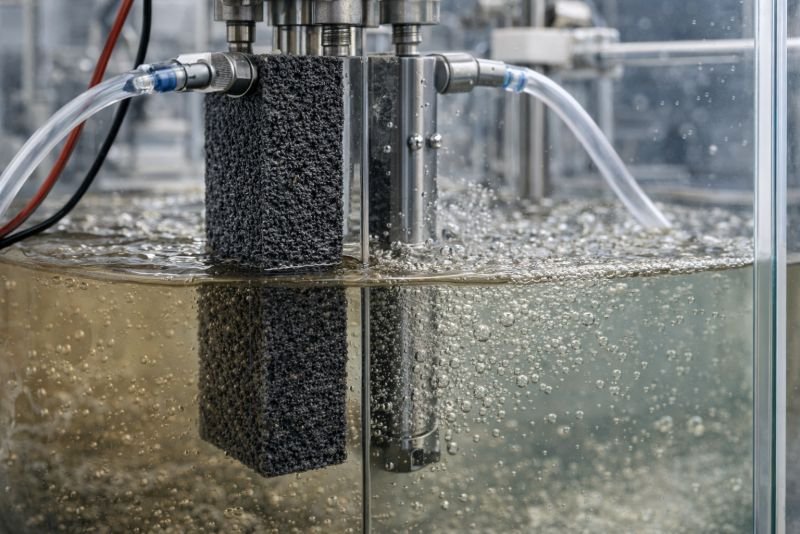
In real reactors, bacteria release electrons to the anode, protons move through the electrolyte, and the cathode uses the extra voltage to produce hydrogen or other reduced products. In wastewater-fed hydrogen recovery, this allows dilute organic feedstocks to support useful gas production with less electrical input than conventional water electrolysis. Used in devices include hydrogen generators, resource recovery reactors, and integrated wastewater treatment modules.
The concept matters because it extends microbial electricity research into chemical manufacturing and resource recovery. Instead of collecting only current, engineers can direct electrons toward fuels, caustic compounds, or metal recovery at the cathode. System performance depends on microbial activity, electrode catalysts, pH balance, membrane losses, gas collection, and how much external voltage is added.
Researchers evaluate microbial electrolysis using hydrogen yield, coulombic efficiency, cathode overpotential, and overall energy efficiency. Those metrics show whether the reactor is effectively converting biological oxidation into a controllable electrochemical product.
Example:
A microbial electrolysis reactor fed with acetate can produce hydrogen at the cathode while bacteria on the anode oxidize the organic substrate.
Related Terms:
NoSuchDevice is a free archive of machines that do not exist yet but already have a shadow in physics. I research and write every entry alone, with no ads. Take a look around the archive, or help keep it free.