





What Is electron-volt?
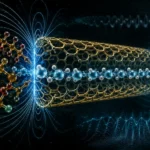
An electron-volt is a unit of energy equal to the work done when one elementary charge moves through an electric potential difference of one volt. It is written eV, with 1 eV = 1.602176634 x 10^-19 J. The unit is convenient when describing particles, photons, and electronic energy levels because their energies are far smaller than a joule.
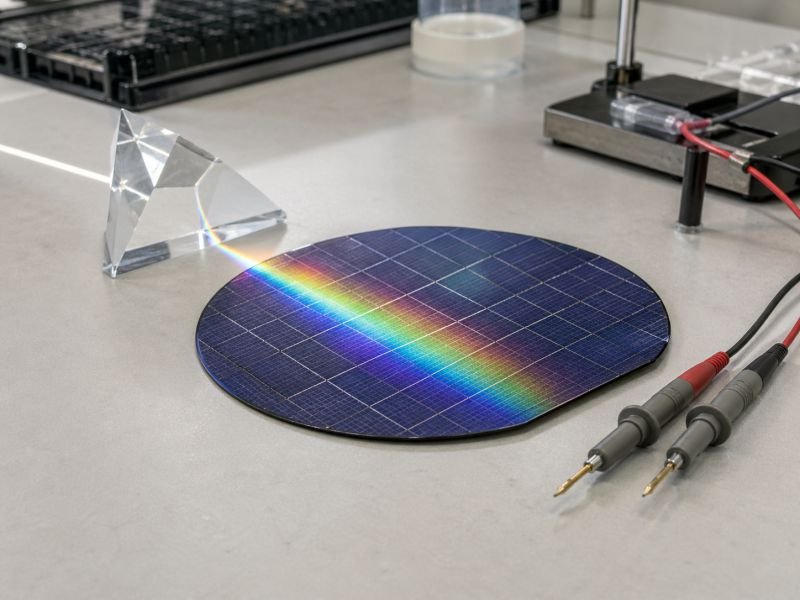
In real materials, electron-volts describe gaps between allowed electron states, binding energies, and photon energies. In photovoltaic semiconductor design, electron-volts connect spectral wavelength, bandgap energy, and whether an absorbed photon can free a charge carrier. Energies below a material threshold pass through or dissipate differently than energies above it.
The concept matters because it gives engineers a compact scale for matching radiation to materials. A silicon bandgap near 1.12 eV, for example, sets the minimum photon energy needed to generate current. Used in devices include solar cells, photodiodes, particle detectors, electron microscopes, and ion beam tools.
Electron-volts are often inferred from voltage, wavelength, or spectroscopy data rather than measured as bulk heat. A common photon relation is E(eV) ~= 1240 / lambda(nm), which connects wavelength to quantum energy for light in vacuum or air.
Example:
A photon with 2.0 eV can excite an electron across many semiconductor bandgaps, while a 0.8 eV infrared photon may pass through silicon without producing current.
Related Terms:
- Planck’s Constant
- Bandgap
- Photon Energy
NoSuchDevice is a free archive of machines that do not exist yet but already have a shadow in physics. I research and write every entry alone, with no ads. Take a look around the archive, or help keep it free.