





What Is Exoelectrogens?
Exoelectrogens are microorganisms that can transfer electrons from their metabolism to an external solid acceptor such as a mineral surface or an electrode. This ability makes them unusual in microbiology, because most cells pass electrons only to dissolved compounds inside their local environment. In bioelectrochemical systems, the resulting current can be approximated as I = nFr, where n is electrons transferred, F is Faraday’s constant, and r is the reaction rate.
In real systems, exoelectrogens rely on outer-membrane cytochromes, soluble mediators, or conductive appendages to move charge beyond the cell envelope. Inside bioelectrochemical wastewater treatment, they colonize anodes and convert the oxidation of organic matter into measurable electrical current. Used in devices include microbial fuel cells, biosensors, and microbial electrosynthesis reactors.
The term matters because it links microbiology with circuit behavior. Exoelectrogens enable energy recovery from waste, electrode-driven chemical synthesis, and biological sensing without conventional metal catalysts at every reaction step. Their performance depends on substrate supply, oxygen exclusion, biofilm organization, electrode potential, and competition from microbes that prefer non-electrode electron acceptors.
Researchers usually evaluate exoelectrogens through current density, coulombic efficiency, and electrochemical signatures that show how well electrons leave the cells and reach the electrode. These measurements help distinguish a merely growing microbial community from one that is actively contributing useful charge transfer.
Example:
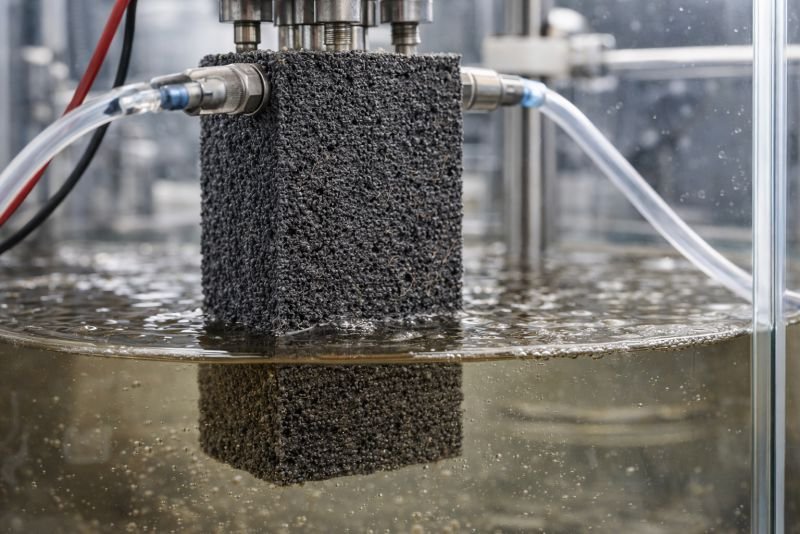
In a laboratory microbial fuel cell, Geobacter-rich exoelectrogens growing on a carbon anode can generate current while consuming acetate from wastewater.
Related Terms:
NoSuchDevice is a free archive of machines that do not exist yet but already have a shadow in physics. I research and write every entry alone, with no ads. Take a look around the archive, or help keep it free.