




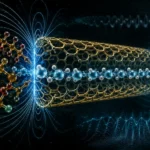


What Is Microbial Nanowires?
Microbial nanowires are filament-like conductive structures produced by certain microorganisms to move electrons beyond the cell surface. They are commonly associated with extracellular electron transfer, where cells interact electrically with minerals, neighboring microbes, or electrodes. Their conductive behavior can be summarized by sigma = L / RA, where sigma is conductivity, L is length, R is resistance, and A is cross-sectional area.
In real biofilms, microbial nanowires can bridge cells that are not directly touching an electrode, allowing charge to move through a three-dimensional community. Within anode biofilm conduction, these structures help buried cells participate in current production instead of leaving only the outermost layer electrochemically active. Used in devices include microbial fuel cells, bioremediation electrodes, and microbial electrosynthesis platforms.
The term matters because nanowires expand the practical reach of biological electron transfer. They affect how thick an active biofilm can become, how efficiently electrons are collected, and how engineers design porous or brush-like electrodes for higher current output. Their role is still an active research topic, because conductivity may arise from both protein structure and redox hopping mechanisms.
Researchers study microbial nanowires with electron microscopy, conductive atomic force microscopy, spectroscopy, and electrochemical testing. These methods help separate true long-range charge transport from simple cell attachment or mediator-based electron exchange.
Example:
In a thick electrode biofilm, microbial nanowires can let cells several layers away from the anode contribute electrons to the external circuit.
Related Terms:
NoSuchDevice is a free archive of machines that do not exist yet but already have a shadow in physics. I research and write every entry alone, with no ads. Take a look around the archive, or help keep it free.