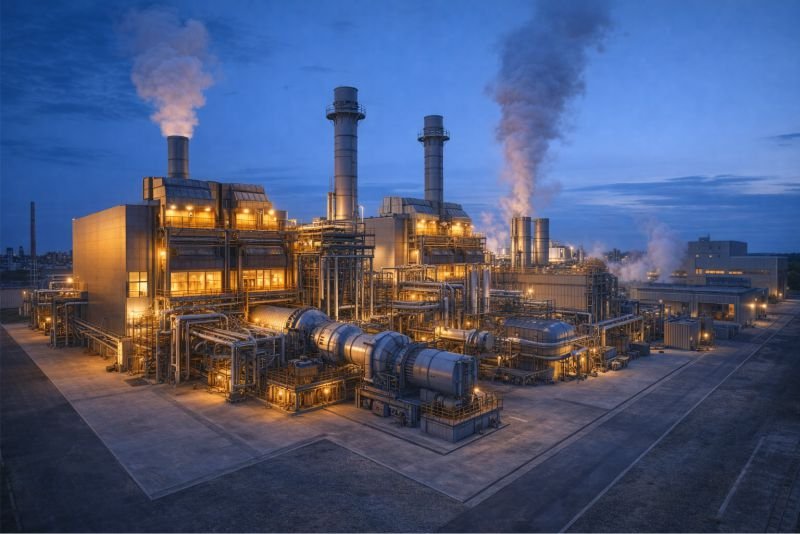





A wastewater treatment plant outside State College, Pennsylvania processes roughly 10 million gallons of organic-laden water every day. Running the aeration systems, pumps, and monitoring equipment for a facility that size consumes somewhere around 30,000 kilowatt-hours per day. That cost is accepted as the price of treating sewage. What is less often noticed is that the sewage itself contains a significant amount of chemical energy, locked inside organic molecules, sitting there waiting to be released.
Most treatment plants burn that energy to heat sludge or simply let microorganisms consume it quietly in the dark. Since the early 2000s, a research group at Penn State under engineer Bruce Logan has been asking a more pointed question: what if the bacteria eating that organic matter could be persuaded to hand their electrons to a wire?
The answer to that question is microbial fuel cells.
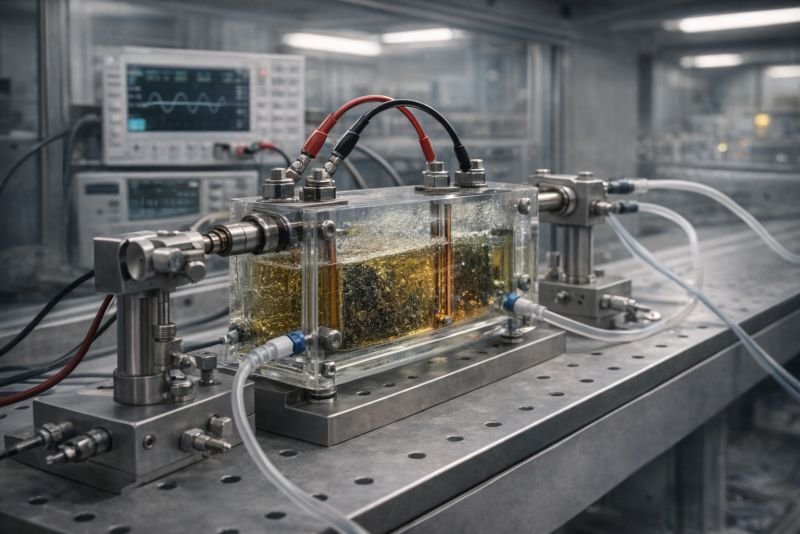
The short version: A microbial fuel cell uses bacteria as the active material in an electrochemical cell. The bacteria oxidize organic compounds and, under the right conditions, transfer the electrons released by that oxidation to an electrode. Those electrons travel through an external circuit as usable current. A well-designed lab-scale microbial fuel cell running on acetate can produce a theoretical maximum voltage of around 1.1 volts, though practical systems typically operate between 0.3 and 0.7 volts. The gap between those two numbers is not primarily chemical. It is biological and geometric.
Table of Contents
How Microbial Fuel Cells Capture Bacterial Metabolism as Current
Every organism that breathes oxygen runs a version of the same electrochemical reaction. Organic molecules are oxidized: electrons are stripped from carbon compounds and passed along a chain of molecular carriers until they reach oxygen, which accepts those electrons and combines with protons to form water. The energy released at each step powers the cell.
Bacteria do the same thing, with two differences that matter for microbial fuel cells. First, many bacteria can use molecules other than oxygen as the final electron acceptor. Sulfate, nitrate, iron, and manganese ions can all serve this role in the right organisms. Second, a specific group of bacteria called exoelectrogens can transfer electrons directly to a solid surface. They do not need the electron acceptor dissolved in solution. If a conductive electrode is placed near them, they will use it.
This is the biological foundation of every microbial fuel cell. The bacteria sit at the anode, consume organic matter, and donate their metabolic electrons to the electrode surface. Those electrons travel through an external circuit to a cathode, where they combine with protons and oxygen. The protons themselves cross a membrane separating the two chambers. The result is a sustained current from nothing more than bacteria eating organic waste.
The Electron Transfer Mechanism in Microbial Fuel Cells
Moving electrons from inside a bacterial cell to an external electrode is not a trivial problem. The cell wall is not a conductor. Crossing it requires a specific mechanism, and different species of bacteria have evolved different solutions.
Direct Contact Through Membrane Proteins
The best-studied exoelectrogens, including Geobacter sulfurreducens, achieve electron transfer by embedding specialized proteins directly in their outer membranes. These cytochrome proteins are conductive; electrons hop from one to the next along a chain running from inside the cell to the electrode surface. The bacterium must be physically touching the anode for this mechanism to work, which places a geometric constraint on how many cells can participate at any given time.
Geobacter species add a second capability: they grow conductive appendages called microbial nanowires. These protein filaments extend several cell lengths from the bacterium and conduct electrons to the electrode. A mature biofilm of Geobacter cells on an anode uses these nanowires to form a three-dimensional conductive network, allowing cells buried deeper in the biofilm to contribute electrons without touching the electrode directly. Under optimized conditions, dense Geobacter biofilms at Penn State produced current densities exceeding 2,000 milliwatts per square meter of anode surface.
Electron Shuttles and Mediator Molecules
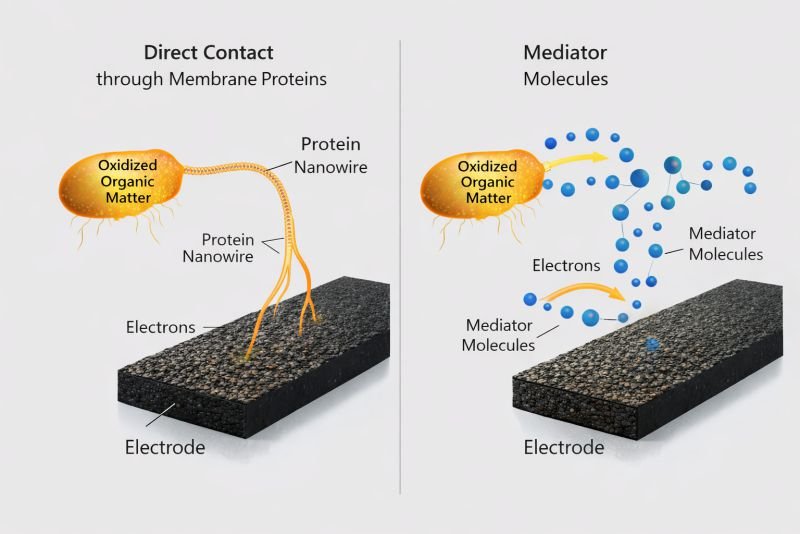
Other bacteria take a different route. Shewanella oneidensis, for example, secretes soluble electron-carrying molecules called flavins. These molecules accept electrons from the cell, diffuse through solution to the electrode, deposit the electrons, and return to collect more. The process is slower and more diffuse than direct contact transfer, but it allows bacteria to contribute current without physical attachment to the anode.
Early microbial fuel cells added artificial mediators like methylene blue or neutral red to enhance electron transfer. Researchers later found that certain bacteria produce their own mediators naturally, which changed the engineering approach considerably. Natural mediator systems are self-sustaining; the bacteria manufacture their own electron shuttles as long as organic substrate is available.
Voltage and the Gibbs Equation in Microbial Fuel Cells
How much voltage can a microbial fuel cell theoretically produce? The answer comes from thermodynamics, specifically from the Gibbs free energy of the oxidation reaction happening at the anode.
For acetate, one of the most common substrates used in MFC research, the oxidation reaction at the anode is:
CH3COO- + 2H2O → 2CO2 + 7H+ + 8e-
The theoretical cell voltage is calculated from the Gibbs free energy of the complete reaction combining anode oxidation with cathode oxygen reduction:
E_cell = -ΔG / (n × F)
Here, E_cell is the theoretical open-circuit voltage in volts. ΔG is the Gibbs free energy change for the full reaction in joules per mole. The variable n is the number of electrons transferred per mole of substrate, and F is Faraday’s constant: 96,485 coulombs per mole of electrons.
For acetate oxidation coupled to oxygen reduction, ΔG is approximately -848,000 joules per mole, and n equals 8.
E_cell = 848,000 / (8 × 96,485) = 848,000 / 771,880 ≈ 1.10 volts
That is the ceiling. In practice, microbial fuel cells running on acetate in lab conditions achieve open-circuit voltages of 0.6 to 0.8 volts, with operating voltages under load dropping to 0.3 to 0.5 volts. The gap between 1.10 volts and 0.4 volts represents losses distributed across several sources: internal resistance in the solution, activation energy barriers at the electrode surfaces, and concentration losses as substrate depletes near the biofilm. Identifying which loss dominates in a given system tells an engineer exactly where to focus.
Everything here is free. Readers are the reason it stays that way.
I make all of it alone, with no ads. If it is worth a coffee a month to you, that keeps the next one coming.
Keep it alive →Variables That Shape Microbial Fuel Cell Performance
Several factors govern what a microbial fuel cell actually delivers, and they interact in ways that make optimization nontrivial.
| Variable | Effect on MFC Performance | Engineering Implication |
|---|---|---|
| Substrate concentration | Higher organic content increases current density up to a saturation point | Wastewater strength determines the usable energy budget |
| pH | Optimal range is 6.5 to 8.0; deviation sharply reduces bacterial activity | Buffering capacity of the medium must be actively managed |
| Temperature | Activity roughly doubles per 10°C rise within biological limits | Thermophilic species could extend operational range in warm climates |
| Electrode surface area | Current scales with anode area; the primary lever for scaling output | 3D electrodes such as carbon felt and graphite granules outperform flat plates |
| Internal resistance | Inversely limits power output; dominated by membrane and solution resistance | Reducing electrode spacing and membrane thickness improves delivered power |
Temperature deserves particular attention. Psychrophilic bacteria adapted to cold environments can sustain current generation at temperatures as low as 4°C, which opens the possibility of microbial fuel cells operating in cold-climate wastewater treatment without heating. The trade-off is lower metabolic rate and lower current density. A cold-adapted system might produce 20 to 30 percent of the power output of a mesophilic system at 30°C, but it would do so with no thermal energy input at all.
Physical Limits on Microbial Fuel Cell Power Density
The fundamental limitation of microbial fuel cells is power density per unit volume. Current lab-scale systems achieve roughly 1 to 5 watts per cubic meter of reactor volume under optimal conditions. A hydrogen fuel cell operates at thousands of watts per cubic meter. A lithium battery delivers tens of thousands.
Biology is slower than electrochemistry.
A platinum catalyst in a hydrogen fuel cell processes reactions in microseconds. A bacterium processing organic substrate operates on timescales of minutes to hours. The rate at which a biofilm can deliver electrons to an anode is ultimately limited by how fast the organisms can metabolize their food. More surface area helps considerably, and researchers have developed three-dimensional electrode architectures using carbon felt, graphite granules, and activated carbon that dramatically increase anode surface area within a compact volume. Logan’s group demonstrated an MFC with a brush anode architecture achieving over 2,200 milliwatts per square meter of anode surface, a substantial improvement over early flat-plate designs. Even so, that number translates to modest volumetric power density compared to conventional energy sources.
The cathode presents a separate constraint. Most lab microbial fuel cells use dissolved oxygen or an open-air cathode, and the rate at which oxygen reaches the cathode surface limits how fast current can flow. Open-air cathodes, where the cathode surface is exposed directly to atmosphere, outperform submerged cathodes, but they introduce drying and biofouling problems in real wastewater environments. Getting both the anode and cathode to perform well simultaneously, at scale, in messy real-world conditions, is where the engineering work concentrates.
Engineering Microbial Fuel Cells for Wastewater Treatment
The most practical near-term application of microbial fuel cells is not standalone power generation. It is energy recovery inside wastewater treatment, where organic matter is already flowing through the system and the infrastructure already exists.
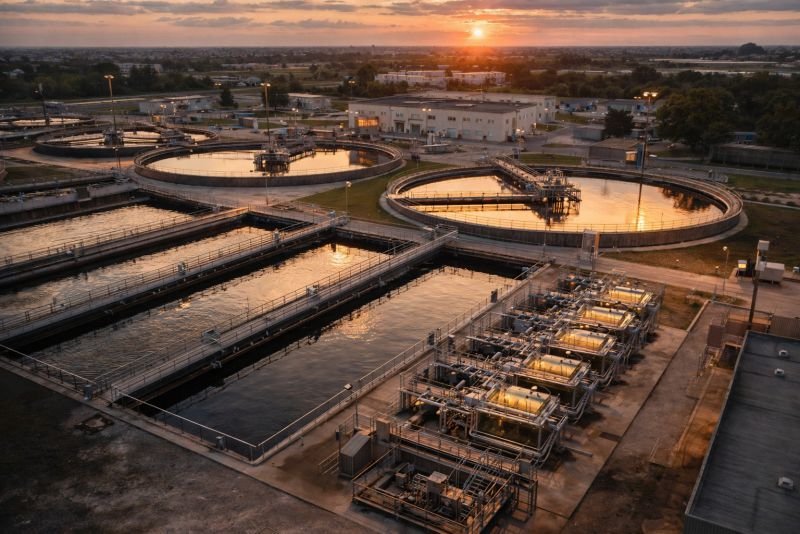
A conventional activated sludge treatment process consumes roughly 0.3 to 0.6 kilowatt-hours of electricity per cubic meter of wastewater treated. The organic content of that same wastewater contains approximately 1 to 2 kilowatt-hours of chemical energy per cubic meter. A treatment plant is, in that sense, spending significant electrical energy to destroy chemical energy it never captured.
Microbial fuel cells positioned in the treatment stream can recover some of that chemical energy as electricity while simultaneously reducing the organic load in the water, accomplishing both tasks in one unit. Field trials confirmed this dual function. A pilot installation at Foster’s Brewery in Yatala, Australia treated brewery wastewater with an MFC system and generated measurable current while reducing biological oxygen demand by more than 70 percent. The power output was modest at pilot scale, but the result confirmed that real organic streams can sustain bioelectrochemical activity outside carefully controlled lab conditions.
Scaling remains the hard problem. An MFC that performs well in a 500 mL bottle encounters dead zones, uneven biofilm growth, and pH gradients when the same design is expanded to a 5,000 liter reactor. Maintaining short electrode spacing and uniform flow distribution across cubic-meter-scale reactor volumes requires engineering solutions that lab systems never need.
What Microbial Fuel Cell Science Opens Beyond Electricity
The principles developed in microbial fuel cell research extend considerably beyond power generation. Once it was understood that bacteria could exchange electrons with electrodes under controlled conditions, researchers began asking what else that exchange could drive.
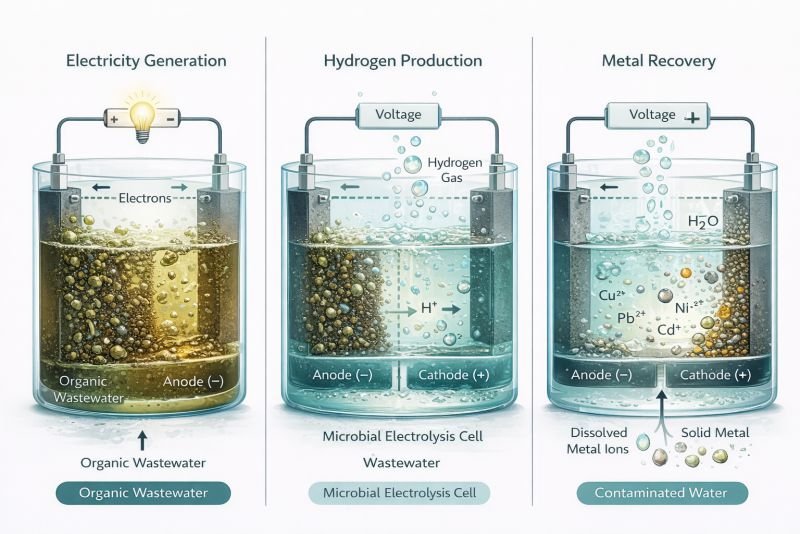
Microbial electrolysis cells use small electrical inputs to drive reactions that do not occur spontaneously. Apply a modest voltage to an MFC-style system and the bacteria at the anode still oxidize organic matter, but the cathode now drives hydrogen production. These systems can produce hydrogen at energy efficiencies that exceed conventional water electrolysis, because the organic substrate at the anode contributes part of the energy required. Logan demonstrated hydrogen production from acetate at efficiencies exceeding 200 percent relative to electrical energy input, a figure that sounds impossible until the chemical energy of the acetate is included in the accounting. The electrical input is only part of the story; the bacteria provide the rest.
Microbial electrosynthesis runs the process in a different direction: feeding electricity to bacteria that use it to reduce carbon dioxide into organic molecules. The organisms become living chemical factories powered by electricity and fed atmospheric carbon, producing acetate, butyrate, or other compounds as outputs. The productivity numbers are currently low, but the principle is established and the research is active.
Bioelectrochemical heavy metal recovery offers yet another extension. Certain electrode reactions can selectively reduce dissolved metal ions from contaminated water, depositing them as solid metal at the cathode while bacteria at the anode supply the current. Pilot studies demonstrated copper recovery from mining wastewater using microbial fuel cell-derived current, combining water treatment with materials recovery in a single system.
The scientific principle at the center of all these applications remains the one first identified in Geobacter biofilms: bacteria can exchange electrons with solid conductors, and the direction and magnitude of that exchange can be controlled by setting the electrical potential of the electrode. Microbial fuel cells established the proof. The applications that follow are constrained by biology, not by physics.
You read the whole thing.
That is rarer than it should be, and it is the exact kind of attention I built this archive for. I make every piece alone, with no ads and no investor deciding what gets written. If you want the next machine taken apart like this one, you can help me make it.
A coffee a month is enough to keep it free for everyone.
Prefer crypto or a one time gift? Other ways to give →
Technologies Related to This Concept
| Technology | Concept |
|---|---|
| Bio-Electrochemical Systems for Wastewater Treatment | Concept: Systems that treat wastewater while generating electricity. |
| Microbial Fuel Cells for Home Waste Management | Concept: Using microbial fuel cells (MFCs) in home bio-reactors to convert kitchen waste into electricity. |
| Home Bio-Reactors Utilizing Sewage Waste | Concept: Systems that safely process human waste to generate biogas. |
| Bio-Reactors Using CRISPR-Modified Microorganisms | Concept: Employing gene-edited microbes for more efficient waste-to-energy conversion. |
| Intelligent Waste Sorting for Optimal Bioenergy | Concept: Smart systems that sort waste to enhance bio-reactor efficiency. |