






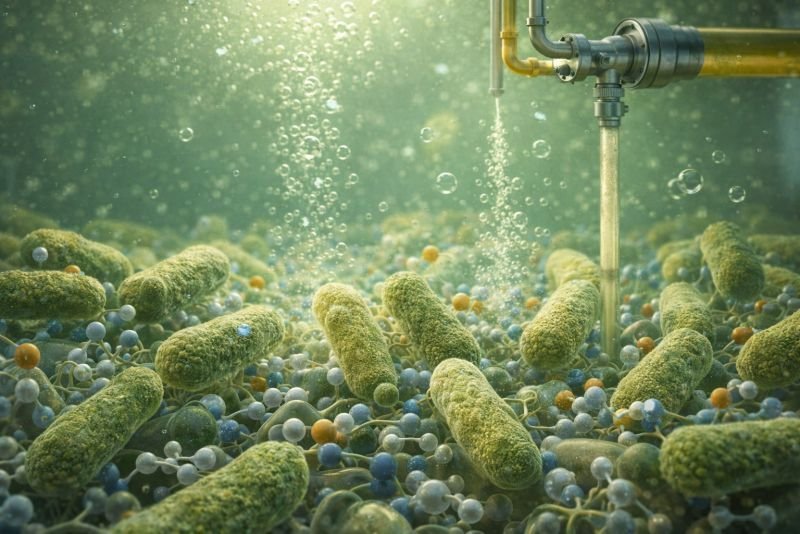
What Is Methanogenesis?
Methanogenesis is the microbial formation of methane by archaea under oxygen-free conditions, usually as the terminal stage of anaerobic digestion. These organisms use substrates such as acetate, hydrogen plus carbon dioxide, or methylated compounds to generate methane as a metabolic product. A common stoichiometric relation is CO2 + 4H2 -> CH4 + 2H2O for the hydrogenotrophic pathway.
In reactors and natural sediments, methanogens depend on upstream bacteria that release intermediates through hydrolysis and fermentation. Their activity is sensitive to pH, ammonia, sulfide, and temperature, so process control focuses on balancing microbial groups and substrate availability. Engineers monitor anaerobic bioreactor methane production kinetics to prevent acid accumulation and gas yield decline.
Why It Matters: Methanogenesis sets the final methane output and therefore much of the energy value in biogas systems. It also affects greenhouse gas dynamics in landfills, wetlands, and waste treatment infrastructure, where controlling methane generation and capture is central to emissions management and renewable fuel recovery.
Used In Devices:
- Anaerobic Digester Vessel
- Biogas Upgrading Skid
- Landfill Gas Collection Well
Example:
In a mesophilic digester, acetoclastic archaea convert acetate to methane as volatile acids decline during stable operation.
Related Concepts:
- Anaerobic Digestion
- Volatile Fatty Acids
- Acetogenesis
NoSuchDevice is a free archive of machines that do not exist yet but already have a shadow in physics. I research and write every entry alone, with no ads. Take a look around the archive, or help keep it free.