





What Is Neutral Beam Injection?
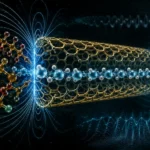
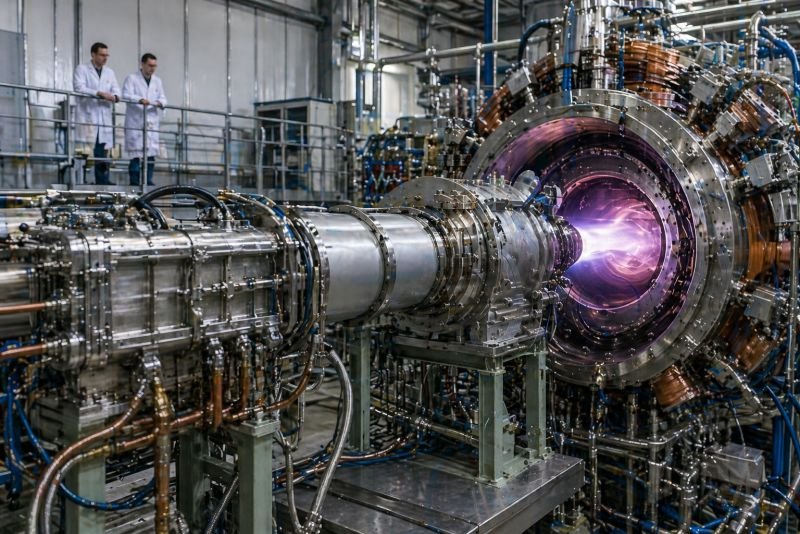
Neutral beam injection is a plasma heating method that accelerates ions to high energy, converts them into neutral atoms, and fires the beam into a confined plasma. Neutral atoms are used because they can cross strong magnetic fields that would otherwise bend charged particles away. After entering the plasma, collisions strip electrons from the atoms and transfer kinetic energy to plasma ions. The particle energy is often written E_k = 1/2 m v^2.
In operating systems, beam energy, pulse length, injection angle, and species choice affect where the heat is deposited. A shallow path can heat outer regions, while a deeper path can raise core ion temperature and drive useful rotation. Within fusion plasma heating systems, neutral beams complement radiofrequency heating because they deliver momentum as well as thermal power.
The technique matters because many fusion plasmas cannot reach reaction temperatures through ohmic heating alone. Used in devices include tokamaks, stellarators, beam-driven neutron sources, and magnetic mirror experiments. Beam injection also gives researchers a controllable way to study transport, fast-ion behavior, instability thresholds, and the transition from externally heated plasma toward self-heating by fusion products.
Example:
A stellarator may inject deuterium neutral beams to raise ion temperature before measuring how well the magnetic field retains heat.
Related Terms:
- Plasma Confinement
- Stellarator
- Radiofrequency Heating
NoSuchDevice is a free archive of machines that do not exist yet but already have a shadow in physics. I research and write every entry alone, with no ads. Take a look around the archive, or help keep it free.