





What Is Passive remote sensing?
Passive remote sensing measures electromagnetic radiation that already exists, usually sunlight reflected from a surface or thermal energy emitted by it. The sensor does not illuminate the target. A simple radiative relation is L_sensor = T L_surface + L_path, where atmospheric transmission and path effects shape what reaches the detector.
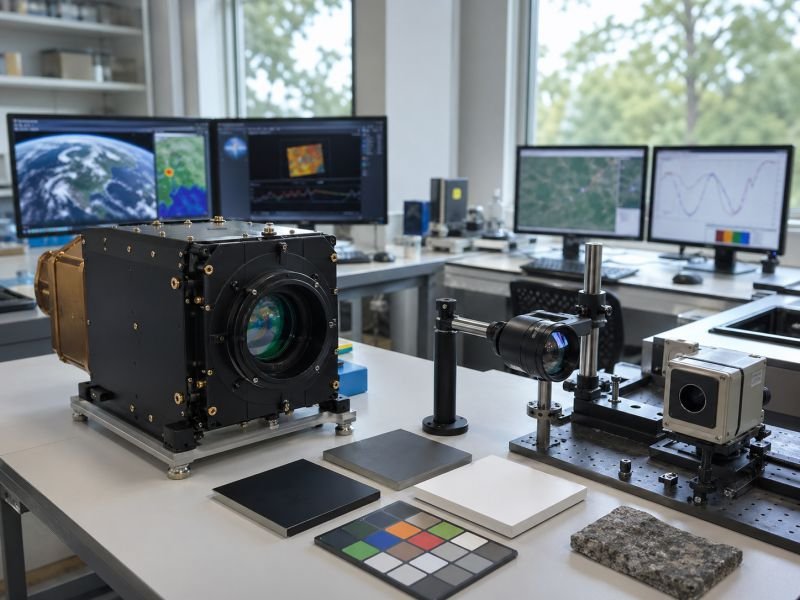
In real systems, passive sensors record visible, infrared, or thermal bands and use their contrast to identify materials, temperatures, or biological activity. This makes them useful in environmental surface analysis, weather imaging, crop mapping, wildfire detection, and ocean color studies.
The method matters because it can observe large areas efficiently with comparatively simple sensor hardware when natural illumination is available. Used in devices include multispectral satellites, thermal cameras, radiometers, weather imagers, drone payloads, and spectrometers that infer surface properties from reflected or emitted energy rather than transmitted pulses.
Performance depends on illumination angle, atmospheric conditions, spectral calibration, and revisit timing, because the measured signal changes with both the surface and the viewing environment. Engineers therefore combine band selection, radiometric correction, and reference targets to separate real physical change from changes caused by haze, shadows, or season.
Example:
A thermal satellite can detect a growing wildfire front at night by measuring emitted infrared energy from hot ground and vegetation.
Related Terms:
NoSuchDevice is a free archive of machines that do not exist yet but already have a shadow in physics. I research and write every entry alone, with no ads. Take a look around the archive, or help keep it free.