





What Is Electromagnetic spectrum?
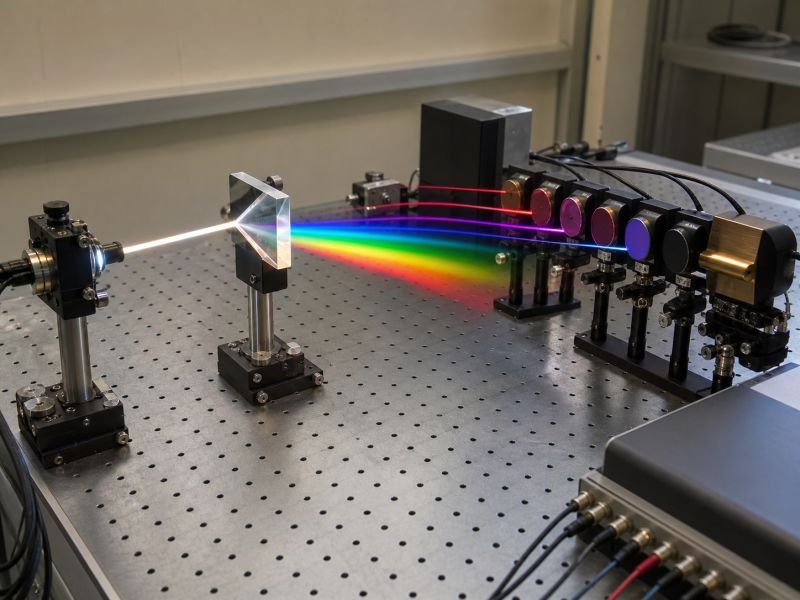
The electromagnetic spectrum is the full continuum of electromagnetic radiation, ordered by wavelength or frequency from radio waves to gamma rays. All regions follow the same physics: coupled electric and magnetic fields propagating through space. A basic relation is c = lambda f, which links wavelength and frequency through the speed of light.
Different parts of the spectrum interact with matter in different ways, so no single band reveals everything about a surface or material. This is central to multispectral Earth observation, where visible, infrared, thermal, and microwave bands each highlight different physical properties.
The concept matters because wavelength controls absorption, emission, scattering, penetration depth, and detector choice across science and engineering. Used in devices include radios, cameras, spectrometers, medical scanners, radar systems, fiber links, and thermal imagers that are designed around specific spectral windows rather than all wavelengths at once.
Engineers often divide the spectrum into named regions for practical work, but those boundaries depend on application and detector technology. Measurement therefore focuses on spectral power, bandwidth, resolution, and material response, not just color, because the same object can look dramatically different when examined in another band.
Example:
A crop field can appear uniform in visible light yet show strong contrast in near-infrared when plant stress changes leaf structure and reflectance.
Related Terms:
NoSuchDevice is a free archive of machines that do not exist yet but already have a shadow in physics. I research and write every entry alone, with no ads. Take a look around the archive, or help keep it free.