





What Is PCBM?
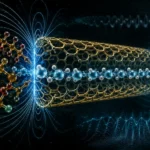
PCBM is a fullerene-derived electron acceptor widely used in organic photovoltaics, especially in early bulk heterojunction cells. Its cage-like carbon structure accepts electrons efficiently and supports reasonable electron transport, which made it a practical benchmark material for separating excitons and collecting charge in blended organic films.
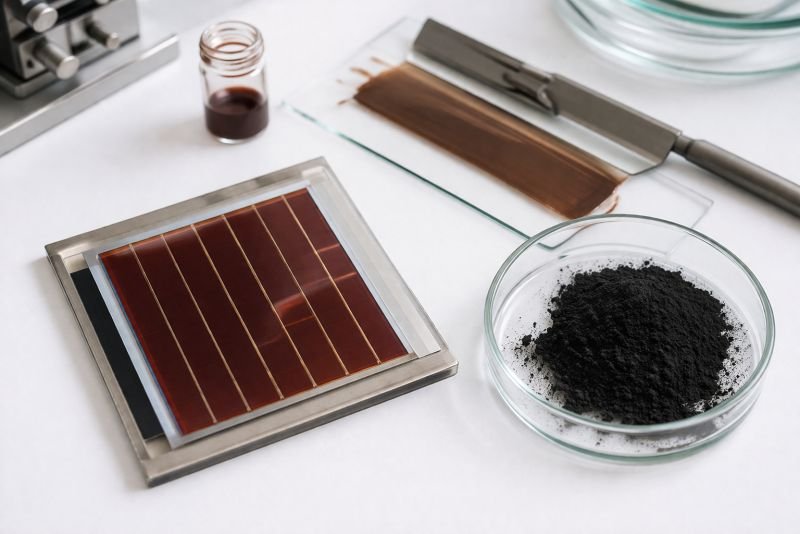
In bulk heterojunction photovoltaics, PCBM is mixed with a donor polymer so electrons transfer into the fullerene-rich phase while holes remain in the donor. It set the performance standard before newer Non-Fullerene Acceptor families offered stronger absorption and better control over energy levels.
A useful transport relation is mu = v_d / E, where mobility mu describes drift velocity under an electric field. Why it matters is that PCBM helped prove organic solar cells could work efficiently, but its weak visible absorption and limited tunability eventually constrained how high cell performance could rise.
Used in devices include organic solar cells, organic photodetectors, and laboratory benchmark blends. Researchers still use it as a reference material because decades of published data make new donor and acceptor systems easier to compare across experiments, device architectures, and laboratories worldwide.
Example:
A classic P3HT:PCBM solar blend produces current because PCBM accepts electrons from the polymer at the donor-acceptor interface.
Related Concepts:
- Non-Fullerene Acceptor
- Conjugated Polymer
- Exciton
NoSuchDevice is a free archive of machines that do not exist yet but already have a shadow in physics. I research and write every entry alone, with no ads. Take a look around the archive, or help keep it free.