





What Is PHA-depolymerase?
PHA-depolymerase is an enzyme that cleaves polyhydroxyalkanoate chains into smaller molecules that microorganisms can metabolize. It is one of the main biochemical reasons many PHA plastics biodegrade in active natural environments. The reaction rate is often described with v = Vmax[S] / (Km + [S]), relating substrate concentration to catalytic turnover under simplified conditions.
In real systems, PHA-depolymerase acts at the material surface, so degradation speed depends not only on enzyme activity but also on crystallinity, temperature, salinity, biofilm formation, and exposed area. Used in devices include biodegradation test rigs, marine-exposure materials studies, composting assays, enzyme screening platforms, and controlled-lifetime polymer systems. It becomes especially relevant in seawater-degradable bioplastic applications where environmental disappearance depends on actual enzymatic access rather than marketing claims about compostability.
The enzyme matters because biodegradability is not an abstract label. It depends on whether real biological catalysts in the disposal environment can recognize and cleave the polymer efficiently enough to prevent long-term persistence.
Researchers therefore compare depolymerase-rich environments with low-activity ones, since a polymer that breaks down rapidly in sediment or warm coastal water may persist much longer in colder or less biologically active conditions.
Example:
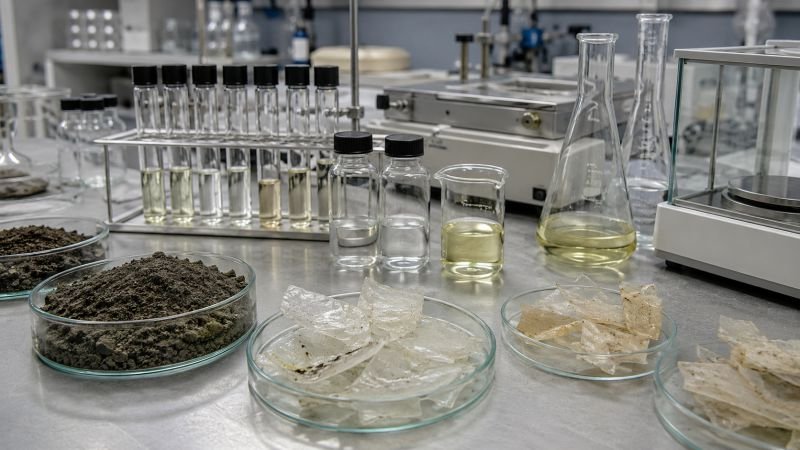
A PHA fragment in marine sediment can lose mass as microbial enzymes progressively cleave its surface into metabolizable products.
Related Terms:
NoSuchDevice is a free archive of machines that do not exist yet but already have a shadow in physics. I research and write every entry alone, with no ads. Take a look around the archive, or help keep it free.