





What Is Polyhydroxyalkanoate?
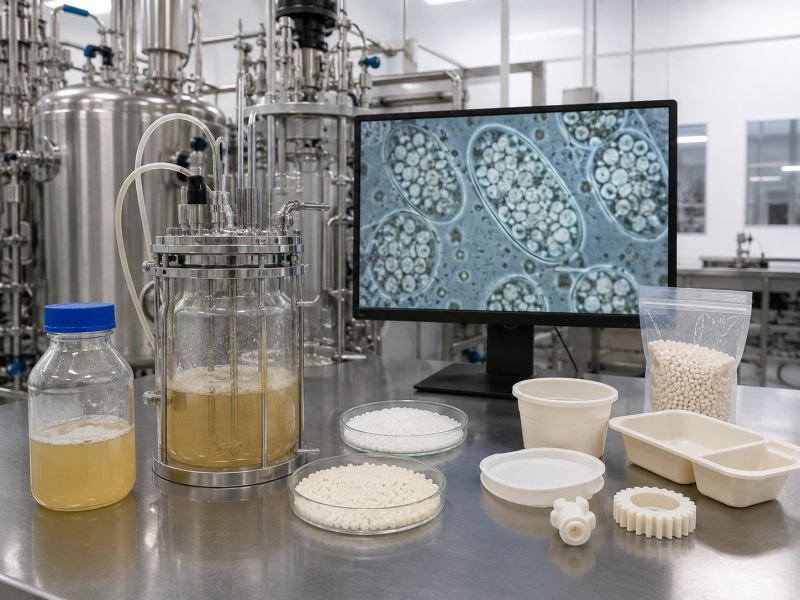
Polyhydroxyalkanoate, usually shortened to PHA, is a family of polyesters that many bacteria synthesize inside their cells as carbon and energy storage material. Unlike plastics made only after external polymerization, PHA accumulates biologically as intracellular granules that can later be extracted and processed. A useful production relation is w_PHA = m_PHA / m_dry cell, which expresses how much of the dry biomass is polymer.
In real systems, PHA yield depends on the carbon source, nutrient limitation, microbial strain, and extraction route used after fermentation. Nitrogen restriction commonly pushes cells to divert metabolism toward polymer storage rather than continued growth. Used in devices include fermentation vessels, biodegradable packaging, agricultural films, medical carriers, and marine-exposed items where persistence in the environment matters. This behavior is especially relevant in bio-based degradable materials engineering.
The polymer family matters because it combines renewable biological synthesis with degradation pathways already present in many natural microbial environments. That makes PHA distinct from bio-based plastics that still need narrowly controlled industrial composting conditions before chain breakdown becomes fast enough to matter.
Engineers still balance cost, purity, molecular weight, and extraction energy carefully, because a material that degrades well after use can remain commercially difficult if the fermentation and recovery steps are too expensive.
Example:
A PHA fishing component lost in seawater can gradually biodegrade through microbial action instead of remaining intact for decades.
Related Terms:
- Degree Of Polymerization
- Glass Transition Temperature
- Thermoplastic Starch
NoSuchDevice is a free archive of machines that do not exist yet but already have a shadow in physics. I research and write every entry alone, with no ads. Take a look around the archive, or help keep it free.