






What Is Quantum coherence?
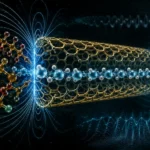
Quantum coherence is the condition in which quantum states preserve a definite phase relationship, allowing their wave functions to interfere in a predictable way. When coherence is maintained, amplitudes from multiple paths can add or cancel rather than behaving as independent random events. A simple relation is phi = omega t, which tracks phase evolution over time and helps describe whether two states remain phase-aligned.
In physical systems, coherence is limited by interactions with the surrounding environment, including thermal motion, scattering, and electromagnetic noise. The effect is central to spectroscopy, interferometry, photosynthetic exciton transport, and quantum information because useful interference disappears once phase memory is lost. In light-harvesting quantum dynamics, coherence can let excitations sample several pathways before settling into the route that transfers energy most effectively.
The concept matters because it explains why some quantum systems show unusually directed transport, high measurement sensitivity, or computational behavior that classical models miss. Used in devices include atomic clocks, interferometric sensors, superconducting qubits, and advanced spectrometers. Engineers and physicists focus on coherence time, isolation, and control because phase stability often determines whether a quantum effect remains observable or collapses into ordinary statistical behavior.
Example:
An atom interferometer relies on coherent matter waves so two split paths recombine with a measurable phase difference.
Related Terms:
NoSuchDevice is a free archive of machines that do not exist yet but already have a shadow in physics. I research and write every entry alone, with no ads. Take a look around the archive, or help keep it free.