





What Is Quantum emitter?
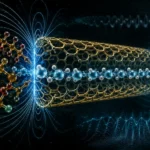
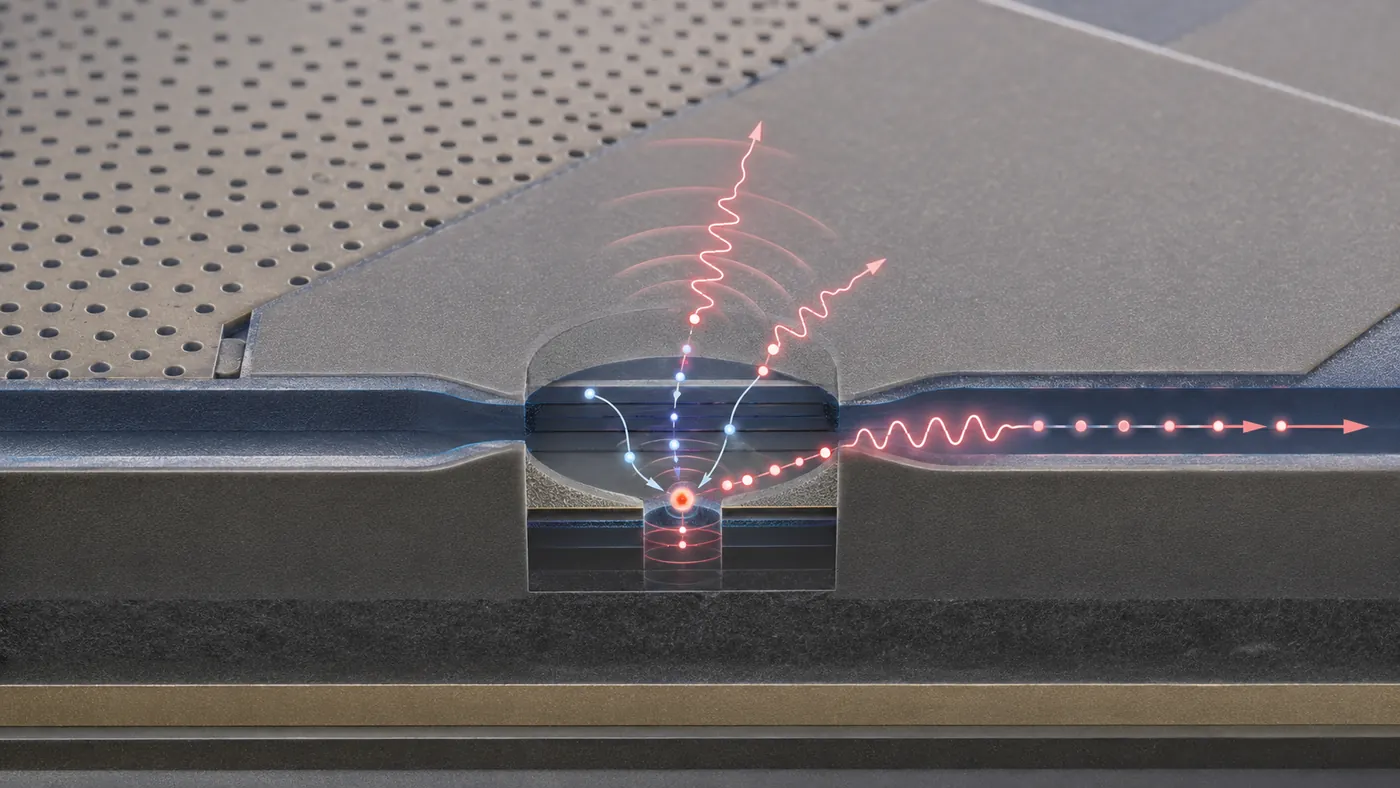
Quantum emitter is an atom, molecule, defect, quantum dot, or engineered nanostructure that releases light in discrete packets when it moves between allowed energy states. Its emitted photon energy follows E = h f, linking the transition energy to optical frequency. Because the energy levels are quantized, the spectrum can be narrow, directional, and sensitive to the emitter’s local environment.
In real systems, emission depends on excitation method, temperature, material defects, cavity geometry, and interactions with nearby surfaces or fields. Some emitters release single photons on demand, while others provide tunable spectral output for sensing, communication, or thermal control. Decoherence, nonradiative losses, and fabrication variation often determine whether a laboratory emitter can become a practical component.
The concept matters because it connects quantum mechanics to controllable light generation at small scales. In quantum photonic emission control, engineered emitters can shape which wavelengths carry energy away from a surface. Used in devices include single-photon sources, quantum sensors, nanoscale lasers, infrared emitters, and photonic integrated circuits.
Engineers characterize quantum emitters by linewidth, brightness, lifetime, photon purity, operating temperature, and how precisely the emission can be coupled into a waveguide or cavity.
Example:
A quantum dot embedded in a photonic cavity can emit photons at a selected wavelength for an optical sensing circuit.
Related Terms:
NoSuchDevice is a free archive of machines that do not exist yet but already have a shadow in physics. I research and write every entry alone, with no ads. Take a look around the archive, or help keep it free.