





What Is Quantum entanglement?
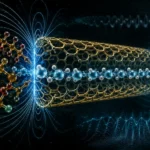
Quantum entanglement is a relationship between quantum systems in which the measurable state of each part cannot be fully described alone. The combined state carries correlations that survive separation in space. A compact test is the Bell parameter S; local classical correlations obey S <= 2, while entangled quantum states can exceed that bound.
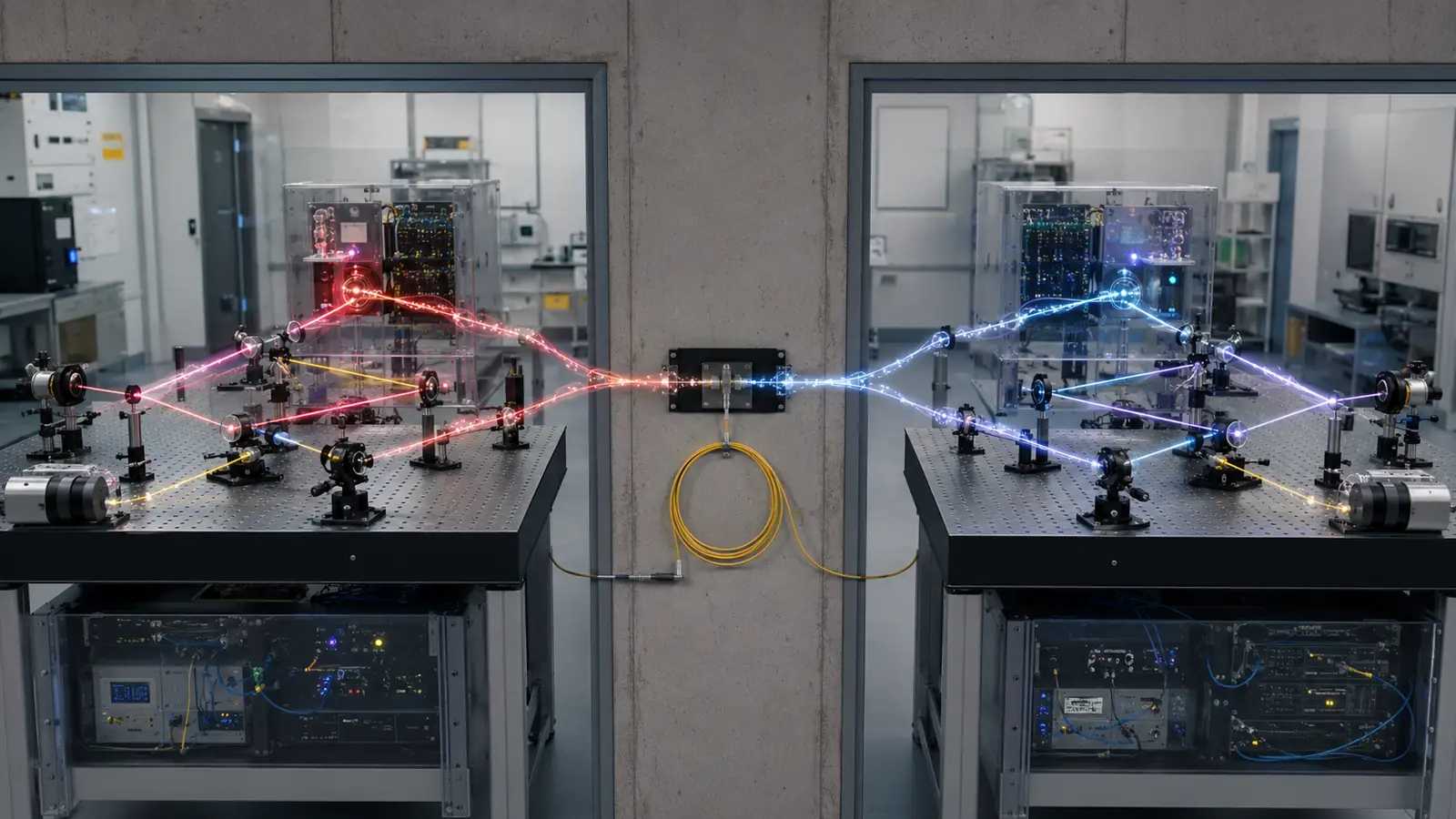
In real systems, entanglement is created between photons, ions, superconducting circuits, atomic spins, or other controllable quantum objects. It is fragile because uncontrolled interaction with the environment leaks information and causes decoherence. In quantum network engineering, entanglement must be distributed, verified, refreshed, and paired with classical communication before it can support coordinated operations.
The concept matters because it is the resource behind quantum communication, quantum teleportation, quantum sensing, and many forms of quantum computation. Used in devices include quantum key distribution terminals, trapped-ion processors, superconducting quantum chips, entangled-photon sources, and quantum sensor arrays. Entanglement gives engineers access to correlations that no ordinary shared randomness can reproduce, making it a central design variable rather than a philosophical curiosity. It also defines how carefully isolation, timing, and readout must be engineered.
Example:
In a Bell test, two separated photon detectors record polarization outcomes whose statistical correlations exceed what any local classical model can produce.
Related Terms:
NoSuchDevice is a free archive of machines that do not exist yet but already have a shadow in physics. I research and write every entry alone, with no ads. Take a look around the archive, or help keep it free.