


What Is Syngas?
Syngas, or synthesis gas, is a combustible gas mixture composed mainly of carbon monoxide and hydrogen, often with carbon dioxide, methane, nitrogen, and water vapor. It is produced by gasification or reforming of carbon-based feedstocks and used as a fuel or chemical intermediate. A key quality metric is H2/CO ratio, written as H2/CO = nH2 / nCO, which guides downstream use.
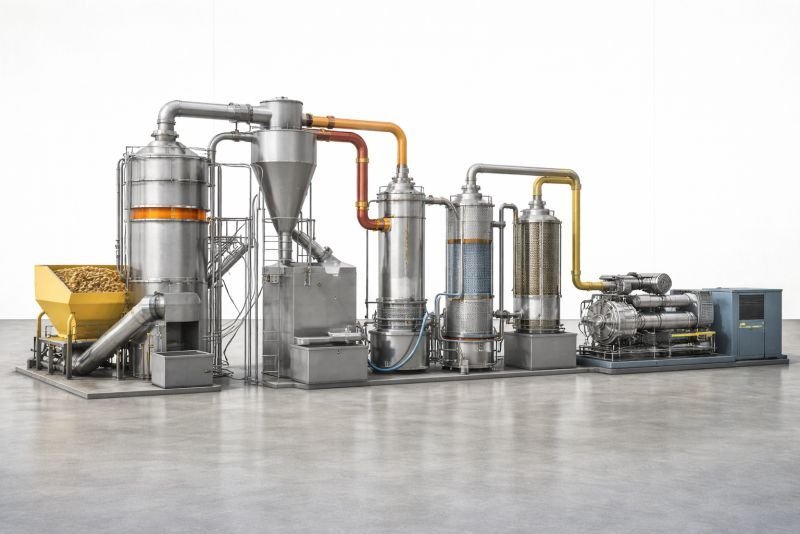
In gasifiers, feedstock reacts with limited oxygen, steam, or both at elevated temperature, causing partial oxidation and conversion of solids or liquids to gaseous products. Process conditions, catalyst choice, and cleanup steps determine tar level, sulfur content, and final composition. Engineers evaluate thermochemical fuel gas generation in biomass systems when aligning reactor operation with engines, turbines, or synthesis units.
Why It Matters: Syngas provides a flexible intermediate that can be burned for power, reformed for hydrogen, or converted to liquid fuels and chemicals. This flexibility supports feedstock diversification and can reduce dependence on a single fuel pathway, especially where residues, municipal waste, or industrial byproducts are available.
Used In Devices:
- Downdraft Gasifier
- Syngas Cleanup Train
- Gas Engine Generator Set
Example:
A biomass gasifier supplies cleaned syngas to a reciprocating engine that generates electricity for a local microgrid.
Related Concepts:
- Pyrolysis
- Chemical Oxygen Demand (COD)
- Water Gas Shift Reaction
NoSuchDevice is a free archive of machines that do not exist yet but already have a shadow in physics. I research and write every entry alone, with no ads. Take a look around the archive, or help keep it free.